
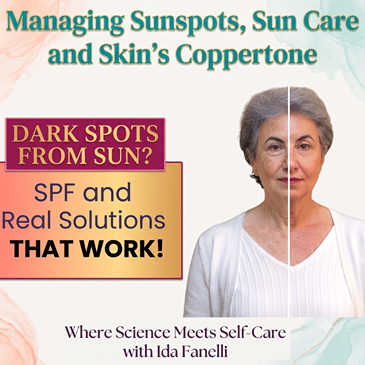
Learn the science of melanin, why pigmentation becomes uneven, how melanin protects from UV damage — and why overproduction causes dark spots • Hormonal triggers, endocrine disruptors, and nutrient deficiencies that impact pigmentation • The role of altitude, heat, blue light, pollution, and skin trauma in discoloration • Lesser-known causes like photosensitive foods, hard water, and mites • Holistic solutions: sunscreens, antioxidant-rich diets, adaptogens, LED therapy, microcurrent, gentle exfoliation, and climate-adaptive skincare.
Important Consumer Notice Disclaimer:
The information provided on this educational page is for general informational and cosmetic purposes only. It is not intended as a substitute for professional medical advice, diagnosis, or treatment. If you suspect you have a skin disorder, chronic condition, or need specialized treatment, please consult a licensed physician or dermatologist immediately to seek professional medical guidance.
To Connect with Ida: Link in Bio
Subscribe, like, listen and share the podcast
This show is visible on many platforms
#Hyperpigmentation #Melasma #SkinDiscoloration #HolisticSkincare #NaturalBeauty #HealthyAging
00:00:00 --> 00:00:04 Hyperpigmentation, discoloration, and melasma
00:00:04 --> 00:00:07 affect people of all skin tones. Melanin is the
00:00:07 --> 00:00:10 pigment responsible for skin, hair, and eye color.
00:00:11 --> 00:00:14 Our family history largely determines the type
00:00:14 --> 00:00:17 and amount of melanin in our bodies, but environmental
00:00:17 --> 00:00:21 factors spaced over time can also cause pigmentation
00:00:21 --> 00:00:24 to evolve. Diet and certain medical conditions
00:00:24 --> 00:00:27 can also influence its production and play a
00:00:27 --> 00:00:30 significant role in determining melanin levels.
00:00:31 --> 00:00:34 Ecological factors, lifestyle choices, and hormonal
00:00:34 --> 00:00:39 changes also influence pigmentation. People want
00:00:39 --> 00:00:42 quick and permanent solutions for this issue.
00:00:42 --> 00:00:46 However, understanding the biological and external
00:00:46 --> 00:00:49 factors contributing to pigmentation and the
00:00:49 --> 00:00:51 overproduction of melanin is essential for effective
00:00:51 --> 00:00:52 management.