According to LinkedIn, 50% of recruiters report that poor interview performance—or a candidate’s inability to clearly articulate their experience under pressure—is a primary reason qualified candidates are rejected.
That raises an important question: How do talented professionals make sure their value is understood when the pressure is on?
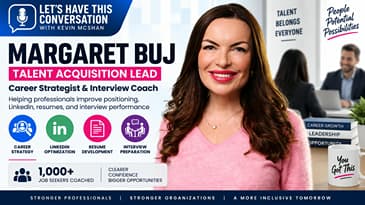
This week on Let’s Have This Conversation, I’m joined by Margaret Buj, an interview coach and international recruiter who helps professionals communicate their value clearly, confidently, and convincingly so they can pursue the roles they truly want.
Since beginning her recruitment career in 2005, Margaret has worked with thousands of job seekers across the UK, Europe, the United States, and beyond—from ambitious graduates to senior managers and C-suite executives.
She has also personally coached more than 1,000 job seekers, helping them strengthen their positioning, improve their LinkedIn profiles and résumés, prepare for high-stakes interviews, and develop more effective job-search strategies.
What makes Margaret’s perspective particularly valuable is that she understands both sides of the hiring table. She knows how organizations assess talent—and where highly qualified candidates can struggle to communicate the value they bring.
Her work sits at the intersection of hiring, professional positioning, and interview strategy, helping companies build stronger teams while helping professionals compete more effectively for the right opportunities.
Margaret’s career advice has been featured in Forbes, the Financial Times, Business Insider, The Guardian, Fox Business, CIO Magazine, Cosmopolitan, and other leading publications. She has also been recognized as a LinkedIn Top Voice.
Margaret joined me for an in-depth conversation about:
• Building a more intentional job-search strategy
• Positioning yourself effectively on LinkedIn and through your résumé
• Preparing to communicate with confidence during interviews
• Understanding what recruiters and hiring managers are really evaluating
• Standing out when competing against other highly qualified candidates
• Turning your experience into a compelling professional value proposition
Your qualifications may open the door. Your ability to articulate their value can determine what happens once you walk through it.
Tune in to this insightful conversation with Margaret Buj on Let’s Have This Conversation.
For more information: https://interview-coach.co.uk/
LinkedIn: @Margaret Buj
Learn more about your ad choices. Visit megaphone.fm/adchoices
[00:00:00] According to LinkedIn, there's a clear job performance tactic that job seekers would want to try to avoid if they want to land their ideal dream job in today's job markets.
[00:00:17] The platform reports that over 50% of today's recruiters say poor job performance or a candidate's inability to articulate and communicate their value is an automatic setback in the job screening and onboarding process.
[00:00:40] And, it's one of the primary reasons qualified candidates get passed over for jobs they're clearly qualified for. This raises the obvious question of how do qualified candidates ensure that their value is understood under pressure so that they land the job that they covet.
[00:01:05] Well, on today's episode of Lets Have This Conversation, we tackle that very question. Because this week, I'm joined by my friend Margaret Buj, she is an interview coach and an international recruiter who helps professionals communicate their value clearly with confidence.
[00:01:30] So they can convincingly land the job that they covet and desire. Since beginning her recruitment career back in 2005, Margaret has worked with thousands of job seekers and professionals across the UK, Europe, America and beyond.
[00:01:54] She's worked with everyone from college graduates to senior managers and C-suite executives.
[00:02:06] She's also personally coached over 1,000 job seekers, helping them to strengthen their positioning and LinkedIn profiles and resumes to help them prepare for high-stakes interviews and develop more effective job search strategies.
[00:02:29] What makes Margaret's perspective particularly valuable is that she understands both sides of the hiring table. She knows how organizations assess talent and how qualified candidates can sometimes struggle to communicate the value they bring. She's very, very important, to help them to make a difference.
[00:02:57] She understands both sides of the hiring, professional positioning, and interview strategy, helping companies to build stronger teams and helping professionals compete more effectively for the right opportunities.
[00:03:16] During the course of her career, her advice has been featured in Forbes, The Financial Times, Business Insider, The Guardian, Fox Business, CIO Magazine, Cosmopolitan, and other leading business and job-seeking publications.
[00:03:41] She's also been featured as a LinkedIn top voice. She drove me this week to have an in-depth discussion on the subject of building a more intentional job search strategy, positioning yourself effectively on LinkedIn, and through your resume,
[00:04:03] preparing for better communication and effective conversation during the interview and onboarding process, so job-seekers can communicate with better confidence, understanding what recruiters and hiring managers are really evaluating, and standing out amongst other highly qualified candidates.
[00:04:32] She also provides me some feedback and thoughts on turning your experience into a compelling professional value proposition, and Margaret joined me this week to tell me more. I'm Kevin McShann, led to this conversation.
[00:05:26] If you're ready, I'll take a moment to welcome you to the program, and I'm super excited to learn about your journey as a talent acquisition leader and recruitment expert. It's good to see you, and thanks so very much for being here. Yeah, thank you so much for having me. Absolutely. So, Margaret, I know that you help people land their most ideal jobs as a talent acquisition leader
[00:05:55] by helping them communicate their value, my friend, by helping them upscale their resumes, LinkedIn profiles, and getting them prepared for job interviews. Just tell me about your work and what makes you so fabulous, my friend. Oh, well, you know, I've spent just over 20 years in recruitment, mostly working for U.S. technology companies.
[00:06:22] So that's ranged from smaller businesses like Mixed Banks, B2B SaaS company, where I currently work to, and much larger organizations like VMware and Expedia. So my work has been very international, recruiting across Europe, Middle East, the U.S., and I've hired really across all functions, you know, sales, marketing, finance, HR, product engineering, with the last few years with a particularly strong focus on technical hiring. And apart from that,
[00:06:49] I have been coaching people for 20 years right now. So I work with professionals in both private and public sector across different industries and career stages. My clients are really based around the world, although most right now are in the U.K. and in the U.S. right now. So, you know, having both perspectives as a recruiter and coach is useful because as a recruiter, I understand the conversations happening inside the company, how candidates are assessed,
[00:07:16] why someone might progress or be rejected. And as a coach, I help people make sense of that process and communicate their experience more effectively through their resume, LinkedIn profile, networking, and interviews, you know. So sometimes someone has excellent experience, but they're making the employer work far too hard to understand why it's relevant. So a lot of my work is helping them make that connection clearer. Yeah, absolutely. So building on that point,
[00:07:44] what do you think is the key to developing repeatable habits that lead to more effective job searches and long-term career success? What are your thoughts there, my friend? Yeah, you know, I think when it comes to sustainable habits, I would start with building a routine that you can actually maintain because people can put enormous pressure on themselves during a job search. So they spent an entire day applying, you know, feel exhausted and then find it difficult to face it again.
[00:08:13] So I would rather someone set aside regular focus time for a combination of activities, identifying suitable roles, making relevant applications, speaking to people and preparing for interviews. You know, the balance will of course depend on whether you're working, caring for someone or searching full time. So there isn't one schedule that works for everybody. But one habit I particularly encourage is maintaining relationships before you urgently need help. So that can be as simple
[00:08:42] as checking in with a former colleague, following up with someone you met at an event or sharing something relevant with a person in your industry. So I don't think you have to be a prolific LinkedIn poster or attend networking events every week. But you do need some people outside of your immediate workspace who know what you do and what you're interested in. And also when you are looking, it helps to be specific. So if you're open to anything, that actually gives people very little to work with.
[00:09:11] Whereas explaining the kind of role that you want, yeah, just explain the kind of a position that you want, the experience you bring and the organizations you're interested in makes it much easier for someone to recognize a relevant opportunity. And another habit that I really encourage is keeping a record of your achievements while they're happening. So people very often wait until they need a new resume to think about what they've accomplished, but by then they've forgotten the details. So keep a simple document.
[00:09:40] It could be a Google Doc and just update it every couple of weeks. You know, what problem did you work on? What did you personally do? What improved? You know, what feedback did you receive? So it could be things like revenue or cost savings, but it could be resolving a difficult customer issue, improving a process, preventing an error or helping a team deliver something complicated. So those details become useful evidence for interviews, performance reviews and promotion discussions. And I would also build a short weekly review
[00:10:10] of the job search itself. You know, are the applications producing conversations? Are you getting interviews but struggling at a particular stage? Are conversations with people in your industry helping you identify better opportunities? So those are different situations. They need different responses. If you're consistently getting interviews, endlessly reviting your resume might not be the best use of your time. You may need to practice explaining your examples aloud or reconsider how you're assessing the roles, you know.
[00:10:37] And also for longer term career success, just keep checking how your field is changing, you know, like look at relevant job descriptions even if you're happy in your role. Like notice what skills employers are looking for. Speak to people doing the work that interests you and find opportunities to develop those skills in practice. So, you know, finally the routine needs room for life outside of the search. So you can improve your approach but you can't control every hiring decision. And also a rejection really doesn't mean that you perform badly.
[00:11:08] Sometimes there are three amazing candidates on the final interview stage and just one role, you know. And also spending every waking hour searching won't produce a better result necessarily. So the habits I want people to carry forward are staying connected, keeping evidence of their contribution and regularly considering what they want to learn or do next. So those habits remain useful long after they've accepted the offer. Yeah, absolutely. And we're talking about standing out in a competitive
[00:11:37] job market. I'm curious to ask you what qualities do you think a job seeker's need to exude if they want to stand out in a crowded job market? What are your thoughts there, my friend? Well, you know, I think, well, firstly it depends on the role and on the industry but what makes a candidate stand out in an interview in general is how clearly they connect their experience to what the employer needs and how convincingly
[00:12:07] they can explain the work behind it. So someone can have an impressive career and still give an interview that leaves the hiring manager unsure whether they're the right fit for this particular role. So they might talk at length about their background without addressing the problems that this team needs them to solve, you know. The first thing I encourage candidates to ask is why is this company hiring someone for this role? what needs to improve, get, build, grow or become more reliable? You know, you won't know everything from the job description but you can identify
[00:12:36] likely priorities and then ask questions to check your understanding. So, for example, two companies might both be hiring a marketing manager. One needs someone to establish the function with very little support. The other one has established team and needs someone who can improve a particular part of its marketing. So the same candidates would need to emphasize completely different parts of their experience in those conversations. So that's one reason I'm careful about suggesting this like one ideal candidate profile because, you know, having recruited
[00:13:06] for startups and large organizations, the working environment matters. So experience of navigating a complex organization can be valuable in one role but experience making progress with limited resources and incomplete information might be particularly relevant in another, you know. And the next thing is evidence. So just you saying that you're strategic or collaborative or good problem solver, that doesn't tell me much on its own. I want to understand the situation where you demonstrated that, you know. So what was the problem?
[00:13:35] What made it difficult? What decisions did you make? Who did you need to involve? And then what happened as a result? And the decisions are especially important. Candidates sometimes give me the beginning and the end. We had this challenge and this is what we achieved as a result but the part that helps me assess them is what happened in between. So if you've improved the process, how did you decide what needed changing? If stakeholders disagreed, how did you work through that? If you had several competing priorities,
[00:14:05] what did you choose to delay and why? You know, so those kinds of answers that gives employer a much better understanding of your judgment and how you might approach their challenges. So I also encourage people to be very clear about their personal contribution. So you can acknowledge the team while explaining what you own. So for example, the team delivered a project and my responsibility was, you know, that's a good way of doing that. And also, I talked about evidence but it doesn't always need to be a revenue figure, you know,
[00:14:35] depending on the role it might be improved accuracy or fewer customer escalations, faster delivery, successful implementation or better coordination between the teams. So if you have numbers, use them but be prepared to explain what they mean and how you know your work contributed. And I think also right now I would think of AI fluency, especially for candidates in technology and other roles when these tools become part of the work. So by that, I mean being able to explain
[00:15:04] how you use AI for a relevant task, how you check its output and whether you still need your own expertise, you know. So simply listing a few tools on your CV, on your resume tells employer very little. So, you know, for example, a marketer might use AI to help organize customer feedback and identify possible themes and then check those themes against the original comments before making a recommendation. Or a software engineer might use it to suggest tests but still need to assess whether those tests cover, you know,
[00:15:34] the important risks. So if you have an example like that, explain the task, what the tool helped with, what you checked or what changed and whether, you know, it improved the work. And, you know, finally also like strong candidates make the interview a thoughtful conversation. So they answer the question, listen to what the interviewer says and then ask questions that help them understand the work, you know. So for example, what would you most need this person to improve in the first six months can give you much more useful information than making assumptions about the role
[00:16:03] and then you can explain which parts of your experience are relevant while also deciding whether the opportunity suits you. So none of this means the strongest interview will always produce an offer because there are so many variables but, you know, another candidate might have more directly relevant experience or the company's priorities might change but you put yourself in a stronger position when the employer can clearly understand what you've done, how you think and how that relates to the work they need someone to do. Yeah,
[00:16:34] I'm particularly interested to ask you about how do you think a wing team has evolved to help people get more jobs and maximize their job search potential and how do we use LinkedIn to maximize potential once we get a job? What are your thoughts on the best ways to maximize and improve our LinkedIn profiles, my friend?
[00:17:03] Are you talking about when you're looking for a job or when you're already employed? I'm asking you to look at it from both sides of the coin so you can take it and direct it if you wish. Yeah, absolutely. So, I mean, you know, firstly, a strong LinkedIn profile makes it easy to understand what you do, where your expertise is relevant and what evidence supports it. So,
[00:17:33] a profile that simply lists employers and dates leave too much for the reader to work out, you know, so I would start with the headline. It should help someone recognize your professional area and specialist. You know, your current title can be a part of that but if the title is vague or unusual, add language that explains the work. So, for example, program manager, okay, good starting point but if you mention program manager, technology implementations, financial services, that provides
[00:18:02] a much more useful context, you know, assuming that accurately reflects the person's experience. So, you know, the aim is to be recognizable and specific. So, a string of broad claims like visionary leader or results-driven professional doesn't really tell the recruiter which opportunities are relevant. And so, also the about section that really should explain your experience in a more human way. You know, like what work do you do?
[00:18:31] What kind of problems have you handled? And yeah, what kind of issues have you handled? You know, what are you particularly good at? Which examples help establish that? Experience section definitely give enough context to understand your remit and contributions. Like what did you own? What was the scale? What changed because of your work? So, you know, you don't need to reproduce every single resume bullet point but the list of responsibilities alone usually misses the most useful information. So, have some metrics,
[00:19:01] have some results and yeah, and also be specific about the skills as well. So, use the professional terminology that accurately describes your work and that employers in your field recognize. Just avoid adding tools, you know, or skills simply because they appear frequently in job adverts. The featured section can provide supporting evidence when you have something appropriate maybe like portfolio, presentation, you know, article, any kind of public example of your work. It definitely is not compulsory
[00:19:30] and you shouldn't create content just to fill the space. And, you know, recommendations can definitely help when they describe something specific. So, someone explaining how you handle the difficult delivery or work with a team gives the reader more context than general praise. And, you know, you don't also need to become a LinkedIn content creator to use LinkedIn effectively. Any kind of thoughtful comments, you know, relevant conversations and keeping in contact with people can be worthwhile. And I think posting is definitely an option
[00:20:00] if you want to build your personal brand, if you have something useful to share but it's not a requirement for professional credibility. And also, before publishing changes, I would just check that the headline about an experience section tell a consistent story. Really, a reader should be able to understand your direction without having to reconcile several competing versions of, you know, of who you are professionally. And also, a lot of hiring managers, like on one hand, yes, you should tailor your CV to different positions but on the other hand,
[00:20:30] a lot of recruiters will check, a lot of hiring managers will actually check your LinkedIn against your CV so really make sure that you don't like over-tailor your CV, you know. Yeah. And, you know, once you're employed, I would just say, you know, keep your profile current. And if your responsibilities have expanded or you completed important project, reflect that. Also, stay connected with people you've worked with, you know, when a colleague moves to companies, keep in touch or if someone shares a professional milestone, maybe send them a message
[00:20:59] or if you come across something relevant to a previous conversation, share that with them because, you know, these relationships can be valuable in their own right. They can lead to advice, collaborations, introductions or just better understandings of how organizations approach similar problems. And I would also use LinkedIn to keep an eye on opportunities on your professional, on your profession. So, like, follow people who share useful insights, including people outside of your own company, like, notice the challenges they're discussing
[00:21:29] and the skills appearing in different roles because that can help you decide what to learn next or which projects to pursue in your current role. And you can also build professional visibility on LinkedIn gradually. That doesn't mean you have to post constantly. You might contribute a thoughtful comment, share a lesson from your work or acknowledge a team achievement provided it's, you know, appropriate to discuss publicly. And I would just also say if a relevant recruiter contacts you, I would still respond
[00:21:58] even if you're happy where you are, you know, because that's, there's no obligation to take a call but you can just maintain the connection. You never know when you might need this connection. Yeah, absolutely. And I will ask you about interview confidence and how you help people increase their confidence for interviewing and then secondarily, you know, recruiting, you know, tactics for hiring managers. Sorry, so, what was, sorry, what was the first question?
[00:22:28] Yeah, no, I, about interview confidence and helping job seekers increase their interview confidence. What do you think is the key there? How I, you mean, how I help people increase their interview confidence? That's the question, yeah. Yeah, so, you know, I have a number of different, I have a number of different clients and sometimes I've had people who simply haven't interviewed for a, for a very long time and they just need a bit of practice
[00:22:57] and I also have a lot of clients who've been interviewed, who've actually had several interviews but they just have received no offer and sometimes they know what they need to improve but very often unfortunately they get no feedback whatsoever. So, I help people build interview confidence by making the experience more familiar and helping them understand what they really have to offer. So, you know, firstly I want to understand what's making them nervous. Like, are they struggling to identify strong examples? Do they lose their structure when they speak? Are they worried
[00:23:27] about the career gap or a question they couldn't answer previously because those need different kinds of preparation and often someone has more useful experience than they realize, you know, they will describe something as, that's just part of my job and when we explore it, there were actually difficult decisions and competing priorities or significant contribution that they haven't been explaining. So, I help them identify those examples and understand why they are relevant to the role and, you know, it's easier to feel confident when you know what evidence
[00:23:56] you can draw on and then we work on how they communicate it. So, we give their answer a clear structure with enough context to understand the situation, specific detail about what they did and then the results. So, we also make their ownership clear. So, people sometimes talk about what we achieved as a team without explaining their own contributions. and, you know, a big part of coaching is practicing aloud as well. So, thinking through an answer or writing it down doesn't fully prepare you to explain it to
[00:24:26] another person especially when they ask an unexpected follow-up. So, in a mock interview I can identify exactly where an answer loses clarity. You know, some might say well you spent most of that answer explaining your background but the strongest part was the decision that you made. So, let's bring that forward, you know, and then we practice it again so they can hear and feel the difference. And, I don't want people to memorize a script. I want them to know their examples well enough to adapt them to different questions because you never know how the employer will ask the
[00:24:56] question. So, we also practice pausing, asking for clarification and taking a moment to choose an example. So, you don't have to answer every question immediately to come across as capable, you know. And also, I had people put rejection into perspective. practice. not getting an offer doesn't necessarily mean they've interviewed badly. Really, truly. Like, I recently had a situation where we had four amazing candidates on the final interview stage, four past the final interview, two with a strong yes. We were trying to get headcount
[00:25:26] for a second headcount. We could only hire one person. They were all amazing candidates. So, you know, it's not always personal even though it's super frustrating, of course, you know. So, and also, like, remember that I remind people that they are assessing the employer as well, you know, they are there to understand the expectations, the manager, whether they could do a good work in that environment. So, that can help the conversation feel less like the test they have to pass. So, you know, it's not about eliminating every nerve. Like,
[00:25:55] everyone feels a bit nervous before an interview. I would feel nervous as well, you know, they're thinking, I understand what this role needs, I have relevant experience to discuss and I've practiced explaining it. That gives you something more dependable than just simply telling yourself to be confident. Yeah, absolutely. And I also wanted to ask you about the ways that hiring managers and recruiters have to sort of modernize the way that they recruit people
[00:26:25] because the way we recruit people has changed, but some of the recruiting tactics have stayed the same. So, on the other side of the point, what work do you think hiring managers and recruiters have to do to modernize their process? What are your thoughts there, my friend? Tell me, I'm not sure you've got a question. Just looking at different ways of recruiting people through
[00:26:55] technology or going through alternative way, it's on the resume of recruiting people. How do you think managers have to update the way that they're outreaching the people to fill their vacant position? What are your thoughts? I think hiring managers and recruiters, again, I've worked for many different companies with completely different processes, but I think hiring managers
[00:27:25] and steps that don't make a better decision. We don't need seven interview stages to assess someone. I think it starts with defining the role properly. What does this person need to achieve? Which skills are essential when this person joins? What could they learn? If the hiring team hasn't agreed on that, candidates can end up being assessed against different expectations in every interview.
[00:27:55] I would definitely introduce more structure. I have had that in the questions and agree on what a strong answer should demonstrate. You can still have a natural conversation. You can still ask them other questions, but the decision should be based on relevant evidence. For example, stakeholder management matters, ask candidates to explain a situation where people disagreed and how they handled that.
[00:28:25] Look at their decisions, their actions, rather than deciding that they seem personable. I think it's also important that interviewers record their assessments independently before discussing candidates together because that will prevent the most senior or most vocal person from shaping everyone else's opinion. I would also look at a number of stages because I have seen companies having 10 interview stages which I think is completely insane. I think each interview should answer a
[00:28:54] specific question about the suitability. If a team keeps adding interviews because nobody feels comfortable making a decision they really might need clear criteria rather than another conversation. I'm a huge fan of some practical assessments but I need to keep them relevant and proportionate. Don't ask people to spend three days preparing an assessment. think asking people to spend an hour or two to prepare a task I think that's totally fair because you want to see how they think but asking people
[00:29:24] to spend three days preparing a task for your company should be a paid assessment in my opinion. And also explain to the candidate what you're evaluating how much time should spend whether they should use AI as an example and if AI is part of the role you might assess how someone uses it and check its output. I think accessibility needs to be built into the
[00:30:01] job requirement or ability to perform on their artificial interview condition. As an example if a job requires careful analysis an unnecessary rushed exercise might tell you less than giving time to review information and explain their reasoning. Technology can support scheduling and administration but employers need to understand how any screening tools work and whether they might exclude suitable people. For me a modern
[00:30:31] hiring process produces useful evidence and gives different people a fair opportunity to demonstrate their ability. So adding more technology will not achieve that unless the underlying process is well designed. I want to quickly ask you about hiring folks with disabilities and a competitive edge that they can offer to an organization. What are your thoughts
[00:31:00] on fairly assessing people with disabilities and giving them an actual sure not to prove what they can do my friend. What are your thoughts there? Are you talking about disability inclusion? Yeah, disability inclusion in the workforce. What are your thoughts on the organizations that use that as a competitive
[00:31:30] advantage? Well, not like my main area of expertise, but I think we need to be careful about placing all the responsibility on a candidate to adapt to a process that might contain unnecessary barriers. As a coach, I can help someone prepare and communicate their experience, but preparation alone won't resolve an inaccessible application system or assessment that measures something unrelated to the job. Unfortunately, that happens. I would start with an
[00:31:59] individual. People with disabilities don't need the same support. Two people with the same diagnosis might have different experiences. I would ask which parts of the process are difficult? What would help them demonstrate their skills? Is it the format of the interview? Is processing several questions at once? Is it the length of the session? The physical environment or the accessibility of technology? This allows us to prepare in a useful way. We might practice answering one question at a time or
[00:32:29] develop a simple structure for example and if they want to request an adjustment we can help them describe what they need clearly. For example would it be possible to receive questions in writing as answer. I had a client once and he had a disability he had might have been just neurodivergent but he asked for that. He asked whether it will be possible to
[00:32:59] receive questions in writing and they actually sent him questions in writing prior to the interview which was quite interesting. At the same time the request should reflect their actual needs. I wouldn't assume that everyone wants questions in advance extra time or a remote interview. I think the disclosure could be a sensitive decision. I wouldn't give blanket advice that everyone should disclose immediately or nobody should disclose. We would talk through the preferences and what support they need and any kind of relevant local
[00:33:30] guidance. The professional position should still give proper attention to their expertise achievements and goals. I wouldn't automatically describe someone as resilient or exceptionally resourceful because they have a disability. If those are the strengths they want to discuss we should support them with their own examples. For employers I think the responsibility begins with examining what the process is testing. For example if a job requires careful analysis why make speed of answering an expected
[00:34:00] question a major selection criteria? If someone can communicate effectively with colleagues and clients are we rejecting them because their eye contact a conversational style doesn't match our expectations. So if you're an employer give candidates clear information about the format duration participation assessment criteria provide an accessible way to request adjustment and respond to those requests respectfully. So depending on the person and the assessment useful adjustment might
[00:34:30] include breaks or accessible documents written questions or just alternative ways to demonstrate the same skills. I think consistency means also assessing same job related capabilities so it doesn't require every person to demonstrate them through an identical format. And I think the inclusion also has to continue after the offer. Candidates need to understand whether the working environment management practices and ongoing support will allow them to succeed. So the standard should remain
[00:35:00] meaningful evidence that someone can do the job and employers need to make sure that the process actually allows people to produce that evidence. Yeah and Margaret my final
[00:35:36] their potential and ultimate success in the job market. What are your thoughts then? Yeah absolutely. Employers want to really understand whether you can do the work they need. How you approach problems and what you like to work with. I think it's not just about the skills are going to try
[00:36:06] to provide some measurable achievements as well and also show the thinking behind your decisions. If you haven't done something before be honest about the gap and explain which experience you can build on. You don't need to make every part of your career sound super impressive. You need to help the person interviewing you understand why your experience matters for this role. Remember you making a decision as well. Ask whether their expectations
[00:36:36] are realistic whether you have support to succeed and whether you want the work itself. I think a successful interview should help both sides make an informed choice. Also, as a job seeker, to maximize your potential in the job market, start by understanding where your experience is most useful. Being capable of many things doesn't mean you should present yourself as someone who can do anything. You know it's a very challenging job market right now. So employers
[00:37:06] need to understand why you're relevant to their particular role. So look at the opportunities you're interested in and identify the problems those employers need someone to solve and then ask yourself what what evidence do I have that I can help which examples show my judgment my skills and the contribution I've made you know and people often overlook achievements because the work felt ordinary or easy to them you know something you did regularly like resolving customer problems or coordinating complicated project maybe exactly what the employer need so you
[00:37:36] have to explain the difficulty what you did and why it mattered and then make that speak to people in organizations that interest you and be specific about the work that you targeting so that gives people a much better chance of recognizing an opportunity that suits you and keep developing but also be deliberate about it before taking another course just ask yourself do need more knowledge practical
[00:38:05] experience or simply a better way to explain what you already know because those are different needs and pay attention to your is attracting interest if you repeated distracting with a particular question work on that you know don't assume that every rejection means that your whole approach is wrong so you know ultimately I
[00:38:47] yeah so well my website is interview coach coach coach coach and have some free resources on my website including my three day job search bootcamp I'm also very active on LinkedIn I think there's just one Margaret boy on LinkedIn and I post advice for job seekers five times a week typically Monday to Friday so feel free to follow me and feel free to ask any questions well absolutely well I think
[00:39:17] LinkedIn is how we I got connected to it is a powerful tool of connection isn't it yes definitely definitely I've had a lot of really great connections via LinkedIn and is that how you found me as well I know you messaged me on LinkedIn or yeah I actually found you on LinkedIn I did a LinkedIn search for job search experts and your profile came up so yeah absolutely yeah yeah that just proves
[00:39:47] the point yeah absolutely well I want to thank you for being here and for providing some great expertise on how people can maximize their job search and you thank you so much bye bye bye bye