Sometimes the most important chapter of our lives begins after the one we thought would define us completely falls apart.
My guest today knows what it means to experience that kind of collapse—and what it takes to rebuild afterward.
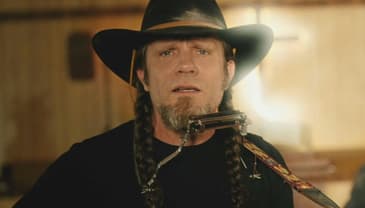
Ezra Vancil is an American singer-songwriter, artist, and speaker based in Dallas, Texas. He has spent decades writing, recording, and performing across rock, pop, experimental music, and Americana. But the most powerful story Ezra has to share isn't simply found in a song. It's found in the life he had to reconstruct.
Ezra is now 13 years sober. His journey has included addiction, depression, a felony DWI, divorce, and the unraveling of the identity and life he once knew. Recovery required him to rebuild much more than his sobriety. He had to rediscover discipline, repair relationships, reconnect with family, reclaim his creativity, and redefine his sense of purpose.
That rebuilding process eventually became Morning & Midnight—an expansive creative project consisting of two albums, a book, and original artwork created during the recording process. The project also became a family affair, featuring vocals from his daughter Cozi, editing contributions from his son, appearances from Paco Estrada, and flamenco guitar from legendary guitar technician Rene Martinez.
However, today's conversation goes beyond the music.
We're talking about collapse, recovery, restoration, and what sustainable change actually looks like when life forces you to start over.
Ezra and I explore how failure can redefine our understanding of success, why creative blocks can sometimes signal personal misalignment rather than a lack of talent, and why lasting transformation requires something deeper than temporary motivation.
We also explore how creativity can help us make sense of experiences that don't fit neatly into categories. Ezra's songwriting reflects the entire spectacle of being human—marriage and divorce, children and parents, heartbreak and loneliness, addiction and recovery, faith and spirituality, nature, love, failure, and hope.
Because life doesn't fit neatly into one genre—and neither does recovery.
When everything you thought defined you disappears, how do you rebuild a life that is not simply successful, but sustainable, meaningful, and authentically yours?
Let's have this conversation with Ezra Vancil.
For more information: https://ezravancil.com/ Instagram: @ezravancil
Learn more about your ad choices. Visit megaphone.fm/adchoices
[00:00:01] Meine Zehen bringen mich um. Diese Schuhe sind viel zu eng. Trägst du immer noch diese spitzen Dinger? Ich meine, sind nicht alle Laufschuhe so geformt? Nein, du brauchst Altras. Altra? Altras sind geformt wie deine Füße mit einer fußförmigen Zehenbox. Einfach viel bequemer. Bezwinge deinen Lauf mit Hallenzehen. Okay, das klingt traumhaft. Mehr Komfort, Kraft und Dynamik. Alles durch die Passform. Altra versteht das einfach. Altra, stay out there.
[00:00:30] Sometimes the most important chapter of our lives begins when the one that we thought would define us completely falls apart.
[00:00:43] My friend Ezra Vancil knows what it's like to experience that kind of lifestyle, the collapse, and knowing what it's like to rebuild your life from ground zero. Ezra Vancil is a singer-songwriter, a speaker, and author based in Dallas, Texas.
[00:01:10] He spent decades writing and performing across multiple different genres of music including rock, pop, experimental music, and Americana.
[00:01:24] However, Ezra Vancil's most powerful story goes well beyond music and dips into recovery, redemption, his battle with sobriety, and having to reconstruct a life he barely thought he knew.
[00:01:44] Into a new identity of self-published meaning belonging through creativity, music, branding, and a message of embracing the power of self-reflection as a catalyst for redefining what is possible in life.
[00:02:06] His journey has also included addiction, depression, a divorce, and the unraveling of the identity in life that he once knew. Recovery required him to rebuild much more than his sobriety.
[00:02:24] He had to rebuild his marriage, his family life, rediscovering discipline, and repairing the relationships that were damaged during the time he was attempting to find himself. Which is all coupled into his journey to redefine his purpose and creativity. Creativity. Creativity.
[00:02:53] For Vantel, the recovery process morphed into a creative process and project that he calls Morning at Midnight. The project consisted of two albums, artwork, which was commissioned during the recording and creative process. Also, a new book.
[00:03:21] This particular project also became a family affair featuring vocals from his daughter, Cozy. Appearances from Paco Estrada. Editing contributions from his son and Flamengo guitar. Provided by legendary guitar technician, Rene Martinez.
[00:03:48] However, today's conversation will go well beyond music. We're talking about collapse, restoration, recovery, and what sustainable change actually looks like in practice. When life forces you to start completely over.
[00:04:13] Ezra and I explore how failure can help redefine our definition of success. And how it can help eliminate creative blocks. How misalignment and talent are intercreated and interconnected.
[00:04:34] And why lasting transformation requires more than temporary motivation. And Vantel, join me this week to tell me more. I'm Kevin McShann. Let's have this conversation.
[00:05:24] Ezra, with that, I'll welcome you to the program. And I'm super excited to talk to you about your life journey of redemption, renewal, and reinvention. It's great to see you and happy Monday to you, my friend. Thank you and happy Monday to you. Absolutely. So, Ezra, I wanted to start our conversation by asking you about the whole concept of meaningful resilience.
[00:05:49] Because anybody that reads or listens to your story will know that you've had some trials and tribulations in life. But you've really rewritten your life into your next greatest chapter, my friend. So, talk to me about meaningful resilience and what that means to you, my friend. Yes. Meaningful resilience. Meaningful resilience.
[00:06:14] So, you know, you can go on YouTube and watch one million shows about how to change your life right now. But meaningful resilience, not that they're not great, is something that happens slowly, one day at a time. A commitment to changing my life one day at a time and doing a little bit better each day. Not trying to be perfect.
[00:06:38] But the way this works for me is that I'm not trying to be, you know, super awesome. I'm not trying to be everything to everybody every single day. I'm just trying to be a little bit better. A little bit better at being me each day. And so, that causes me this resilience that I can just keep moving through life slow and steady. Absolutely, my friend.
[00:07:02] And I know that your story extends well beyond music, my friend. And I know that you are now someone that's 13 years sober. And your journey has also included addiction, depression, and a felony DWI, my friend, and the unraveling of your message.
[00:07:30] At one point, my friend, I know that you were searching for answers in a life that you thought was running out of them. So, tell me about your story and what you want people to know about the power of perseverance as well. Yes. Yeah, my story has a dark era to it. It started really well. I was like almost famous.
[00:07:57] I got signed when I was young to a deal that was substantial. And my life kind of, it didn't work out. And I kind of fell further and further into substance abuse. Mainly alcohol was my problem. But drugs too. Just trying to change the way I felt. Because I really did not like who I was or how I felt or how my life was turning out.
[00:08:22] And, you know, the more I tried to control this, it just seemed like the worst it got. And eventually, the state of Texas and the police were in there taking care of me because I wasn't taking care of myself. And I got a felony. And, you know, it just got really dark. I think that, you know, for me, I'll just say alcohol. It wasn't, for me, it was a solution. It wasn't the problem, I thought.
[00:08:51] Because I thought it was a solution for the way I felt inside. In fact, I thought it was the only solution for how I felt inside. And that's why I kept doing it until I just completely destroyed my life. I tried to take my life a few times. So, I eventually got to where I didn't even think my life was worth living anymore. And alcohol was the only thing that I knew that could take me to oblivion, take me away from reality. And so, nothing changed until I was ready to face reality.
[00:09:21] And that's what happened is one day I just fell down on my knees and I prayed what they call the foxhole prayer. And I just asked God. I said, I didn't even know who God was. And I just said, whatever you are up there, I need help. I can't do it. And I don't want to live like this anymore. Yeah, and anyone watching or listening to this, I'm curious to get your message about the importance of reaching out for resistance
[00:09:51] or authentically being honest with yourself and the process of sort of finding yourself. So, anyone listening or watching this, I'm curious to get your thoughts on your message about the power of authenticity and being honest with yourself. What would you tell them, my friend? Oh, that's so important. It's just so important. It took me so long to get there.
[00:10:19] And really, it was so freeing when I finally just was honest. They had to start. That's why they say, to that own self be true. I got to start here. If I'm not honest with myself, I can't be honest. I can't be real in the world. I can't do anything real. And so, it had to start here. And when I got honest with myself, what I found out, the first thing I found out is I'm not very honest. I'm not honest with myself. I'm not honest with the people around me.
[00:10:45] And that was the first thing I started trying to change is just speaking the truth. And it was messy. You know, that's the thing we don't want to be honest because sometimes it's messy, you know. But when we're honest with ourself, I could see I cannot do this on my own. At that time, I was 40 years old. And if anything, I've proved I cannot do this by myself. I've got to have people come in and help me. And so, I had to start trusting other people.
[00:11:13] And that was a big deal for me because I didn't want to trust people. But it was the first step in me, my entire life changing, is to let other people into my life. To also let them help me be honest, you know. To help them, tell them what's on my mind, what I'm thinking. And have somebody else set questions. Like a mirror I can look at. Yeah, absolutely.
[00:11:34] And I'm curious for you to expand on the idea of trusting people because, you know, that's a big hurdle for anyone that goes through a similar situation that you went through. So, what's your best piece of advice about letting down the walls and eventually trusting people? And how important is that trust in order for the redemption, the renewal, and the healing, my friend? What are your thoughts then?
[00:12:03] Well, I understand why it's so hard. And there's a reason I couldn't trust people for a long time because we're human beings. People aren't always trustworthy. We do things that upset, we upset each other. I think the most important thing that I learned about trusting people is, first of all, different people have different things to offer. If I know somebody that is really good at business, but they don't have a good marriage, I'm not going to go to them and ask them for marriage advice.
[00:12:33] But I might ask them for business advice. Now, if I know somebody that has a great marriage, but they're not so great, you know, with other things in their life, I'm not going to ask them about that. So, I have like a trust people for certain things and I don't trust them for other things. And in the end, I have to, it's more than me just opening up my trust because I'm also an imperfect human being. And so are they.
[00:13:02] But so it comes down to love too, that I trust people. I realize they're going to make mistakes just like I do. But trust for me is like opening the doors. I'm going to let you in. Come in. I need your help. And I don't take everything from them. I have a higher power. I go and ask God first, you know, before I just go off and do anything anybody says. I have a filter for that. But for me, it's love. Love is saying we're all imperfect, but you may have something that I need.
[00:13:31] So I'm going to open up and I'm going to listen. But that does start with going to people. You know, I think we go to people that we think they look successful. So, of course, they know about everything. But they might know about something. They might know about success. They might know about business. They might know about money. But they might not know about your personal life or depression or substance abuse. To that, I'm going to go to somebody that's dealt with it and that they've done something with it.
[00:13:59] They've got the fruits. They show that they've done something with it. And, you know, this rebuilding process for you eventually became journals, a book, and ultimately a double album, my friend, entitled Morning and Midnight, my friend.
[00:14:21] And so how did this personal recovery evolve into a larger creative idea and project? And how did those experiences change your definition of success, my friend?
[00:15:04] Yeah. Because I don't want to just keep being out there trying to be famous or anything. I don't think there's any point to that anymore. Maybe when I was 20, that's fun. What am I going to keep doing all this for? And so I sat down out here. I live in the forest of East Texas. And I sat in the woods and I started doing things that just for the sake of doing them, not to get famous, not that anybody would even see them.
[00:15:28] I started writing poetry, started writing little journals, things that I enjoyed doing just for the sake of just being an artist and just creating. And what that turned into was a book. And while I was doing that, I was also working on an album. And I didn't mean for all this to happen. That's the beauty of when you just go do something you enjoy, it's going to turn into something that's purely you. And so this album turned into two sides of a decade.
[00:15:55] I have an album that's for the beginning of the decade, which was a tougher time in my life, and this time in the decade. So it's morning, which is now, and midnight, which I came out of that dark place. And so that's what it is. And you asked, how did it change my creative? And this little experiment, because I will say before this, I was just making albums like everybody, trying to put them out, trying to get people to listen to them. And this time I just made it for myself.
[00:16:23] And I've been completely changed because now I found the joy of just creating and just for the sake of it. And if people love it, that's great. But I don't need that anymore. I just enjoy doing it. I enjoy talking about it, putting it out there, and just see what happens. Yeah. And you also say that creative blocks in this process could be a sign of what you call misalignment.
[00:16:51] So I'm curious to know, what does that mean to you, and what have you learned about creating sustainable success and change over a period of time, rather than simply just experiencing temporary transformation?
[00:17:14] So what's the difference to you between sustainable change and temporary transformation, my friend? Yeah, a big part of that is, you know, I think our mission in life is just to become more and more authentic. Like each of us have a job when we get here, and it's to become who we are and to learn who we are.
[00:17:38] And so, you know, I think what is sustainable is to continue to grow in who you are. And where misalignment for me comes, I notice it, first of all, if I am trying to be something I'm not. And that happens a lot in different situations. Like some of us, well, I know a lot of us, we act one way around our family. We act another way around our friends. We act another way at church. We act another way at the club.
[00:18:06] And we have all these little personalities, and those need to align into just one person. And so when I feel like, man, I'm misaligned and like my creativity is falling off and everything, it's because I'm acting. I'm starting to act. And when I'm acting in this world, I'm trying to be something. I'm looking at Instagram and thinking, oh, I need to be more like this guy. I need to be more like this. Or, you know, I'm being around my family and I feel pressure to be a certain way. Suddenly, I start losing who I am.
[00:18:35] Now, where does that creativity come from? It comes from who I am. That's the beauty of music and art and that it just comes out of somewhere. Nobody can really say where this stuff comes from, especially the beautiful things. And so to align myself is just to get more and more with who I am.
[00:18:55] And I'll just say the way I kind of keep maintenance on that is I spend a quiet time every morning just remembering what I'm doing here on this earth, remembering who I am and why I'm doing it. You know, self-reflection is a powerful tool, isn't it? Absolutely. Yes. It's so important. Absolutely.
[00:19:16] So, you know, leading into my next question, I wanted to ask you about how do you think redemption and reinvention can coexist and work together? Do you think one can coexist without the other when we're talking about creating peaceful spaces? And, you know, giving ourselves the grace to make mistakes and learn from them?
[00:19:46] Do you think redemption and reinvention could actively coexist, my friend? Oh, yes. Yeah. You said, do they depend on each other? I think they do. Because, like you said, the grace. It's about being who we are and who we are as human beings and human beings make mistakes. That's a fact. And we all do. And so we have to have grace with ourselves.
[00:20:14] And so that's that to reinvent ourselves. A lot of times the person standing in our way is us. We're our worst enemy. So to reinvent ourselves, we have to have grace. Like I have a guy in my head, he's the Ezra number two that's always blaming me for things and telling me I did terrible or that stupid, look what you did. I don't even want to be mean to him. I want to have grace on him and be like, hey, bud, I know you've got an important job. You're looking out for me, but not right now.
[00:20:44] So I got to be, I have to have grace on myself. And redemption, you know, to redeem ourselves is to go into, this is something I try to do in music and in art, is make the past the things that I've done wrong, the things that have hurt me, to make them beautiful, give meaning to them. And so I don't see any better way to do that than to reinvent yourself and to move forward into who you're capable of being. Yeah, absolutely.
[00:21:12] And Ezra, I want to talk to you about the idea of personal identity and revisit something you said earlier in our conversation. And that's the idea of repairing your life instead of chasing recognition.
[00:21:28] And I know it was something you battled with, with your musical recognition and wanting to accomplish, you know, musical goals and aspirations.
[00:21:44] But I'm curious, what happened when you stopped chasing, you know, the recognition and started sort of repairing your life and putting everything back in perspective, my friend? I'm wondering if you can draw a contrast between the two. Yeah. Well, yeah, you know, recognition is something, it's a part of the world we live in right now. Everybody's online.
[00:22:13] I mean, I'm on here talking to you. And we live a life of seeing other people who seem like they have found the answer in the way that they look online. But this is not the truth of their life. And we all know that, though our minds can trick us if we see enough of this. And, you know, in my young life, I fell into that. Music is like that. You're always trying to get recognition.
[00:22:36] But what I found is just kind of this simple axiom, this very true thing that I can't give away something I don't have. And what I see a lot of times online is a lot of people trying to give things that they don't have. A lot of, you know, very people that have not even been through certain things trying to give the answer to those things where there's there's it costs a lot to have something to give away.
[00:23:06] In us, it costs sometimes pain. It costs experience. It costs time. And then we have something to give away. So I think recognition can happen. And that's okay. There's nothing wrong if you get recognized, if you get famous. But come at it with the respect for other people and bring something that you can actually give away. Something that you've earned. Something that you've learned in this life. Or something that you want to give to this world honestly and authentically.
[00:23:37] Yeah. You know, I want to transition now to talking about the choices we make. And the environment and people that we surround ourselves with. Because I know that when you went through this journey of recovering and reinventing, my friend, you had to make some interesting choices about the environment you put yourself in. And the people that you surrounded yourself with.
[00:24:06] So I'm curious to ask you, how much do our life choices and the people that we surround ourselves with in life, how much do those decisions influence the people, the environment, and the experiences that surround us today, my friend? And so how important is you is making good choices? What are your thoughts then?
[00:24:33] Well, I think it's, you know, well, starting with just the choices of the people we put ourselves around. You know, we probably all heard by this time that we are the sum of the five people that we're around the most. You know, we take on who we put ourselves around. Not all of us have a choice of who we're around. If we're a kid, we're in a family. But we have choices like we have the internet now. We're sitting here talking.
[00:25:02] I'm putting myself around you, somebody who wants to strive for better things in life. And so we have choices, that choice right there to put ourselves around other people, you know, that are trying to get the things that we think are important in life. So I think that choice matters so much. You know, this is one thing. I've never been good at business in my life, in my younger life. But I started to get it once I started to hang around business people.
[00:25:28] And I kind of had a resentment towards business people because they look like they all got it together and they understand everything. And I don't know everything. But once I started hanging out with them, spending time with them, like asking them questions about things, suddenly I started understanding things that I always couldn't get. I always got hung up on. And so it's actually just a very practical thing. And then, you know, I'll just say about our choices real quick.
[00:25:56] I think our choices matter a whole lot. I think we should really consider what we do. But the way life goes, we can't just stop and figure out the exact right thing to do at all times. So I believe in faith, too, is like go with the thing that you think is best. If your heart is telling you, I don't know about this, stop. No matter what, just wait on it. But even when you make bad choices, you can always pick up and you can remedy it really quick, you know.
[00:26:26] And so it's okay to move through life, to not get like stuck because we can get stuck, too, going, oh, is this the right choice or that? So it's kind of a balance. I think they're important, but I think we can recover even when we make bad choices. Yeah, that leads into my next question because I wanted to ask you about grace versus accountability.
[00:26:46] And I don't need to tell you that recovery often requires a bit of self-compassion and self-accountability and personal responsibility. So how have you learned to give yourself the grace without using grace as an excuse or an external, you know, bias to avoid accountability?
[00:27:11] Where do you believe the balance lies between giving yourself the grace but still holding yourself accountable for your actions? Because what are you wanting people to know about the contrast between grace and accountability, my friend? That's a great question.
[00:27:32] Because that is the thing is that, you know, we can get so, we can be so, sometimes we have two problems. Sometimes we let ourselves off the hook too much. And sometimes we just tear ourselves down. And so it really for me is that middle road. And I don't know a better way to do this, but to have other people in your life that you trust that are trying to do the thing you're doing, especially when we're talking about recovery.
[00:28:01] I had to surround myself around people who gave me the grace and the love, but they also helped me be accountable. And this is something I think, and now it depends on what you're trying to change. Let's say you're trying to lose weight. I'm going to take it out of the, like the, the chemical abuse thing. Now, if you're going to try to lose weight, first of all, you want to be with somebody around people who have lost weight or are trying to do it also.
[00:28:30] And so what you're going to get is they automatically have grace for you because they've been where you are. They understand the pain of trying to do this. And so, but you're also going to get the accountability because they've, now they're outside of it. They've come out of it. And so they're going to pull you. They understand that you got to be pulled. So I really need other people to do that. I do it to myself better and better. The more I'm around people that help me have grace and accountability at the same time.
[00:29:00] Yeah, absolutely. I'm curious to get your thoughts on the power of self-reflection because you say this morning, a morning and midnight project came about after you spent some time in the woods as you had alluded to earlier about self-reflection and really reflecting on love, life, and relationships.
[00:29:27] So tell me about the power of self-reflection and the role that it played while you were developing and ultimately executing on this project, my friend. Tell me more. Yes. Self-reflection. Yeah, this project came out of very intense self-reflection, more than I think I've ever done in my life.
[00:29:51] And what I found just from that project is that, you know, we want what I think I want is just happiness and no problems. And so I was reflecting in this album of a dark era of my life where things were just really hard and I was going through a divorce, getting sober and looking at now. And now it's not perfect. I still have all kinds of problems, but it's so good. And I said, well, I don't have everything I want. I'm not happy.
[00:30:18] And so through this reflection, what I found was, no, what I want is richness of life. I don't mind if there's problems in my life. I want to know that I can face these problems. I don't even mind if I don't do a good job of taking care of them. Did I face the problem? So that brings me back to what self-reflection is about for me. And I think like, when do you do it? You know, as often as you can.
[00:30:43] But what it's about for me is facing myself, facing what I do in this world, fixing the things that I can and letting go of the things that I can't and just moving forward. And if I don't stop and check in with myself, I'm just a blind man walking through a dark alley. There's I don't know where I'm going to end up. Yeah, you know, Ezra, what is your thoughts on the whole idea of equity of equality?
[00:31:13] And what I mean by that is this, and I'll use myself as an example. So, Ezra, as you know, I was born with cerebral palsy. And I actually was told at nine that I would never be able to walk for the duration of my life without assistance. And I've taken my life's journey.
[00:31:37] And one of the mantras that I sort of live my life by is that everyone's portrait of success is different. You know, I've been told no more times in my life than I can't remember.
[00:31:52] But I always tell myself that, you know, if I, you know, one no is an opportunity to sort of rewrite the course of the painting that I'm sort of painting for myself.
[00:32:09] So under that context, I'm curious to ask you about how you view the whole concept of equity of, you know, equality and, you know, the equity of life, my friend. What are your thoughts there? Yeah. Well, I mean, my understanding, I just learned this recently. So because I hear these words all the time, equity and equalities. Equity is equal outcomes. And equality is that we're all equal.
[00:32:38] That's how I understood that. But to kind of touch on that, you know, I actually got, I said something on another podcast and I think the girl got mad at me and she never released the show because she asked what I could say for people who are dealing with other people that are in addiction and struggling in that. And what I said is don't do for them what they can do for themselves.
[00:33:02] And that's where I kind of fall with this equity and quality, too, is that we, you know, I think I should want for you what I want for myself. One thing that I, when I go through a hard time with somebody, I actually will pray for them to have the things that I want. Because what it does is help me empathize with them. But at the same time, I know from somebody that's changed his own life that I have to be left alone to do the things that I can do.
[00:33:29] And if people are doing for me what I can do, I'm going to stop doing it. It's like if my wife, you know, does all the dishes all the time, I'm going to stop doing dishes. I can do dishes, you know, so I need to learn to do my own dishes. I need to be left to do my own, clean up my own mess. And so everybody has different capabilities.
[00:33:51] And I think the rule of thumb is in a graceful way, don't do for them what they can do for themselves because we need to strive. We need to strive for with everything that we have and that we've been given to be the greatest we can be because that gives us purpose. Like I said, riches are more than happiness. Riches of life is purpose in life that I get up and my life's not perfect, but I get up and I strive every day.
[00:34:18] And it makes me feel rich when I go to bed because I know I did all I could today, you know? Yeah, absolutely. And so I'm wondering how you redefine success at this point in your life. You know, as we get older, we reprioritize what is really important in life.
[00:34:41] So I'm curious for you, how has your definition of what's important in life evolved as you've gotten older and moved through recovery, lost your creative process, and rebuilding? And how have those experiences helped you put your life together and really determined what matters in life, my friend? What are your thoughts, Dan?
[00:35:10] This time has shown me how much other people, especially the people that God's put into my life, how much they matter. And there's a paradox here because what that did is it turned me to me to take care of myself and to be a better person, to take care of the people around me and to have more to help the people around me.
[00:35:35] So there's a lot of, I hear a lot of people, I mean, it's just kind of the normal thing of we all want to help and change the world. Well, what this did to me is go, yeah, I do too. And I want to help the people around me. The way that I can do that is I can start helping myself become stronger, become more resilient, to become more successful in a way that I can help other people to overcome so that I can help other people overcome. And so it's, to me, it's kind of a paradox how that's come,
[00:36:05] is I value people more than I've ever valued them in my life. Yet the work has to be done on myself each day. Yeah, absolutely. And I know that you find purpose and meaning through music. So I'm curious to ask you, my friend, when you entertain or bless people with the music that you put out, how do you find purpose and meaning through music and your creative process?
[00:36:34] And what do you hope people, the lessons that you hope they learn through your music, my friend? What are your thoughts there? The meaning that I find in music is music and not just music, pretty much any creativity is like a translator tool. There's this stuff inside of us. There's all these thoughts and feelings.
[00:37:02] And music and my creativity is able to lay it out. And now I can look at it. And what it gives to me is like a therapy. I mean, a lot of times I don't know what I'm feeling. I've written songs about my children and my wife. I've written songs about my children when I've been having a hard time with them. And I didn't know the answers. And it came out in a song. I wrote a song and I just let the feelings come out on paper. And then it helped us both heal.
[00:37:30] And so music is an amazing, magical thing. I don't even understand it. What I hope it gives to other people, what lessons they learn from my music. I try to be very, I guess you could use the word contextual. Because some people, they sing the same stuff. They might be 20 years old and they're singing about parties. And there's 30 years old, they're singing about partying. And there's 40s and their 50s. They keep singing about the same things.
[00:37:57] I want my music, my songs to travel with me. So in my 40s, I want to sing about stuff that's going on in my 40s and my 50s. Someday I'll be in my 60s. And I want to sing about the hard and the times and the good times and that and the 70s. So I hope people actually see a life lived in my music. And I hope they can find themselves in there and some joy. And also some empathy with the pains of life. Yeah, absolutely.
[00:38:26] And, you know, I'm curious to go back to the idea of a self-accountability audit and the questions that people that went through a similar battle as you should ask themselves, and if you sat across someone today that has gone through a similar journey of your own personal story,
[00:38:56] story, what advice would you give them about hope, encouragement, and perspective along the way? What would you tell them, my friend? Well, the biggest thing is that there really is hope. And that's the reason I'm here talking to you, Kevin, is that I went through hell for those years. And when I started getting better, I knew that someday, not right away because I didn't have anything to give away yet,
[00:39:25] but someday that I needed to go tell people that are where I was, hey, there's something on the other side. So that's the biggest thing is there is something there. And this might not sound like good news, but it is. The answer is already inside of you. You know, there's nobody out there. There's nothing out there. There's no, there's a lot of things to help you out there find that. But what it's all going to point to is this decision.
[00:39:51] You have to start being more and more of the person you're capable of being. Yeah, absolutely. And just out of personal curiosity, because I have spent some summers in Texas, my friend. And if you're not used to the heat, it's like a Mack truck, my friend. So tell me, what's the key to surviving the Texas summer heat, my friend? Oh, my goodness. Yeah. Well, I was just complaining about it yesterday.
[00:40:20] It was 103. Boy, you know, I wonder if complaining about it helps, helps deal with it because everybody here just complains about it. So that might be one key. Another one is really make sure you're, you got a good air conditioner because we pretty much live indoors in August. We don't go outside. And stay hydrated, right? Oh, absolutely. Stay hydrated. Stay hydrated, yes.
[00:40:46] So, you know, I'm curious to end our conversation by asking you about, you know, your transformational legacy beyond the music and the art and the connecting with people. So I'm curious to ask you, when your life is all said and done, how do you want people to remember your life, your contributions and the mission that you have in life, my friend?
[00:41:15] What would you tell me there? What a question. You know, I would want people to remember my love. And that's what I'm working on, showing less of my non-love in life and showing more of my love. And my music and my art has done that my whole life.
[00:41:38] I've just really explored my own loves, my wife, my children, the people around me, my community, my family. So I hope they remember my love. Yeah, absolutely. And finally, my friend, tell me if people want to get involved with the Morning and Midnight Project or get in touch with you partially. What's the best way they can do that? They could go to EzraVansill.com. EzraVancil.com.
[00:42:08] And on there, you can sign up for the mailing list. The Morning and Midnight has a special limited vinyl release and a book release that there's a I think I've got about 70 left of those and then they're gone. And then you can also catch me on Instagram. That's about the only social channel I hang out on very often. And that's just at EzraVansill.
[00:42:31] Well, I have to say, reducing social media exposure isn't that bad of an idea, isn't it? It's a great idea. I'm doing it too. Absolutely. Well, my friend, I truly want to thank you for sharing your story of redemption, emotional and mental recovery and how you transformed your own meaning of prosperity, my friend.
[00:42:59] And it was a real pleasure to engage in conversation with him this afternoon. And I want to thank you for being here. Thank you, Kevin. I hope we can do it again. Thank you, Kevin.