The Strategic Priority Gap: A report highlighted by Benefits Canada found that while 49% of HR leaders rank general engagement and retention among their top priorities, only 28% view employee well-being itself as a central strategic priority.
What if organizations stopped treating employee wellness as an initiative and started viewing it as a fundamental part of workplace culture?
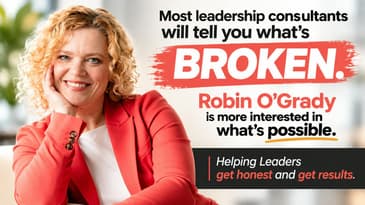
Robin O’Grady is an international speaker, fitness industry leader, corporate culture specialist, and founder of O’Grady Consulting. She is dedicated to empowering individuals and organizations to pursue attainable wellness goals that contribute to healthier, more engaged, motivated, and sustainable workplace cultures.
Robin believes wellness doesn't have to be complicated. Through simple strategies and actionable tools, she helps organizations make well-being achievable and accessible while strengthening employee engagement, team motivation, productivity, and connection.
Drawing from her diverse experience as an operations director, fitness industry leader, dance instructor, and aerialist, Robin brings energy, authenticity, and practical insight to conversations about what it takes to create environments where people can thrive.
During our conversation, we explore the relationship between employee well-being and workplace culture, why organizations should think more strategically about wellness, and how leaders can move beyond short-term wellness initiatives toward sustainable practices that become embedded in the everyday employee experience.
We also discuss the connection between personal wellness and professional performance, the importance of setting attainable goals, what leaders can do to reignite engagement and motivation, and why sustainable organizational change often begins with giving people practical tools they can actually use.
Outside of her professional work, Robin enjoys dancing, group fitness, aerial arts, and—just for fun—doing handstands. Based in Calgary with her husband and two boys, she brings her belief in balance and sustainable wellness into both her professional and personal life.
Robin O’Grady joined me this week to explore how organizations can close the gap between talking about employee well-being and making it a meaningful part of workplace culture—and why helping people thrive can ultimately help organizations thrive.
LinkedIn: @RobinO'Grady
Email: connect@robinspeaks.ca
The Strategic Priority Gap: A report highlighted by Benefits Canada found that while 49% of HR leaders rank general engagement and retention among their top priorities, only 28% view employee well-being itself as a central strategic priority.
What if organizations stopped treating employee wellness as an initiative and started viewing it as a fundamental part of workplace culture?
Robin O’Grady is an international speaker, fitness industry leader, corporate culture specialist, and founder of O’Grady Consulting. She is dedicated to empowering individuals and organizations to pursue attainable wellness goals that contribute to healthier, more engaged, motivated, and sustainable workplace cultures.
Robin believes wellness doesn't have to be complicated. Through simple strategies and actionable tools, she helps organizations make well-being achievable and accessible while strengthening employee engagement, team motivation, productivity, and connection.
Drawing from her diverse experience as an operations director, fitness industry leader, dance instructor, and aerialist, Robin brings energy, authenticity, and practical insight to conversations about what it takes to create environments where people can thrive.
During our conversation, we explore the relationship between employee well-being and workplace culture, why organizations should think more strategically about wellness, and how leaders can move beyond short-term wellness initiatives toward sustainable practices that become embedded in the everyday employee experience.
We also discuss the connection between personal wellness and professional performance, the importance of setting attainable goals, what leaders can do to reignite engagement and motivation, and why sustainable organizational change often begins with giving people practical tools they can actually use.
Outside of her professional work, Robin enjoys dancing, group fitness, aerial arts, and—just for fun—doing handstands. Based in Calgary with her husband and two boys, she brings her belief in balance and sustainable wellness into both her professional and personal life.
Robin O’Grady joined me this week to explore how organizations can close the gap between talking about employee well-being and making it a meaningful part of workplace culture—and why helping people thrive can ultimately help organizations thrive.
LinkedIn: @RobinO'Grady
Email: connect@robinspeaks.ca
Learn more about your ad choices. Visit megaphone.fm/adchoices
[00:00:00] As an Executive Leader, do you prioritize the health of your people and how engaged are you in this process? Or are you someone who prioritizes productivity and production over anything else? Well, a new report from Benefits Canada says that more CEOs across Canada have more work to do in this very department.
[00:00:28] The report found 49% of CEOs rank general engagement and only 28% view employee engagement as a top strategic priority. Perhaps we should stop viewing employee wellness as simply an initiative and view it more as a fundamental part of work culture.
[00:00:57] This week on Let's Have This Conversation, I had the privilege of sitting down with my friend Robin O'Grady. She is an international keynote speaker, fitness industry leader and expert, corporate culture specialist and the founder of O'Grady Consulting.
[00:01:19] She is dedicated to helping individuals and organizations pursue attainable goals when it comes to employee wellness, which contributes to a more healthier, engaged, and happier workplace culture. Robin firmly believes that wellness does not have to be complicated through simple strategies and actionable tools.
[00:01:46] She helps organizations make wellness more achievable and accessible while strengthening aspects of team engagement, employee morale, productivity, and connection. She draws on her extensive experience as an operations director, fitness industry leader, dance instructor, and aerialist.
[00:02:15] She prides herself on bringing energy, authenticity, and practical strategies and insights to conversations about what it will take to make people and organizations thrive and reach the fullest heights of their own potential. During the course of our conversation, we explore the relationship between employee well-being and workplace culture.
[00:02:44] Why organizations should think more strategically and how leaders can move beyond short-term wellness initiatives in favor of moving towards sustainable practices and habits that become ingrained and embedded in everyday culture. And O'Grady, join me this week to tell me more.
[00:03:14] I'm Kevin McShann. Let's have this conversation.
[00:03:19] If you're ready, I'll take a moment to welcome you to the program.
[00:03:52] And I'm super excited to talk to you about your work as a speaker in emotional intelligence and in the fitness industry. It's great to see you and happy Monday to you, my friend. Happy Monday to you. Absolutely. So, Robin, I know that you are an international keynote speaker.
[00:04:14] You go around talking to people about the importance of emotional wellness at work and how it intersects with our organizational culture and building stronger teams. So, I want to start by asking you about your zone of genius, my friend, and what makes you so fabulous. Awesome. You know, I think my zone of genius is humans.
[00:04:39] I love people and I love to see them thrive and do well for themselves. What I really love to bring to people is this idea of energy management and stress management and how they can take what they have, the body that they've been given, the energy that they've been given, and make the most out of it in their day. Yeah.
[00:05:00] So, let's talk about the intersection of energy and stress management because, you know, I always say that we make time with the things that we're prioritizing. And as leaders of organizations, we're pulling so many different directions. So, I'm curious to ask you, how do you think we effectively manage both energy and stress? And how do you think they can healthily coexist, my friend? What are your thoughts then?
[00:05:30] You know, I really talk about the simplification of both. And I think we get a little too caught up with the external and what's happening around us and to us. And we forget that all of that control actually lives within us. And so, if we can spend a little bit more time just getting in tune with what's best for our energies, then we can really make a big difference in the management of those energies.
[00:06:00] And in doing that, we actually manage the stress by taking care of how we manage our energy. So, they kind of flow from each other, I think. Yeah, absolutely. And, Robert, I wanted your thoughts on this because according to our friends of the Human Resources Directors of Canada, fewer than 25% of leaders consistently demonstrate authenticity in the workplace,
[00:06:28] while 63% of employees report leaving their previous job because they lack general and human connection with the immediate supervisor, my friend. So, how would you assess the state of authentic leadership in today's workplace? How can leaders work to improve it, my friend? What are your thoughts then?
[00:06:54] Yeah, you know, we get really caught up in the sort of social construct that is what we think is the workplace. You know people talking corporate ease and they get caught up in the idea of utilizing that kind of language and behaving in that kind of way. It's sort of become so socially acceptable that we don't, that we keep a block, that we keep a barrier from each other. And we're, you know, professional with each other, which of course I would never take away the professionalism side of things.
[00:07:24] However, we also have to just be our genuine self. And we sort of lose that in trying to be whatever we think is expected. And if we just came as we are, we would be a lot more successful with our teams because they could really get in touch with the person that they are working with or for, instead of this character that we put on when we come in because we think that's expected of us.
[00:07:54] Yeah, we need to start letting go of those things. We need to start just getting really, really back to basics, back to just our own self, like come in and manage yourself first. Once you're managing yourself, then you can easily take that down to your team. Yeah, absolutely. You know, Robin, I wanted to also ask you about the importance of, you know, emotional vulnerability as leaders.
[00:08:20] As you were just discussing, it's important that employees, the human side of leadership and that, you know, that their bosses are leaders. Leadership are people too. So I'm curious to ask you about the importance of honest, human-centered and transparent leadership.
[00:08:42] When do you think it's important for leaders to authentically show their blind spots so that they know that the people that they are in charge of leading know that they're human too? What are your thoughts there, my friend? Yeah, you know, I'm actually going to take that in a bit of a weird direction, but I promise I'll bring it back.
[00:09:02] You know, as a mother, I'm a mother of two boys, and I think that one of the things that was really successful for me with them is that when I made a mistake, I would just tell them. You know, so I would sit down, maybe I raised my voice when I shouldn't have, or, you know, for whatever reason, I, as a mother, made a mistake with that kid. Then I would talk to my kid about it. I would say to him, you know, mommy wasn't in her best moment right there.
[00:09:32] I lost control for a second, or I lost my temper, or whatever it might be. And I would share that with them. And then we would talk about, in a calm moment, we would talk about, you know, how I could do better and what that looked like for them and how that might happen to them and that they could manage that as well. And that they can apologize for that as well. So I take that same sort of strategy into the leadership role. If I make a mistake, I just say, okay, oh, I made a mistake. Or I don't know everything.
[00:10:01] I don't presume to know everything. So when I'm talking to my team, I'm really trying to get the best from them so that we can be the best as a whole, because I'm only one part of the team. So giving them the freedom and the sort of opportunity and the permission to say, hey, this is what I did. This is what I could have done better. And this is what we'll do next time.
[00:10:28] But also doing that myself so that they see that we are all just cohesively working together. We're all human. And I think those sorts of little things that you do in the day-to-day interactions really make that connection. It's that, you know, it's that small moments. Those small moments make all the difference. Yeah, absolutely. And I know that you work with organizational leaders to make workplace wellness more attainable.
[00:10:58] So when we look at the term workplace wellness, it's an interesting term, and it can mean a lot to a lot of different people. So when you consider the concept of attainable workplace wellness, I wonder how you define it, my friend. Yeah, you know, it's funny that you said it that way, because truly it is broad.
[00:11:20] You know, I've been trying really hard to find, you know, almost better words for it than workplace wellness, because it is such a broad term. So it's interesting that you pointed that out. It just affirms what I've been thinking as well. So in the end, it is really just about what you're doing to make sure that you as the leader are taking care of yourself, mind, body, and soul, and then taking that strategy and integrating that down to your team.
[00:11:49] If your team feels good about their work, and they feel good in their body and their system, if they in general are, you know, on a high, they're going to perform better. It's proven. There's so many statistics to show you that that's the way that it is. So if we can integrate things, again, it's about the day to day.
[00:12:12] We have these broad strokes, and the broad strokes are fine, but how do they represent in the trickle down that is the everyday work? We often feel like we're in a tornado. How do we find space in that tornado to pull out so we can observe what's going on and then jump back in and get in the tornado and do the work? It's really important to think about what that looks like for each individual and then what that looks like in each moment through the day.
[00:12:41] You have to do it with intention. Yeah, absolutely. So I'm curious, I'm curious, building on that, you also make the argument that leaders should think about workplace wellness more strategically and making it a strategic advantage. So I'm curious, how do you think leaders can go beyond short-term wellness initiatives and really embed it into the culture? It's all about repetition and habits, isn't it?
[00:13:12] Yeah, it is. It totally is. So it starts with the strategy, like you said. So we begin with what do we want? What is the outcome that we're looking for? We start there, and then we break it down into that day-to-day work. Yeah, absolutely. So I'm curious if we can build on that by now discussing the connection between, you know, personal wellness and professional performance.
[00:13:40] Because, you know, I like the argument that most successful leaders can get the most out of their team if they invest in sort of their emotional wellness outside of work. And that's how can we work together to lighten the load here at work so you can put more deposits in what I call the family bank account?
[00:14:04] How can we reimagine your role here at work so that you're more invigorated and giving your best? So how do you think we can connect the dots between personal wellness but also professional performance? What are your thoughts there, my friend? Yeah, I love that family bank account. That's really, really, I love, that's brilliant. It starts with intention and knowledge.
[00:14:34] So the leader often is considering their job, just like the staff, right? Just like the team, all the way down the chain. They think about this is my job, this is what I do, this is what I have to do. Where the leader sometimes is missing, just and sometimes is more actual knowledge about who their team are. Not as an employee, but as a human being.
[00:15:03] And so, you know, there's, again, there's this line of this professionalism or this sort of like corporate level that we're sort of thinking we have to keep. However, it doesn't hurt you as a leader to know a little bit about Jane, you know? So maybe Jane is changed. Something in her behavior has changed. And you're noticing that at work. Sometimes it's because of something that's going on outside of work.
[00:15:33] And we might not know that because we have never taken the time to just say, like you said to me, how was your weekend? And ask the questions and try to just know just a little bit more. We're certainly not asking leaders to sort of get into their lives of their employees because the employees might not want that, you know? But we definitely, we just need to have a bit of a broader stroke about who that person is as a human being. So we can have more real conversations with them about what's happening in their performance.
[00:16:02] Yeah, absolutely. And Robin, you may find this industry interesting because according to Manulife, Canadian workplaces lose the equivalent of 46 working days per employee each year
[00:16:19] because of health challenges and burnout with 19% of work time affected by productivity struggles rather than physical absence, my friend. So I'm curious what immediately comes to mind when you hear those statistics?
[00:16:38] And how do you think leaders have to rethink, you know, what they're asking their employees to do so that that's so completely burned down so that their performance doesn't struggle, my friend? What do your thoughts think? Yeah, you know, I was talking to some leaders this week about how often they meet with their team members to just have a conversation about everything.
[00:17:07] And it was not often enough, you know? Some companies are quarterly. You meet with all of your team maybe once or twice a year. You meet with your team to actually sit down one-on-one to have a meaningful conversation. If you want to create an environment within your workplace where the employees are satisfied, psychologically safe, feel like they're being well cared for, want to be there,
[00:17:36] you have to ask them what they want. We can't presume to know what we think they want. I worked with a company a while ago that put up a $10,000 gym in the facility in hopes of improving the workplace wellness for their employees. And so when I came in, my conversations with the employees, it became very clear that less than 2% of them were using the gym.
[00:18:02] And so they spent all this money and put all this time and thought they were doing this amazing thing. Of that 2%, a good percentage of the 2% were actually the people who built the gym. So the high-level team members, it was really for them in the end. And so the employees were not getting what they needed because nobody asked them. Nobody talked to them and said, what would work for you? There's lots of different things you can offer, you know, four-day work weeks. Like everybody knows all the different ideas that are out there.
[00:18:32] But your team is the only one that knows what's best for them. Yeah, absolutely. So I want to build on that discussion of economics and workplace wellness. Because as you said, you can put money, you can throw money at almost anything. But strategically investing that money to also get the economic return is a tricky contest, my friend.
[00:19:01] And so I'm curious, when we talk about the economic sort of impact of neglecting wellness and not investing it into the things that really matter, I'm wondering if you can talk a little bit more about the overall concerns that might develop through an organizational culture
[00:19:25] or if you misinvest in the things that you think will improve workplace wellness. What are your thoughts, Dan, my friend? You know, you've given some really good stats already today that show why these things don't work or do work. And again, I think that most companies would be absolutely shocked to hear that what their teams actually want doesn't actually cost them anything.
[00:19:53] Or very little. The budget that they need to put into place to invest into what will become their workplace wellness program or their workplace well-being program is often a lot less than they think it is. And so the key is to pull back and to actually evaluate it, involve the team in the conversation. You know, Robin, that's an interesting way that you put that
[00:20:22] because that's the exact same argument. So outside of this podcast, I also am a professional speaker and I talk to organizations about the importance of hiring people with disabilities because I was born with cerebral palsy. And I found out at nine that I wouldn't be able to walk for the rest of my life without assistance because of the severity of my disability.
[00:20:47] And when I graduated college, one of the reasons I became a speaker was because I wanted to be a sports reporter. And I was rejected 10 consecutive times by news directors who told me I was qualified but because of my disability at the time. Now, I graduated college in 2010. So at the time, they told me that my disability would be a liability
[00:21:14] because they didn't think they had the infrastructure to support me. And I make the argument that, you know, I used to work for the Ontario Chamber of Commerce, for example, and we did a study that showed that if you bring someone on with a disability, 63% to 80% of the time, accommodations cost less than $500.
[00:21:39] So I'm curious to ask you from your perspective working with corporate leaders, what sort of competitive advantage does hiring people with disabilities present to an organization? What are your thoughts there, my friend? Yeah, gosh, you know, that's so funny because you're right. The numbers just don't add up to what people believe that they do. So often, it's so much less than they think,
[00:22:06] but they've just created this inflated idea of what it has to look like. I think that bringing people with disabilities into the workplace, like many things, you know, that sort of inclusion in general is so valuable to the workplace in, gosh, there's so many ways. You know, it really is just about bringing the best person for the job, regardless.
[00:22:29] And so if that person is you, then not bringing you in simply because they might have to put in some slight infrastructure is crazy to me, because the value to them will be exponential on top of that. They'll make that, you know, they'll make the money back right away. I had an employee that worked for me with Down syndrome at the last place that I was in, a bricks and mortar building myself. And he brought the most value.
[00:22:59] There was no better person for that job. Absolutely no better person for that job. The attention to detail, the energy, the customer service that he brought was above and beyond what many of the other employees were able to bring. And so using the disability as a reason to not hire, to me, is just crazy. It should be the best person for the job. You're qualified. You belong. Period. Yeah, absolutely.
[00:23:27] And I can already tell that when you get speeches, they're full of high average and grade fives. And I know that your presentations are designed for organizations that want to revitalize their culture and strengthen their employee engagement and, you know, reignite both motivation and productivity. Productivity.
[00:23:54] So tell me, how do you connect with leaders on an authentic level yourself? And what are the best parts about your presentation? What do people most remember, my friend? Yeah, the energy is part of it. You know, I definitely am high energy. And if you follow me on any of my platforms, you'll see that for sure.
[00:24:18] But I think more so is that I'm a little bit tough love and I'm a lot about action. And so it's really critical to me that when you leave my sessions or when I come in to consult with you, that you have things that can be implemented right away. So small tasks that can be implemented immediately that lead to the bigger outcomes that you're looking for.
[00:24:44] Yeah, and as a speaker to yourself, I'm always fascinated to ask speakers about what do you think authentically connects with an audience, something that they'll remember when you leave 90 days from now because it's all about connection and value proposition.
[00:25:08] So what's the value proposition that you offer as a speaker that you hope people or organizations take away 90 days after you're gone, my friend? What are your thoughts? You know, it really is about coming back to the simplification of these things. It's taking everything and remembering or realizing, coming to realize that it doesn't have to be as hard as you think it does.
[00:25:36] Everything is a little bit easier than you actually think it is when we can sort of bat away all of that external noise and just come back to what is best for you, the individual, first. Once you do that, it's a revelation. And what I'm presenting to them is, in the most genuine way,
[00:26:00] the truth of how that's possible and actual action that they can take to make it happen. Yeah, and I know that your incredible experience results from your time as an operations leader and a fitness industry expert. And you've also dedicated part of your life to the aerial arts, my friend.
[00:26:29] So no one will ever accuse you of not being ambitious, okay? So I'm curious. How have those different experiences shaped your own philosophy about leadership, emotional wellness, and organizational culture? Because I know they're the pillars of O'Granny Consulting, my friend. So tell me more. Yeah, you know, I have two industries that I really hold dear,
[00:26:59] and that is the hospitality industry and the fitness industry. The hospitality industry was my first career, and then I moved into the fitness industry. And I always say that they're basically the same, because in the end, it's about customer service, it's about being front-facing and businesses that require that sort of specialization. I believe in mind, body, and soul buckets, right? So those buckets are draining constantly. They're being drained all the time.
[00:27:28] Your mind is being drained, your body's being drained, your soul is being drained, because of just the output that we're putting out into the world. And so it's really important to me that we balance those three buckets. It's often we're a little bit skewed to one or maybe two, but generally we're giving one way more than we're giving the others. And that filling of those buckets happens at work, but it also has to happen outside of work. And so you can't just fill your mind bucket at work.
[00:27:56] You should be fulfilling that outside of work things as well. And for me, obviously, I'm a very physical person. And so that, you know, I do aerial arts, I dance, I am in fitness. I'm very, very physical. I recognize that about myself. So I gift myself more on that side to fill that bucket because I'm draining that bucket a lot more than the other one. And so I really make sure that those buckets remain balanced and that I'm setting myself at this sort of equilibrium all the time.
[00:28:27] Yeah, absolutely. You know, Robin, I'm curious to get your thoughts on this because our friends over at Bloomberg News, they did a study earlier this year, and they found that 68% of Canadian job seekers report changing aspects of their own personality to fit into workplace culture. While 59% say that their work personality
[00:28:53] is significantly different when they leave their office, my friend. So why do you think those numbers tell us about belonging, psychological safety in the workplace and employees' ability to be their authentic selves? What are your thoughts, my friend? Yeah, I mean, it's very telling that the psychological safety in our workplaces isn't there yet. It speaks volumes.
[00:29:23] If you cannot come to work and be yourself and be your most genuine self, that's a problem. That's a problem that that workplace needs to solve. Yeah, so what's the best way that you think the corporate side can meet the employer side, my friend? What are your thoughts? How do they fix it? Yeah, can I be honest in saying that they need to set some time aside
[00:29:52] to deal with knowing every individual? I think sometimes we get too big or so big, I mean, never too big, I guess, but so big that we become disconnected from our team and it becomes a job and the work and we forget that the work is being done by humans. And so level by level, there is a strategy that has to happen.
[00:30:20] What I do with some leaders is I pull them away from their workplace for a two or three day retreat and we sit down and we just hash it out and we go through every single level, we go through every single person and we just make sure that we have a connection and an engagement with each of those people. And again, the outcome when we come back comes down to day-to-day action.
[00:30:49] One of the first things as an operations director that I would do is I would sweep the entire company. I would go through and I would say hi to every person. I would talk to every person. I would just have a moment, just a small moment with every single team member. So they knew that I was accessible to them. So they knew that regardless of how many layers above them I was in the hierarchy that I existed and I existed for them. It's about service leadership. Yeah, absolutely.
[00:31:19] And to that point, Rob, and I used to be the lead job developer in the YMCA here in Windsor for a time. I used to tell the people that I counseled about job preparedness is I always tell them the best person that you could be involved with or make a great first impression with is the secretary because the secretary of an organization
[00:31:48] says everybody at the reception desk. So I'm curious, how do you think leaders can always encourage the people that they want to bring into an organization and those that they want to make a great impression on about workplace culture and the importance of organizational wellness? How important is it?
[00:32:17] Do you think leaders have to lead when making a first impression because it's all about that reception they get when they walk in the door, isn't it? Yeah, yeah. You know, I guess it does depend on the type of business and so there is some change within different businesses. Some places don't have a reception or things like that, but every person on the team should feel like they are part of what makes that team function.
[00:32:46] So whether you are the CEO or whether you are the nighttime cleaner, each of you has an incredible value to the whole of the team, but that only counts or it only works if the leaders are ensuring that everybody on every level knows that. And so in your example, the reception, that person needs to understand how important they are
[00:33:14] and that that role is incredibly important to the success of the company. They don't know that if the leader is not sharing that with them. So it's up to the leaders to make sure that every person in every section and every corner of that company understands that their job brings value to the whole team. It's more important than the other. Yeah, absolutely. You know, Robin, I want to finally ask you,
[00:33:42] before I ask you a couple of personal questions about workplace accountability and wellness because I know that you believe that leaders need to take accountability for their actions and it's tied directly to the emotional wellness of workers. So I'm curious, how do you think workplace accountability and our physical sort of mindset when we come into work,
[00:34:09] both physically and manually are interconnected because accountability from the leader is key, isn't it? Yeah. You know, it comes back to intention and it comes back to consistency. Without those two things, everything sort of falls apart. And sometimes it falls apart slowly so you don't really catch it until it's gone quite a ways away. Sometimes it falls apart immediately.
[00:34:39] But without intention and consistency of action, we're in trouble. You know, so leaders need to make sure that this is always at the highest top part of their mind, that their leadership, that their work is bringing about everything else down the chain. So their role modeling for everybody is critical. Yeah, absolutely. So, you know, outside of work, Robin,
[00:35:08] I know that you're a huge believer in the power of dance, group fitness classes, and we've already talked about your aerial arms, my friend. And as you mentioned, you're a mom of two. So tell me about your passion and purpose outside of work and how they fill your intentional cup of gratitude and sort of your compassion for passion, my friend. Tell me more. Yeah. You know, when I allowed myself to think about
[00:35:37] what makes me the best human that I can be, it changed everything for me. I wasn't trying to please or trying to do anything for anybody else. I started taking care of myself first. And then in doing that, I became so much more of service to everybody around me in such a much cleaner and genuine way. And so I am the best mother that I am
[00:36:07] because of the things that I allow myself to do for me. You know, allowing myself to do the things that make me happy, like dance, like aerials, those sorts of things, makes me a better person. And that makes me a better mother and a better wife. And so my ability to allow myself, to gift myself those things, some people don't do that because they feel like it's selfish. I say be selfish. Let yourself be happy. Give yourself the gift of taking care of you.
[00:36:37] And then you will be more better, more capable of taking care of everybody else. Yeah, absolutely. And Robert, I'm curious because we're both Canadians. So I know you're coming or you live in Calgary. And I'm curious for you, what is the best part about Canadian culture and living in Canada because it's a great place to live, isn't it? It's a great place to live. I love my country.
[00:37:06] I love my province and my home city, Calgary. And I was actually born here, which is a rare thing. Many, many people were not born in Calgary that are still here. And so I'm proud to say that. You know, it is such an honor to be part of a country that no matter where you go in the world, you are known to be nice. You're known to be kind. You know, like there really isn't much better than that. Everywhere you go in the world, you're accepted because we're known
[00:37:36] for being kind and nice people. That's pretty cool. Yeah, you know, I have to tell you a quick story and then I'll ask you my last question. So my speaking coach, I met, he originally is from Boston, but when I first met him, he lived in Austin, Texas. And when I first met him, I kept saying thank you and, you know, sorry when I thought I was making a mistake. And he said,
[00:38:06] you know, you don't always have to say thank you and sorry. And I told him it's my Canadian blood in me and I couldn't apologize. No, I'm only kidding. But that's, the Canadian in us, we're always super cognizant of the people and things around us, aren't we? Yeah, that's right. Yeah. It's really special. Absolutely. Robert, my final question for you
[00:38:35] is about legacy, ambition, and, you know, blending the two to break home a story of impact. You know, I am a huge believer in the power of self-reflection and, you know, I'll tell you just a quick story about myself. So I was born three months premature and I wasn't supposed to live past three and a half and I grew up with a stutter because of the
[00:39:05] results of my disability. Sometimes my words in my brain came out faster than I wanted them to. So I spent seven and a half years in speech language therapy to get rid of the stuttering aspects of my disability. So I'm curious, would you look at your life and the totality of your professional influence and the ambition that you hold
[00:39:34] with the goals that you have? How do you want your legacy to be defined, my friend? Yeah, you know, I really, with intention, go out into the world hoping and putting forth the energy that anybody that comes in contact with me leaves a little bit happier, maybe a little bit better, but definitely being glad that they met me or they were in contact with me for that day.
[00:40:03] I really work for that every single day is to bring joy and energy and happiness to the people that are around me. I really hope that that is my legacy and that's how I'm remembered. Yeah, absolutely. And since you brought it up, I'm curious to finally ask you about the connection of happiness and resilience in the workforce and how do you think those are interconnected in today's workplace culture?
[00:40:33] What are your thoughts there, my friend? And it's, again, well established in literature. You can find all kinds of content about this. When people find happiness and joy at work, they will give you so much, you'll get so much more out of them, but they will also stay for so much longer. One thing starts to crack, it becomes a lot of things. And so that trail
[00:41:01] of dissatisfaction in the workplace can happen very, very quickly. So it's really important that as leaders, we have our eyes wide open to what's happening with our teams. And so do I think that that resilience in the workplace is affected by their happiness in the workplace? 100%. Yeah, absolutely. Finally, Robin, tell me if people want to get connected with you or bring you into speech.
[00:41:31] What's the best way they can do that? Yeah, you can reach me on LinkedIn, Robin O'Grady. You could email me at connect at robinspeaks.ca and I'm across all social media platforms. So if you want to see some aerials and things like that, you can find me on other places too. Absolutely. Well, I have to tell you, LinkedIn is the new Facebook for business people, isn't it? Yeah, that's right. Yeah. Absolutely. Well, Robin, I want to thank you
[00:41:58] for getting up early to talk to me this morning and celebrating both Canadian culture and wellness at work, my friend. I really enjoyed our discussion and it was a real privilege to engage in conversation with you and I want to thank you for being here, my friend. It's most appreciated. Thank you so much for having me.