The global video game industry is a billion-dollar business—and has been for many years. In 2025, revenue from the worldwide gaming market was estimated at nearly $522.5 billion, with the mobile gaming market generating an estimated $126 billion of that total. Despite record-breaking revenues, the industry’s growth rate is projected to slow in the near future, according to Statista.
So, as the gaming industry evolves, where will the next generation of innovation—and investment—come from?
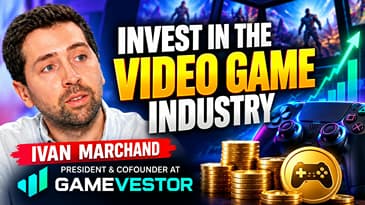
On this episode of Let’s Have This Conversation, I sit down with Ivan Marchand, President and Co-founder of Gamevestor, a regulated European crowdinvesting platform designed to open video game financing opportunities to individual investors while helping independent studios access the capital they need to bring new games to market.
Before launching Gamevestor, Ivan spent more than 15 years building and scaling digital businesses across Europe, the Middle East and Africa, including roles at Google, Amazon and Electronic Arts. His career has existed at the intersection of platform growth, strategic partnerships, revenue ownership, gaming, technology and entrepreneurship.
At Gamevestor, Ivan has helped build the business from the ground up, raising more than €1 million and reviewing more than 400 game studio applications while developing a new approach to connecting investors with early-stage opportunities in the global gaming market.
During our conversation, we explore the economics behind the video game industry, the challenges independent studios face when trying to secure funding, what investors should understand about financing video games, and why a bigger development budget doesn't necessarily guarantee a bigger return.
We also discuss what Ivan learned during his time at some of the world's largest technology and gaming companies, what it takes to scale a digital platform, how strategic partnerships drive sustainable growth, and how crowdinvesting could reshape the relationship between game developers, investors and players.
As gaming continues to mature into one of the world's most significant entertainment industries, this conversation examines an important question: Could opening access to video game investment help fund the industry's next generation of great ideas?
For more Information: https://www.gamevestor.co/
LinkedIn: @Ivan Marchand
Learn more about your ad choices. Visit megaphone.fm/adchoices
[00:00:00] The global video game industry is a billion dollar business in 2025 alone. Revenue from the worldwide gaming industry was estimated to land at 522 and a half billion dollars with mobile gaming accounting for approximately 126 billion of that total.
[00:00:28] Despite the record breaking profits and growth, the industry growth rate is expected to slow in the coming years according to our friends over at Statista.
[00:00:44] So the question remains, as the gaming industry continues to evolve, the question is, where will innovation and investment coincide and intersect to ensure that the industry continues to remain viable?
[00:01:08] On this episode of Let's Have This Conversation, I sit down with my friend Ivan Marchand, who is the president and co-founder of GameVestor.
[00:01:21] A regulated European crowd investing platform designed to open up video game financing opportunities for individual investors while helping independent studios access the capital they need to bring new games to market.
[00:01:46] Before launching GameVestor, Ivan spent more than 15 years scaling digital businesses across Europe, the Middle East, and Africa including roles at Google, Amazon, and Electronic Arts.
[00:02:06] His career has existed at the intersection of platform growth, strategic partnerships, revenue ownership, gaming technology and entrepreneurship. And at GameVestor, Ivan has helped to build businesses from the ground up, raising more than 1 million euros.
[00:02:33] While also reviewing over 400 game studio applications. While also developing a new approach which connects investors to more easy early stage opportunities. In the global gaming market, during the course of our conversation, we explore the economic realities that
[00:03:01] the video game industry is currently absorbing and undertaking and the challenges that independent studios face. When trying to secure funding, what investors should understand about the financing it takes to successfully develop and bring video games to market.
[00:03:28] And why sometimes the bigger development budgets don't necessarily translate into the biggest of returns. And Ivan joined me this week to tell me more. I'm Kevin McShannn. Let's have this conversation.
[00:03:48] If you're ready, I'll just take a moment to welcome you to the program.
[00:04:23] And I'm super excited to talk to you about GameVestor. Great to see you. And thanks for being here, my friend. Thank you for having me. Absolutely. So, Ivan, before we get into the substance of our conversation, I wanted to start by asking you to sort of characterize and sort of evaluate the current state of the video game investing industry. What do you think it is?
[00:04:51] And why do you think it needs to improve, my friend? Sure. So, you know, it's all started, you know, right now we're still in the in the crisis, in the investment crisis in the video game industry. It started with COVID where, you know, a lot of people played and bought video games. So investments were rising up.
[00:05:15] And then after COVID, you know, people went back to work and it went down. So a lot of investments didn't pay off. And since then, it's been very, very difficult before it was, it became a buyer market. Right. So nowadays, video game studios, even the good ones, they struggle to get their games funded.
[00:05:43] And yeah, that's why, you know, six years later, we are still in this crisis. Yeah, absolutely. And before I ask you about GameVestor, I'm curious to get your thoughts on the roadmap to get the video game industry back on solid footing, my friend.
[00:06:04] How do you think we can continue or reinvest into the video game industry so that the video game sort of founders have the financing they need to develop new video games? What are your thoughts there, my friend? So I think it will become more and more difficult for three plays. Right.
[00:06:27] I think the big publishers, they will need to focus on their strongest IPs and creativity will come from the smaller studios and the indies, right? The studios that can take more risk. I think that's the way the gaming industry is being shaped right now.
[00:06:49] Of course, like you have a lot of revenue that is drive by titles like Fortnite or even like no, can say platforms like Fortnite, Roblox and Minecraft. But when it comes to video game, like the, I wouldn't say the traditional ones, the premium PC and console video games, I think, you know, the industry will be split in two. You will have the big AAA that we know, they will stay the same.
[00:07:20] They will not show they will innovate much. And their real innovations in terms of gameplay, in terms of creativity, this will come from the indie industry. That's the trends that I'm seeing right now. Yeah.
[00:07:38] And tell me about being the co-founder of GameVestor, which I know is a regulated European investment platform designed to open up video game financing to individual investors. I'm curious, what problem did you see in the traditional game finance model that compels you to create GameVestor in the first place, my friend?
[00:08:05] Sure. So, we saw a gap between the people making the games and the people who would like to invest in them. A talented indie studio can have a compelling project without being the right fit for a publisher or a venture capital fund. A publisher has its own portfolio opportunities and the VC usually invests in the company with an eventual exit in mind.
[00:08:29] Meanwhile, as an individual investor, who, you know, will understand and love games, the only thing you can do when you want to invest mostly is invest in a large listed publisher. And this is very different from backing a particular game and getting money out of it. So, we built GameVestor to connect those two sides. Studios can seek project financing and individuals can access opportunities selected by industry experts.
[00:08:59] So, yeah, it's the whole system of bonds linked to games commercials, basically royalties. But the point here was to create a new financing route for games that deserve a serious look while giving investors the information to make their own decision.
[00:09:17] Yeah, absolutely. And I know before launching GameVestor, you spent more than 15 years in technology and gaming, including roles at Amazon, Google and Electronic Arts, my friend. And so, when you look across those experiences, what lessons about technology and consumers and building businesses ultimately prepared you to become your own entrepreneur?
[00:09:47] What sort of lessons did you learn from those experiences, my friend? I think the biggest lesson is that having a good product and building a good business are connected, but they are not the same thing. You need to understand who the customer is, how you reach them and why they come back. So, across those roles, across these companies, I worked around platforms, partners and commercial decisions.
[00:10:16] And that teaches you how to look beyond your own part of the business, right? A marketing decision affects revenue, a platform decision affects discovery and a partnership only works if the other side can deliver too. Large companies, the good thing about the large company, they teach you discipline, right? You measure results, you make priorities and you are being accountable for what happens next.
[00:10:42] As a founder, you need that discipline without carrying over all the complexity and the bureaucracy of those large companies. You know, at Investor, the feedback is very direct with small team. And if a studio cannot understand our model or an investor finds the experience confusing, we have to fix it. You cannot hide a weak customer experience behind the size of the organization.
[00:11:08] And I know that a motto, rather, of your career exists at the intersection of platform growth and strategic partnerships and revenue ownership. So, what does the intersection mean to you? And what have you learned about creating, you know, partnerships?
[00:11:30] Because I believe that partnerships are sort of the nucleus of any business, my friend, where everyone has a meaningful opportunity to benefit. What do you want people to know about the importance of partnerships, my friend? You know, when you're responsible for revenue, partnerships stop being just an announcement or a logo on the slide, right?
[00:11:57] You have to ask, what will actually happen because we're working together? Who does what? And how do we measure whether it works or not? The most useful question is whether each side still has a reason to support the partnership after the initial excitement has passed. If one side carries all the costs while the other captures the upside, that becomes a problem.
[00:12:23] And that thinking matters against the two, obviously, right? Because the studios, they need enough resources and incentive to deliver. And investors, they need understandable terms and reporting. And the platform obviously needs a sustainable business. So, you have to design for all three, including what happens when a project falls behind. Yeah, absolutely.
[00:12:49] You know, Ivan, I also wanted to ask you about your philosophy and sort of perspective on the critical questions that studios have to ask themselves, whether they're independent or part of a bigger conglomerate about. The critical questions that you have to ask before you want to invest in a video game or create a new one.
[00:13:19] What do you need to know about your customer acquisition and sort of the industry trends before you develop or invest in video games? What are your thoughts there, my friend? So, you know, a great idea makes you want to play the game. An invisible project also gives you reasons to believe the team can finish it, reach an audience and make the economics work. So, I will break it into three questions.
[00:13:49] Can they build it? Who will buy it? And does the budget make sense for that audience, right? So, a playable build of the game can tell you more than a very polished pitch. And a production plan shows whether the scope is realistic or not. A marketing plan can explain how players will discover the game rather than assume that being good will be enough, which is the case with many studios.
[00:14:15] So, we look at how a team responds to difficult questions as well. Can they explain their assumption? Can they adjust the scope without losing what makes the game interesting? So, the notion is that creativity and commercial discipline support each other. And a realistic budget gives the creative idea a better chance of reaching players. Did I answer the question right? Yeah, absolutely.
[00:14:42] I mean, I know that you, Stuart, are a game investor by building a crowd-investing platform for, you know, the gaming industry from the ground out by raising more than 1 million euros and reviewing over 250 studio applications. So, what do those applications teach you about the current trajectory of the gaming industry?
[00:15:12] And what do you want people to know about the difference between having a great game idea and having the investable business? What are the distinctions between the two? I know we've sort of touched on it briefly, but what do you want people to know about the sort of different factors they have to consider, my friend? Sure.
[00:15:40] That would be, yeah, very much linked to what I just said. I would say. It's, you know, a great idea makes you want to play the game. And an investable project gives you reason to believe the team can finish it, reach an audience and make the economics work, right? Then I tell you all the things we will look at, but that's really it.
[00:16:09] It's a great pitch, sells the possibility. An investable project explains the path. And I think that's the key here. Yeah, absolutely. And you also make the argument that sometimes a bigger budget doesn't always mean a great return on the investment.
[00:16:32] And, you know, one of the big comparisons you make is talking about Spider-Man 2 and, you know, and how big that budget was compared to a more independent studio. So tell me, why do you think a bigger budget doesn't always mean a great return on investment, my friend? Yeah, that's true.
[00:17:00] You know, very often people think it's the case, it's currently the case with the GTA 6, right? They think, oh, the game will generate so much revenue. That is true. But then it doesn't necessarily make it, obviously GTA will be a great investment, but, you know, a bigger product, you know, the production does not automatically make a very good investment with a strong multiple, right? That's the real difference here.
[00:17:30] The revenue that it generates versus the multiple. If you put $1,000 into, let's say, Spider-Man 2 and $1,000 in peak, then at the end you get much more return on investment with peak. Why? Because a blockbuster can generate far more money in absolute terms, while a smaller game produces a much larger multiple of its budget, right?
[00:17:57] So if the initial cost is modest and demand is strong, the multiple is bigger. We'll see if a low budget does not create demand, that's a problem, right? But at Game Investor, we look for a credible relationship between the budget, the team and the addressable audience. Yeah. Yeah. Yeah, absolutely.
[00:18:22] And you also said that more capitalists are raising the standards before they invest in studios or individual video games, and they're looking for things like evidence and whether they're getting engagement by the video game community,
[00:18:45] and whether, you know, there are demos that can really make sure that the return on investment is viable. So I'm curious, when you look at what investors are looking for today, I'm curious, how much do you think engagement and proof of concept has really risen to the top
[00:19:15] before anyone will invest into a video game, my friend? What are your thoughts then? It's always important, right? Evidence is healthy, provided you ask for the right evidence at the right time. You cannot demand launch level 70 from a team that is still testing its central ID and that's very often what's happening today.
[00:19:42] Before that, like not so long ago, five, six years ago, that was not the case. Today it is. So early on, I would rather see a small prototype that proves something distinctive than an expensive presentation that proves very little. Later, it becomes reasonable, of course, to expect stronger production planning and evidence of player interest.
[00:20:04] But the danger is turning one metric today's wishlist into a universal admission ticket. You have different genres that will attract different audiences in a different way. So a small but engaged community may tell you more and will be maybe more powerful than a much larger audience that is not interested in buying.
[00:20:31] And yeah, originality does not mean we should stop asking commercial questions. It means that we should be thoughtful about how we test the answers. Yeah, absolutely. And I'm just curious for you personally, where does your passion for video games and technology come from? And why are you willing to stake sort of your professional reputation on the future of video games?
[00:21:00] My friend, why are you so passionate about the field? And what do you want people to know about the, you know, the positive sides of getting into the video game industry? My friend, what are your thoughts then? I think that, you know, the first reason why I'm so passionate about video games is that I started very, very early, right? A few decades ago, parents would just let their kids play from a very young age.
[00:21:31] So it's not like today where you need to keep your kids away from the screens until they are like 10 or older. So, yeah, I started very, very early. And, you know, when I saw like originally a bit more than three years ago, when I met my co-founder, we originally wanted to create our own gaming studio.
[00:21:56] And we spent like more than a year talking to publishers talking to VC, trying to get the funds for the studio. And people would say, oh, you know, it's a great idea. And, you know, two years ago, you would have left with your money already. And, you know, that's when we thought, okay, there is something wrong in the industry. There is, you know, a huge potential here.
[00:22:19] We don't want another studio to that with potential to, you know, just have to stop their dream because of funding. So that's why we decided to switch and pivot to create GameVestor. It's because, yeah, we knew how weird the market was and how weird the market still is when it comes to funding video games.
[00:22:46] And to me, that's the biggest issue we need to fix in the industry today. Yeah, absolutely. And Ivan, you know, I wanted to also ask you about the role that AI has played in, you know, investors' decisions to invest in video games and video game studios specifically.
[00:23:11] And, you know, AI has really changed the way that capital flows within the industry. So I'm curious to get your thoughts on the impact of AI and how it'll affect video game investing and the video game industry as a whole. What are your thoughts there, my friend?
[00:23:35] Like many other people, I think AI is useful when it removes repetitive work or helps a small team explore ideas faster. That can be part of testing, prototyping, localization with a human review. It's always better, right? And proper attention to IP material.
[00:23:58] The creative direction still needs someone with a taste, with intention and responsibility for the result. Making more content is not the same as making a more meaningful experience. And usually it doesn't pay off in video games, at least. If a production becomes easier, we may also get more competitions for player attention on the other side, right?
[00:24:24] So yeah, discovery, identity and trust could become even more important. So yeah, my test will be simple. So does the AI tool help the team make a better game for the player? If so, that's great. Saving time is valuable, but only if the final experience still deserves that player's time. Yeah, absolutely.
[00:24:49] And one of the things that a game investor offers is the chance for early stage investors to get into the global video game investing market. And I know that you're based in the EU in Switzerland, my friend.
[00:25:10] So I'm curious about helping early stage investors break into a traditionally competitive and expensive market. And why this is such a big pillar for a game investor. And what do you want people to know about it, my friend? So I think, sorry, I'm not sure I understood your question.
[00:25:38] Yeah, I know that a game investor works with early stage investors to get them into sort of the global marketplaces, video games. And I'm just wondering if you can break down the importance of that to sort of level the playing field and make the video game investing industry more inclusive. What are your thoughts there, my friend?
[00:26:07] So I think it's very much linked to what we were discussing earlier, right? Today, as an investor, you don't have a way to invest in a video game unless it's, you know, you buy shares of Take-Two or electronic cards, which I don't think you can do anymore.
[00:26:30] So while, you know, gaming is a $200 billion market and still you cannot, the market is not really investable for, you know, individual people. While you can, it's a high risk, high reward financial product, right?
[00:26:52] Obviously, you will have lots of games that will fail or will barely, you will barely refund yourself on those projects. But if you invest, once again, I'll take the example of Peak, but there are many others, right?
[00:27:09] Where if you invest in a game like this, and all of a sudden, or like the Chameleon game, all of a sudden, it becomes a global hit overnight, then it's a jackpot, right? So it's the model that publishers have been using for decades now. That's why, you know, for years and years, publishers, they were funding 10 games.
[00:27:39] And out of those 10 games, you would have like one, two, three hits that would make so much money. They would refund all of the other games, plus make extra money. So yeah, that's a great model. And I think for the investors who are willing to take the risk, because once again, it's a risky product, that's worth it.
[00:28:05] And you know, after building Game Investor, I'm also curious to ask you, after spending years inside major technology and gaming companies, how has your personal definition of entrepreneurial success sort of evolved over the years? My friend, what do you think it means to be a successful entrepreneur in today's modern climate?
[00:28:34] What are your thoughts? You know, like, very naively, you think about being on stage and giving talks and things like this. But being, for me now, a successful entrepreneur is showing growth, being able to show growth and revenue, right? Because that tells you, if you're building something people value and whether the business can keep operating and grow.
[00:29:06] But yeah, as a founder, it's harder to separate those numbers from the way they are achieved. So success would mean building a company that deserves to exist over the long term.
[00:29:38] So, yeah, my definition is becoming less about an isolated milestone or event. And more about something repeatable. Can we create value? Can we earn trust? And can we keep doing it without compromising the reasons we started? Yeah, absolutely. I'm curious to ask you about launching video games within the first 90 days.
[00:30:06] And I know that you believe that it can be an enormous opportunity to prove a proof of concept if it goes well. It really gives you the evidence-based sort of evidence you need to prove that a concept is good or whether it isn't. So, I'm curious.
[00:30:29] How do you view a successful launch and what questions do you think investors and video game creators should ask themselves about whether they've had a successful versus an unsuccessful launch? What are your thoughts there, my friend? We should start with the assumptions made before launch. Because a good result for a focus in the independent game may look tiny next to a blockbuster.
[00:30:58] So, we need the right comparison in regards to the project's own economics, I would say. For a premium game, I would look at net sales and revenue against the forecast. The price actually achieved a refund as well. A review, of course. And how demand is evolving after a few days, a few weeks, right?
[00:31:26] Strong player feedback but weak awareness suggests a different problem from strong awareness and poor conversion. For instance, you know, even with a big game, technical complaints may point to something fixable. But a lack of interest in the core experience is more difficult to solve, right? So, a game that needs more time should have evidence supporting that view, plus enough resources for a realistic plan.
[00:31:55] Giving it time is not a strategy by itself. So, yeah, the first 90 days are useful but general and release models matter. For instance, if you release in early access. Or if you have a premium launch or a live service game, you know, these are very different 90 first days. Yeah, absolutely.
[00:32:20] And you also talk about player feedback when we're talking about monitor-zizing or making money off games, my friend. So, when we talk about our revenue strategy or monitor-nizing games, I'm curious, how big is, you know, player feedback when we're looking to see if our revenue model or revenue stream is a successful one?
[00:32:49] And what are your feelings on the ability to pivot our sort of monetization strategy? If it isn't working, my friend. So, what do video game creators and studios need to know about feedback and how it's related to how we make money in the video game industry? Yeah. Well, feedback is key.
[00:33:16] And when it comes to monetization nowadays, you have so many ways of monetizing your game, right? It's very different depending on the games. But if you get negative feedback, which is most often the case with gamers, first thing is to correctly understand the complaint. Is the issue the price? Is the issue the value offered?
[00:33:44] The timing or a mechanic that feels unfair? I mean, if you're not aware, then you need to check the behavior alongside the feedback purchases, refund engagement and repeat spending where it's relevant. And sometimes, especially with small studios, the right response is better communication. But sometimes, the offer itself will need to be changed.
[00:34:09] But protecting a monetization model that damages the trust can be more expensive than accepting a lower forecast. And from an investor's perspective, I would want the team to explain the evidence, the alternatives and the revised economics. And material changes also need to respect their relevant agreements, of course.
[00:34:33] So ultimately, sustainable revenue comes from players who feel the experience is worth paying for. The threat sheet needs to reflect that relationship, not fight it. Yeah, absolutely. And Ivan, my final question for you today, my friend, has to do with your own individual, personal and professional legacy, my friend. And how do you want your legacy to be defined? Ivan?
[00:35:02] Oh, that's a big one. I think I would like people to feel that working with me, help them build something valuable, I guess, that matters to me more than a particular job title or headline.
[00:35:19] Professionally, I really hope that GameVestor will help good teams, good studios bring games to life while giving more people a better, formed way to participate in that industry. Once again, it's a huge industry and not so many people are aware of that. You know, it's bigger than cinema and music combined.
[00:35:46] So if we help create opportunities that would otherwise have been missed, that would really mean something. But I would also want the people involved to say we were honest with them. Not every project will work as planned. How we behave in those moments will say as much about us as any successful launch. Yeah, absolutely.
[00:36:10] Ivan, if I would tell you, if people want to get connected with yourself, fortunately, or a game investor, what's the best way they can do that, my friend? They can search for me on LinkedIn. There are so many people with the same name that I have. Or they can directly go to game investor dot co and contact us whenever they want. Absolutely.
[00:36:37] Well, you know, Ivan, I want to thank you for providing your expertise and insights on the video game investing industry. The good work that you're doing to provide financing to video game investors and for drawing me today to engage in conversation about the future of the video game industry.
[00:36:59] I think that's a great pleasure to be here, and I want to thank you for being here, my friend. Thank you, Kevin, for having me.