
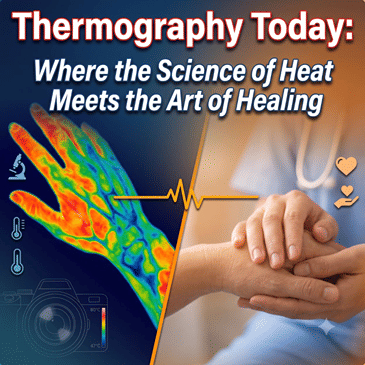
Medical infrared thermography (IRT). Beyond typical house-insulation heat maps, we look at how this physics-based technology maps inflammation, vascular health, and nerve damage.
We break down the hard physics (including the Pennes bioheat equation), address ongoing controversies in breast cancer screening, discuss how skin tone affects emissivity, and explore the cutting-edge AI frontier known as Thermomics.
Video Timestamps
0:00 - Introduction: Where the Science of Heat Meets Healing
1:45 - The Physics & Physiology of Human Heat
3:30 - Skin Tone Nuances: Is Thermography an Equitable Tool?
5:10 - Clinical Applications: Diabetic Feet, Burns, and Vascular Disease
7:40 - Mass Fever Screenings & Public Health Tracking
9:15 - The Breast Cancer Controversy: Standalone vs. Adjunct Data
11:55 - The Post-74 Screening Gap for Canadian Women
14:10 - Why Thermography Misses Deep Tumours (Thermal-Signature Equivalence)
16:35 - What is the Cold Stress Challenge?
18:40 - The Future of AI and Thermomics
21:10 - Practical Costs, Clinic Protocols, and Hardware Evolution
Like, share, and subscribe to the Channel for more episodes.
Connect with Ida Fanelli
www.Linktr.ee/idafanelli
#Thermography #ThermalImaging #MedicalPhysics #Thermomics #IntegrativeMedicine #PreventiveHealth #ScienceMeetsSelfCare #AIInHealthcare
00:00:00 --> 00:00:03 Welcome to Where Science Meets Self -Care with
00:00:03 --> 00:00:06 Ida Fanelli. With over 30 years in beauty and
00:00:06 --> 00:00:09 wellness and a background in medical science,
00:00:09 --> 00:00:12 Ida blends clinical knowledge with holistic care.
00:00:13 --> 00:00:16 Each week, she and her guests share insights
00:00:16 --> 00:00:19 to help you achieve healthier skin, balanced
00:00:19 --> 00:00:23 energy and empowered self-care. Now, here's
00:00:23 --> 00:00:32 your host, Ida Fanelli. You may have seen thermography
00:00:32 --> 00:00:37 used on houses where colourful heat maps show
00:00:37 --> 00:00:40 where warmth escapes through poorly insulated
00:00:40 --> 00:00:44 walls. The same technology, refined over time,
00:00:44 --> 00:00:48 can also be used on the human body to reveal
00:00:48 --> 00:00:52 hidden signs of inflammation, nerve damage, blood
00:00:52 --> 00:00:55 vessel issues, and even early signs of disease.
00:00:56 --> 00:01:00 Medical infrared thermography is a complex field,
00:01:00 --> 00:01:03 and it is more debated than many people realize.
00:01:04 --> 00:01:07 In this episode, we will take an honest look
00:01:07 --> 00:01:12 at the science behind thermography. We will explain
00:01:12 --> 00:01:15 how the technology works, review the clinical
00:01:15 --> 00:01:18 evidence, discuss its limitations, look at the
00:01:18 --> 00:01:22 biophysics of human heat patterns, and explore
00:01:22 --> 00:01:25 how artificial intelligence is changing this
00:01:25 --> 00:01:28 field. My goal is to give you a clear, balanced
00:01:28 --> 00:01:32 information not to promote or dismiss thermography,
00:01:32 --> 00:01:37 the physics and physiology of human heat. To
00:01:37 --> 00:01:41 understand thermography, it helps to start with
00:01:41 --> 00:01:44 the basics, the physics of heat and how our body
00:01:44 --> 00:01:49 controls temperature. Sir William Herschel discovered
00:01:49 --> 00:01:54 infrared radiation in 1800, who discovered that
00:01:54 --> 00:01:57 by placing a thermometer just beyond the red
00:01:57 --> 00:02:00 end of the visible light spectrum, he registered
00:02:00 --> 00:02:04 an invisible heat generated energy. This was
00:02:04 --> 00:02:07 the first scientific recognition of what we call
00:02:07 --> 00:02:13 infrared radiation. By 1868, the German physician
00:02:13 --> 00:02:18 Karl Wunderlich had formally established human
00:02:18 --> 00:02:22 body temperature as a clinical indicator of illness,
00:02:23 --> 00:02:25 cementing the idea that heat is information.
00:02:26 --> 00:02:33 In 1929, Hungarian physicist Kolmányi invented
00:02:33 --> 00:02:37 the first infrared sensor electronic camera.
00:02:38 --> 00:02:43 And by 1934, the researcher J .D. Hardy had established
00:02:43 --> 00:02:47 the physiological role of infrared emission from
00:02:47 --> 00:02:50 the skin, proposing that human skin functions
00:02:50 --> 00:02:54 almost exactly like a perfect block body radiator.
00:02:55 --> 00:02:58 In practice, this means that we are warm -blooded
00:02:58 --> 00:03:02 and keep our core temperature steady, usually
00:03:02 --> 00:03:07 between 33 and 42 degrees, no matter the weather.
00:03:08 --> 00:03:11 Our skin, the body's largest organ, is the main
00:03:11 --> 00:03:15 way we release extra heat. The sympathetic nervous
00:03:15 --> 00:03:18 system manages this by adjusting the blood flow,
00:03:19 --> 00:03:22 narrowing or dilating blood vessels as needed.
00:03:23 --> 00:03:27 It's a sensible and efficient system. Medical
00:03:27 --> 00:03:31 infrared thermography, or IRT, works by capturing
00:03:31 --> 00:03:35 the infrared radiation our bodies emit. especially
00:03:35 --> 00:03:40 in the 8 to 14 micrometer wavelength range where
00:03:40 --> 00:03:44 our skin emits the most. This radiation is turned
00:03:44 --> 00:03:47 into a visible thermal image called a thermogram.
00:03:47 --> 00:03:53 Human skin has emissivity of about 0 .98 regardless
00:03:53 --> 00:03:57 of skin tone or race, so these cameras can accurately
00:03:57 --> 00:04:00 measure the skin's surface temperature. A note
00:04:00 --> 00:04:05 on skin tone, an equitable diagnostic tool. with
00:04:05 --> 00:04:09 important nuances. Before we talk about clinical
00:04:09 --> 00:04:12 uses, it's important to answer a common question.
00:04:12 --> 00:04:16 Does skin color affect how thermography works?
00:04:17 --> 00:04:20 The short answer is no, and the reason ties back
00:04:20 --> 00:04:24 to that emissivity value we just discussed, because
00:04:24 --> 00:04:28 human skin emissivity sits at approximately 0
00:04:28 --> 00:04:32 .98 in the infrared spectrum and remains highly
00:04:32 --> 00:04:36 consistent across all skin tones. ethnicities
00:04:36 --> 00:04:39 and levels of pigmentation thermal cameras do
00:04:39 --> 00:04:42 not need to be adjusted to different skin colors
00:04:42 --> 00:04:46 melanin the pigment that determines how dark
00:04:46 --> 00:04:49 or light our skin appears affects the absorption
00:04:49 --> 00:04:53 of visible light but it does not meaningfully
00:04:53 --> 00:04:58 affect infrared emissivity the camera is reading
00:04:58 --> 00:05:02 heat emission not visible color which means the
00:05:02 --> 00:05:05 physics of thermography are inherently colorblind
00:05:05 --> 00:05:09 research confirms this thermal imaging can detect
00:05:09 --> 00:05:13 temperature changes across all skin tones this
00:05:13 --> 00:05:17 is not a minor detail it is actually one of thermography's
00:05:17 --> 00:05:21 biggest clinical strengths especially for people
00:05:21 --> 00:05:25 with darker skin early signs of tissue damage
00:05:25 --> 00:05:29 or inflammation such as redness are often harder
00:05:29 --> 00:05:32 to see with the naked eye in patients with deeper
00:05:32 --> 00:05:36 pigmentation where they appear as darker spots
00:05:36 --> 00:05:39 rather than the usual flush of redness because
00:05:39 --> 00:05:44 thermography relies on heat rather than visible
00:05:44 --> 00:05:47 color It has real potential to help reduce health
00:05:47 --> 00:05:51 disparities that occur when visual exams are
00:05:51 --> 00:05:55 easier for people with lighter skin. This is
00:05:55 --> 00:05:58 an important topic in both integrative and conventional
00:05:58 --> 00:06:02 medicine. In studies that used a cooling protocol,
00:06:02 --> 00:06:06 temperature readings vary depending on the amount
00:06:06 --> 00:06:10 of melanin in the skin. People with higher melanin
00:06:10 --> 00:06:13 levels show greater cooling -induced reductions
00:06:13 --> 00:06:16 in temperatures, reaching lower temperatures
00:06:16 --> 00:06:19 than those with lighter skin. The reason for
00:06:19 --> 00:06:22 this difference is still unclear. Researchers
00:06:22 --> 00:06:25 do not yet know whether it is due to real physiological
00:06:25 --> 00:06:28 differences between skin types or to measurement
00:06:28 --> 00:06:32 issues in the imaging process. Each possibility
00:06:32 --> 00:06:36 would affect how protocols are designed. In practical
00:06:36 --> 00:06:39 terms, thermography is safe and effective for
00:06:39 --> 00:06:43 all skin tones. However, researchers suggest
00:06:43 --> 00:06:46 that in the future, we may need to adjust detection
00:06:46 --> 00:06:49 thresholds based on melanin levels to ensure
00:06:49 --> 00:06:53 results are equally accurate for everyone. This
00:06:53 --> 00:06:56 research helps make diagnosis fair and precise.
00:06:56 --> 00:07:01 The key clinical point is this. Any change, injury,
00:07:01 --> 00:07:04 infection or disease that affects blood flow
00:07:04 --> 00:07:07 will also change the skin surface. Temperature
00:07:07 --> 00:07:11 creating hot or cold spots that can be detected.
00:07:11 --> 00:07:14 Our bodies constantly emit signals and thermography
00:07:14 --> 00:07:18 helps us read them. It's easy to see why both
00:07:18 --> 00:07:20 clinicians and patients are interested in this
00:07:20 --> 00:07:24 technology. Thermography is quick, non -contact,
00:07:24 --> 00:07:27 painless and most importantly does not use any
00:07:27 --> 00:07:31 ionizing radiation. There are no x -rays or gamma
00:07:31 --> 00:07:35 rays. The camera simply picks up the energy your
00:07:35 --> 00:07:39 body naturally gives off. Broad clinical applications
00:07:39 --> 00:07:44 where thermography genuinely shines. Because
00:07:44 --> 00:07:47 of these features, IRT has been studied in many
00:07:47 --> 00:07:51 areas of medicine. The wide range of strong peer
00:07:51 --> 00:07:54 -reviewed research on thermography is often overlooked
00:07:54 --> 00:07:57 because most attention goes to breast cancer.
00:07:58 --> 00:08:01 Let's look at the area where evidence is especially
00:08:01 --> 00:08:06 strong. Vascular and metabolic disease, diabetic
00:08:06 --> 00:08:09 foot complications. One of the best studied and
00:08:09 --> 00:08:12 most important uses of thermography is in diabetic
00:08:12 --> 00:08:16 foot care, though it receives little public attention.
00:08:16 --> 00:08:19 Up to half of diabetic patients are hospitalized
00:08:19 --> 00:08:22 at some point for foot problems, like wound and
00:08:22 --> 00:08:25 ulcers, often because nerve damage has reduced
00:08:25 --> 00:08:28 sensation and poor circulation slows healing.
00:08:29 --> 00:08:32 By the time a patient notices a serious wound,
00:08:32 --> 00:08:35 significant damage may already have occurred.
00:08:36 --> 00:08:39 Thermography can detect early damage by showing
00:08:39 --> 00:08:41 abnormal temperature patterns in the foot before
00:08:41 --> 00:08:45 any visible signs appear. Research shows that
00:08:45 --> 00:08:48 diabetic patients are at high risk of foot ulcers.
00:08:49 --> 00:08:52 Studies also show that those at high risk often
00:08:52 --> 00:08:55 have higher average foot temperatures between
00:08:55 --> 00:08:59 30 and 37 degrees Celsius, while healthy people
00:08:59 --> 00:09:03 usually have foot temperatures between 26 .8
00:09:03 --> 00:09:07 and 30 degrees Celsius. This is a clear measurable
00:09:07 --> 00:09:10 sign that something is wrong, and it can be found
00:09:10 --> 00:09:14 earlier than with most standard exams. Since
00:09:14 --> 00:09:17 thermography does not use radiation or requires
00:09:17 --> 00:09:21 invasive procedures, this kind of early vascular
00:09:21 --> 00:09:25 monitoring has real clinical value. Plastic and
00:09:25 --> 00:09:29 reconstructive surgery, dynamic infrared thermography.
00:09:29 --> 00:09:34 When surgeons perform complex tissue flap reconstructions,
00:09:34 --> 00:09:36 they need to find the exact location of small
00:09:36 --> 00:09:40 but important blood vessels called perforators.
00:09:41 --> 00:09:44 before cutting tissue. These vessels are essential
00:09:44 --> 00:09:47 for maintaining viability of transplanted tissue.
00:09:48 --> 00:09:51 A method called dynamic infrared thermography
00:09:51 --> 00:09:58 or DIRT has been helpful for this. Surgeons apply
00:09:58 --> 00:10:01 mild cooling to the skin and then watch as different
00:10:01 --> 00:10:05 areas warm up again. The spots that warm up fastest
00:10:05 --> 00:10:09 show where the perforator vessels are giving
00:10:09 --> 00:10:13 a real -time map of active blood flow. After
00:10:13 --> 00:10:17 surgery DIRT can be used to monitor transplanted
00:10:17 --> 00:10:21 tissue and detect arterial or venous blockages
00:10:21 --> 00:10:23 much earlier than they would be visible to the
00:10:23 --> 00:10:28 eye or felt during an exam. In burn care, IRT
00:10:28 --> 00:10:31 helps predict the depth of a burn. Deep burns
00:10:31 --> 00:10:34 lower skin temperature, while shallow burns raise
00:10:34 --> 00:10:37 it. Studies show this method is more accurate
00:10:37 --> 00:10:40 than just looking at the burn, which is important
00:10:40 --> 00:10:43 for making treatment decisions. Pain management,
00:10:44 --> 00:10:48 rheumatology, and dentistry. inflammation and
00:10:48 --> 00:10:51 pain are closely linked to blood flow and thermography
00:10:51 --> 00:10:55 is very sensitive to these changes in people
00:10:55 --> 00:10:58 with rheumatoid arthritis thermograms show higher
00:10:58 --> 00:11:02 temperatures over inflamed joints which match
00:11:02 --> 00:11:05 up with swelling and disease activity This makes
00:11:05 --> 00:11:09 thermography useful not only for diagnosis but
00:11:09 --> 00:11:12 also for tracking how well treatments are working,
00:11:12 --> 00:11:15 giving both doctors and patients a clear, visible
00:11:15 --> 00:11:19 way to see progress. In neurology and pain management,
00:11:19 --> 00:11:23 studies show that IRT can help predict post -herpetic
00:11:23 --> 00:11:26 neuralgia, a long -lasting nerve pain that can
00:11:26 --> 00:11:30 follow shingles. It does this by detecting temperature
00:11:30 --> 00:11:33 differences between affected and healthy areas.
00:11:34 --> 00:11:37 This is a powerful use of thermography as it
00:11:37 --> 00:11:40 may help doctors anticipate and address one of
00:11:40 --> 00:11:43 the hardest pain conditions to treat. In dentistry,
00:11:43 --> 00:11:46 thermography has been used to assess jaw joint
00:11:46 --> 00:11:50 problems by detecting uneven heat patterns over
00:11:50 --> 00:11:54 the jaw, which can signal pain or joint issues.
00:11:54 --> 00:11:58 Researchers have also used IRT to monitor heat
00:11:58 --> 00:12:01 during dental drillings and laser treatments,
00:12:01 --> 00:12:04 helping to prevent damage to the tooth's inner
00:12:04 --> 00:12:07 tissue, a practical use that most patients are
00:12:07 --> 00:12:11 not aware of. Ophthalmology, Obstetrics, and
00:12:11 --> 00:12:15 Autism Spectrum Research This area of research
00:12:15 --> 00:12:17 is especially interesting because it shows how
00:12:17 --> 00:12:20 much heat mapping can reveal about overall health.
00:12:21 --> 00:12:24 In eye care, measuring the temperature of the
00:12:24 --> 00:12:27 eye surface has shown links between higher temperatures
00:12:27 --> 00:12:30 and glaucoma, supporting the idea that inflammation
00:12:30 --> 00:12:34 plays a role in the disease. Higher eye surface
00:12:34 --> 00:12:37 temperatures have also been connected to heart
00:12:37 --> 00:12:40 disease, suggesting that the eyes could offer
00:12:40 --> 00:12:44 a noninvasive way to check heart health. Using
00:12:44 --> 00:12:47 eyes as a diagnostic window fits well with the
00:12:47 --> 00:12:51 integrative medicine approach. In obstetrics,
00:12:51 --> 00:12:54 early studies suggest IRT could help detect early
00:12:54 --> 00:12:57 pregnancy, increase metabolism, and blood flow
00:12:57 --> 00:13:00 in early pregnancy, raise the temperature in
00:13:00 --> 00:13:03 the uterus, nearby tissues, and breasts compared
00:13:03 --> 00:13:07 to non -pregnant women. Detecting pregnancy through
00:13:07 --> 00:13:11 a non -invasive thermal signal is a promising
00:13:11 --> 00:13:15 idea. Surprisingly, IRT has also been studied
00:13:15 --> 00:13:20 as a possible tool for diagnosing autism, spectrum
00:13:20 --> 00:13:24 disorder. Autistic children often show different
00:13:24 --> 00:13:27 facial skin temperatures, responses to social
00:13:27 --> 00:13:31 and emotional situations compared to neurotypical
00:13:31 --> 00:13:35 children. AI models trained on these patterns
00:13:35 --> 00:13:40 have reached accuracy rates as high as 96%. While
00:13:40 --> 00:13:43 this research is still in the early stages and
00:13:43 --> 00:13:46 should not be overstated, it shows that our heat
00:13:46 --> 00:13:49 patterns can reveal a lot about our biology.
00:13:49 --> 00:13:53 Mass fever screening and proven public health
00:13:53 --> 00:13:56 tool. This is probably the application with the
00:13:56 --> 00:14:01 most direct practical validation at scale. During
00:14:01 --> 00:14:05 the SARS outbreak, the H1N1 pandemic, and most
00:14:05 --> 00:14:09 recently COVID -19, infrared thermal cameras
00:14:09 --> 00:14:12 were rapidly deployed at airports and other high
00:14:12 --> 00:14:16 traffic locations worldwide for mass fever screening.
00:14:16 --> 00:14:20 The International Organizations for Standardization
00:14:20 --> 00:14:24 has developed specific technical guidelines for
00:14:24 --> 00:14:27 these systems researchers found that measuring
00:14:27 --> 00:14:29 the temperature at the inner corner of the eyes
00:14:29 --> 00:14:32 most closely matches core body temperature this
00:14:32 --> 00:14:35 allows for quick non -invasive screening of many
00:14:35 --> 00:14:39 people at once in this case thermography strength
00:14:39 --> 00:14:43 speed non -contact no radiation and scalability
00:14:43 --> 00:14:46 make it a perfect fit the evidence is strong
00:14:46 --> 00:14:50 and this is a clear example of thermography at
00:14:50 --> 00:14:53 its best Thermography often leads to confusion,
00:14:53 --> 00:14:57 misleading marketing, and potential harm if misunderstood.
00:14:58 --> 00:15:01 The biological rationale for using thermography
00:15:01 --> 00:15:05 in oncology is sound. As malignant tumors multiply,
00:15:06 --> 00:15:10 they require an increased blood supply, a process
00:15:10 --> 00:15:13 called angiogenesis. This new vascular network
00:15:13 --> 00:15:18 and elevated metabolic activity generate localized
00:15:18 --> 00:15:23 heat, that in theory should appear as an asymmetrical
00:15:23 --> 00:15:26 hot spot on the breast surface combined with
00:15:26 --> 00:15:29 the absence of ionizing radiation and the lack
00:15:29 --> 00:15:33 of painful breast compression the appeal is obvious
00:15:33 --> 00:15:37 and it has driven enormous public interest particularly
00:15:37 --> 00:15:41 among women who experience anxiety or pain with
00:15:41 --> 00:15:45 conventional mammography However, some holistic
00:15:45 --> 00:15:48 clinics, health spas, and online influencers
00:15:48 --> 00:15:51 have promoted thermography as a replacement for
00:15:51 --> 00:15:55 mammography. This claim is not supported by science
00:15:55 --> 00:15:58 and may be dangerous. The U .S. Food and Drug
00:15:58 --> 00:16:01 Administration has issued strict warning letters
00:16:01 --> 00:16:05 to clinics illegally marketing thermography as
00:16:05 --> 00:16:09 a standalone screening tool. The American Cancer
00:16:09 --> 00:16:12 Society and the Society of Breast Imaging are
00:16:12 --> 00:16:16 unequivocal. There is no valid scientific data
00:16:16 --> 00:16:19 proving thermography is an effective standalone
00:16:19 --> 00:16:23 screening tool for breast cancer. The FDA has
00:16:23 --> 00:16:25 cleared thermography only as an adjunctive tool,
00:16:26 --> 00:16:29 meaning it may be used alongside primary diagnostic
00:16:29 --> 00:16:34 tests, not instead of them. The statistic matters.
00:16:35 --> 00:16:38 In a large study of over 10 women, almost
00:16:38 --> 00:16:42 72 % of those who developed breast cancer had
00:16:42 --> 00:16:47 normal thermogram results. This 72 % false negative
00:16:47 --> 00:16:51 rate means that most cancers were missed by thermography.
00:16:51 --> 00:16:54 Since early detection is key to survival, this
00:16:54 --> 00:16:58 is a serious clinical problem. Thermography also
00:16:58 --> 00:17:02 has a significant false positive rate, flagging
00:17:02 --> 00:17:05 benign conditions like mastitis, hormonal change,
00:17:06 --> 00:17:10 or simple cyst as possible cancers. This can
00:17:10 --> 00:17:14 cause excessive anxiety and costly follow -up
00:17:14 --> 00:17:18 biopsies. These are real harms for real people.
00:17:18 --> 00:17:21 As someone with a science background who values
00:17:21 --> 00:17:23 both complementary and conventional medicine,
00:17:23 --> 00:17:26 I believe in being honest about the evidence.
00:17:27 --> 00:17:30 Thermography should not replace mammography as
00:17:30 --> 00:17:33 the primary tool for breast cancer screening.
00:17:33 --> 00:17:36 The use of thermography alongside standard screening
00:17:36 --> 00:17:39 is different, but using it as a replacement is
00:17:39 --> 00:17:42 not supported by research. And now we'll take
00:17:42 --> 00:17:46 time for a commercial break. Welcome back. The
00:17:46 --> 00:17:49 alternative perspective. what the wellness community
00:17:49 --> 00:17:54 is saying and why it matters. To fully understand
00:17:54 --> 00:17:56 thermography's place in healthcare today, it's
00:17:56 --> 00:17:59 important to consider how it is discussed outside
00:17:59 --> 00:18:02 of scientific research. Many patients and clients
00:18:02 --> 00:18:06 are influenced by these conversations and deserve
00:18:06 --> 00:18:09 honest guidance. A widely circulated interview
00:18:09 --> 00:18:13 in the National Health Community features barbara
00:18:13 --> 00:18:16 o 'neill alongside sima clinical director of
00:18:16 --> 00:18:20 the thermography clinic milton and thermography
00:18:20 --> 00:18:23 international their conversation has profoundly
00:18:23 --> 00:18:27 connected with audience who feel unheard or overwhelmed
00:18:27 --> 00:18:30 by conventional medicine and the resonance is
00:18:30 --> 00:18:34 worth understanding o 'neill shared that a painful
00:18:34 --> 00:18:38 mammogram experience decades ago led her to seek
00:18:38 --> 00:18:42 gentler alternatives sima shared her own compelling
00:18:42 --> 00:18:46 personal story that despite carrying the brca1
00:18:46 --> 00:18:51 gene mutation it was her own thermography scan
00:18:51 --> 00:18:54 not conventional testing that first flagged an
00:18:54 --> 00:18:57 abnormality later confirmed as early stage breast
00:18:57 --> 00:19:01 cancer she then chose to address it through lifestyle
00:19:01 --> 00:19:04 mindset stress reduction sleep and hydration
00:19:05 --> 00:19:07 Both women also discussed reducing toxic load
00:19:07 --> 00:19:10 through cleaner personal care products supporting
00:19:10 --> 00:19:13 lymphatic health by avoiding restrictive synthetic
00:19:13 --> 00:19:17 clothing, using wild yam cream for natural hormone
00:19:17 --> 00:19:20 balance, and following an alkaline diet with
00:19:20 --> 00:19:24 regular upper body movements. I want to approach
00:19:24 --> 00:19:27 this carefully because there are different issues
00:19:27 --> 00:19:30 to consider. Many of these lifestyle principles
00:19:30 --> 00:19:33 are valid. It's important to approach this topic
00:19:33 --> 00:19:37 carefully as there are several issues to consider.
00:19:38 --> 00:19:41 Prioritizing sleep, managing stress, and eating
00:19:41 --> 00:19:44 a clean anti -inflammatory diet are evidence
00:19:44 --> 00:19:47 -based pillars of preventative health that I
00:19:47 --> 00:19:50 discuss regularly in my own work. These ideas
00:19:50 --> 00:19:53 deserve to be taken seriously. When it comes
00:19:53 --> 00:19:56 to the clinical use of thermography, personal
00:19:56 --> 00:20:00 stories are meaningful but science shows that
00:20:00 --> 00:20:02 using thermography as the main screening tool
00:20:02 --> 00:20:06 for deep breast tumors leads to many missed cases.
00:20:06 --> 00:20:10 The FDA clearly states that thermography should
00:20:10 --> 00:20:13 only be used alongside, not instead of, standard
00:20:13 --> 00:20:16 breast imaging. This distinction is important
00:20:16 --> 00:20:20 for early detection and patient safety. These
00:20:20 --> 00:20:24 conversations reach millions of people, not because
00:20:24 --> 00:20:27 they are misformed, but because they want care
00:20:27 --> 00:20:30 that feels gentle, personal, and matches their
00:20:30 --> 00:20:34 values. It's a valid need. As an integrated practitioner,
00:20:34 --> 00:20:38 it's important to respect while ensuring our
00:20:38 --> 00:20:41 recommendations are based on solid science. Using
00:20:41 --> 00:20:44 lifestyle medicine and thermography as part of
00:20:44 --> 00:20:47 a broader screening plan is worth considering,
00:20:47 --> 00:20:50 but neither should replace prudent early detection
00:20:50 --> 00:20:54 methods. Clear and careful guidance is crucial.
00:20:54 --> 00:20:58 This kind of discussion rarely occurs in mainstream
00:20:58 --> 00:21:01 health, education, and I think it's long overdue,
00:21:01 --> 00:21:05 especially for Canadian women. In most Canadian
00:21:05 --> 00:21:08 provinces, organized mammography screening programs
00:21:08 --> 00:21:13 stop inviting women after age 74. After this
00:21:13 --> 00:21:16 age routine, screening letters are no longer
00:21:16 --> 00:21:19 sent and the system steps back. Do not assume
00:21:19 --> 00:21:22 that breast health monitoring is no longer important
00:21:22 --> 00:21:26 or that the medical community no longer considers
00:21:26 --> 00:21:29 it necessary. In fact, age is one of the biggest
00:21:29 --> 00:21:33 risk factors. and most breast cancers are diagnosed
00:21:33 --> 00:21:38 in women over 60. The change at age 74 is due
00:21:38 --> 00:21:43 to program rules, not biology. A doctor can still
00:21:43 --> 00:21:47 order a mammogram for a woman of any age and
00:21:47 --> 00:21:50 many will do so for patients with symptoms, a
00:21:50 --> 00:21:52 strong family history, or a personal request.
00:21:53 --> 00:21:57 If you are over 74 and want to keep having mammograms,
00:21:57 --> 00:21:59 you have every right to discuss this with your
00:21:59 --> 00:22:03 doctor and ask for it. You do not have to wait
00:22:03 --> 00:22:05 for an invitation. There are other options for
00:22:05 --> 00:22:08 breast health monitoring since clinical breast
00:22:08 --> 00:22:11 exams are not performed by a doctor or nurse
00:22:11 --> 00:22:15 due to time constraints. Learn to do monthly
00:22:15 --> 00:22:18 self breast exams though they are less sensitive
00:22:18 --> 00:22:21 than imaging. Ultrasound is especially helpful
00:22:21 --> 00:22:25 for women with dense breast tissue which is still
00:22:25 --> 00:22:28 important after age 74 and is used alongside
00:22:28 --> 00:22:32 other tests. MRI is usually reserved for women
00:22:32 --> 00:22:35 at high risk due to genetics or family history
00:22:35 --> 00:22:39 because it is expensive and uses more resources.
00:22:39 --> 00:22:43 A wonderful wellness practice for promoting circulation,
00:22:43 --> 00:22:46 easing breast tenderness, and reducing benign
00:22:46 --> 00:22:50 fluid retention is to learn a lymphatic massage
00:22:50 --> 00:22:53 and perform it regularly. It is also used in
00:22:53 --> 00:22:56 post -treatment lymphedema care and this is where
00:22:56 --> 00:22:59 I want to be honest about Thermogfree's most
00:22:59 --> 00:23:04 For a woman over 74 who no longer has access
00:23:04 --> 00:23:08 to organized screening, cannot tolerate mammography,
00:23:08 --> 00:23:12 or lives in a rural or remote area with limited
00:23:12 --> 00:23:16 imaging access, thermography used alongside regular
00:23:16 --> 00:23:19 clinical breast exams and physician oversight
00:23:19 --> 00:23:24 can play a more meaningful role than does for
00:23:24 --> 00:23:27 younger women with full screening access. It
00:23:27 --> 00:23:30 is not a replacement for structural imaging.
00:23:30 --> 00:23:33 The physics we discussed earlier still apply
00:23:33 --> 00:23:37 but as part of a well -managed approach to breast
00:23:37 --> 00:23:40 health for a woman whose system has stepped back.
00:23:40 --> 00:23:43 It is a tool worth knowing about and discussing
00:23:43 --> 00:23:46 with her health care provider. The women most
00:23:46 --> 00:23:48 likely to fall through the gap are often the
00:23:48 --> 00:23:52 ones least likely to know it exists. If you work
00:23:52 --> 00:23:54 with clients who are in this age group or if
00:23:54 --> 00:23:58 you are in this age group yourself, please bring
00:23:58 --> 00:24:00 this up with your next appointment. Ask what
00:24:00 --> 00:24:04 monitoring will look like going forward. Ask
00:24:04 --> 00:24:07 if mammography can still be ordered. Make a plan.
00:24:07 --> 00:24:10 The system may have stopped sending letters,
00:24:10 --> 00:24:14 but your health still matters. The physics of
00:24:14 --> 00:24:18 why, thermal signature equivalence, and the loss
00:24:18 --> 00:24:21 of diffusion. So if thermography is so sensitive
00:24:21 --> 00:24:24 to heat and blood flow, why does it miss so many
00:24:24 --> 00:24:28 deep tumors? The answer is not a technological
00:24:28 --> 00:24:31 failure. It is a basic law of physics. Understanding
00:24:31 --> 00:24:34 this will change how you think about thermography's
00:24:34 --> 00:24:39 limitation. Bioengineers model heat transfer
00:24:39 --> 00:24:43 in living tissue using a framework called the
00:24:43 --> 00:24:47 modified Penne's bioheat equation. a mathematical
00:24:47 --> 00:24:50 description of the balance between heat conduction
00:24:50 --> 00:24:53 through tissue heat exchange mediated by blood
00:24:53 --> 00:24:57 flow and heat generated by metabolic activity
00:24:57 --> 00:25:01 when you apply this model to real tumors you
00:25:01 --> 00:25:03 discover that tumors are not simply uniformly
00:25:03 --> 00:25:09 heat spheres they are highly heterogeneous structures
00:25:09 --> 00:25:14 they may have necrotic cell death active metabolically
00:25:14 --> 00:25:19 intense viable rims, and irregular non -uniform
00:25:19 --> 00:25:22 blood perfusion patterns. Completely different
00:25:22 --> 00:25:26 internal architectures. Here's what it gets fascinating.
00:25:26 --> 00:25:30 A breakthrough mathematical study examined how
00:25:30 --> 00:25:34 wildly different internal tumor structures project
00:25:34 --> 00:25:36 their heat signatures to the breast surface.
00:25:36 --> 00:25:40 What they found was a phenomenon they named thermal
00:25:40 --> 00:25:44 signature equivalence. While a tumor with a necrotic
00:25:44 --> 00:25:47 core and a tumor with a rim -enhanced perfusion
00:25:47 --> 00:25:50 produce completely different internal temperature
00:25:50 --> 00:25:54 fields, the surrounding healthy tissue, fat glandular
00:25:54 --> 00:25:57 tissue, connective tissue, skin acts as what
00:25:57 --> 00:26:01 the researchers called a low -pass thermal filter.
00:26:01 --> 00:26:04 As heat diffuses outward through these layers,
00:26:05 --> 00:26:08 small -scale internal variations are progressively
00:26:08 --> 00:26:12 attenuated and smooth. By the time the thermal
00:26:12 --> 00:26:15 signature reaches the skin, surfaces signatures
00:26:15 --> 00:26:18 from entirely different tumor architectures can
00:26:18 --> 00:26:23 become virtually indistinguishable. The depth
00:26:23 --> 00:26:25 of the tumor is the primary enemy of surface
00:26:25 --> 00:26:29 thermography. The model defines a thermal screening
00:26:29 --> 00:26:32 length determined by the balance between tissue
00:26:32 --> 00:26:35 conductivity and blood perfusion cooling effects.
00:26:36 --> 00:26:38 The deeper the tumor is located, the stronger
00:26:38 --> 00:26:40 the thermal screening effect of the overlying
00:26:40 --> 00:26:45 tissue and the thermal distinguishability decays
00:26:45 --> 00:26:50 exponentially with depth. A deep tumor simply
00:26:50 --> 00:26:54 loses its thermal contracts before the heat ever
00:26:54 --> 00:26:57 reaches the skin. The only factor that naturally
00:26:57 --> 00:27:00 overcomes this screening effect is the tumor
00:27:00 --> 00:27:05 size. A larger tumor occupies more volume, generates
00:27:05 --> 00:27:08 a massive cumulative heat source and pushes a
00:27:08 --> 00:27:12 much stronger thermal perturbation to the surface.
00:27:12 --> 00:27:15 But here lies the clinical paradox that perfectly
00:27:15 --> 00:27:19 encapsulates thermography's limitation as a screening
00:27:19 --> 00:27:23 tool. By the time a tumor is large enough to
00:27:23 --> 00:27:26 reliably overcome the thermal screening effect
00:27:26 --> 00:27:29 and generate a clearly visible surface signal,
00:27:29 --> 00:27:32 it is often large enough to be felt manually
00:27:32 --> 00:27:36 through physical palpitation and would almost
00:27:36 --> 00:27:38 certainly have been detected years earlier by
00:27:38 --> 00:27:41 a mammogram. This is not a failure of the technology.
00:27:42 --> 00:27:45 it is simply a limit set by physics understanding
00:27:45 --> 00:27:50 this helps us use thermography wildly in situations
00:27:50 --> 00:27:53 where blood flow and temperature changes are
00:27:53 --> 00:27:56 actually linked to the problem rather than separated
00:27:56 --> 00:28:00 from it by layers of tissue the canadian regulatory
00:28:00 --> 00:28:04 landscape what health canada has said and why
00:28:04 --> 00:28:08 clinics are still operating For Canadian readers
00:28:08 --> 00:28:11 specifically, there is an important regulatory
00:28:11 --> 00:28:14 history here that deserves its own honest discussion,
00:28:14 --> 00:28:17 because understanding it answers the question,
00:28:17 --> 00:28:20 if thermography is not approved for breast cancer
00:28:20 --> 00:28:23 screening in Canada, why are clinics still offering
00:28:23 --> 00:28:28 it? On November 28, 2012, following a CBC News
00:28:28 --> 00:28:31 investigation that found medical clinics across
00:28:31 --> 00:28:34 the country were marketing thermography as a
00:28:34 --> 00:28:37 breast cancer detection tool, Health Canada issued
00:28:37 --> 00:28:43 information. Update 2012 -178. The statement
00:28:43 --> 00:28:46 stated that thermography machines are not approved
00:28:46 --> 00:28:50 for breast cancer screening in Canada. Health
00:28:50 --> 00:28:53 Canada warned that women relying on thermography
00:28:53 --> 00:28:56 results faced a potential risk of cancer going
00:28:56 --> 00:28:59 undetected, and the agency followed an advisory
00:28:59 --> 00:29:03 by issuing a border alert to stop unlicensed
00:29:03 --> 00:29:06 thermography devices from being imported into
00:29:06 --> 00:29:09 the country. The provincial response was swift
00:29:09 --> 00:29:12 in some regions. Manitoba's health minister issued
00:29:12 --> 00:29:16 a cease and desist order to the Winnipeg Thermography
00:29:16 --> 00:29:19 Clinic describing the situation as an exploitation
00:29:19 --> 00:29:22 of people's fear of cancer. Newfoundland and
00:29:22 --> 00:29:25 Labrador followed with a similar order against
00:29:25 --> 00:29:28 a clinic in St. John's Quebec College of Physicians
00:29:28 --> 00:29:31 launched an investigation with its general director
00:29:31 --> 00:29:35 publicly stating that thermography was under
00:29:35 --> 00:29:38 scrutiny and as a potential illegal medical practice.
00:29:39 --> 00:29:41 Health Canada was not finished. In September
00:29:41 --> 00:29:46 2017, the agency issued a second safety alert,
00:29:46 --> 00:29:49 reiterating its position in going further. Thermography
00:29:49 --> 00:29:52 devices in Canada are licensed only to measure
00:29:52 --> 00:29:56 skin temperature, functioning in regulatory terms
00:29:56 --> 00:29:59 essentially as a sophisticated thermometer. They
00:29:59 --> 00:30:02 are not licensed as cancer screening devices
00:30:02 --> 00:30:05 either alone or as an adjunct. Health Canada
00:30:05 --> 00:30:08 stated it was following up with manufacturers
00:30:08 --> 00:30:12 to remind them that advertising or selling thermography
00:30:12 --> 00:30:15 devices for breast cancer screening is prohibited
00:30:15 --> 00:30:18 in Canada and that it would work with Canada
00:30:18 --> 00:30:22 border services agencies to stop non -compliant
00:30:22 --> 00:30:25 devices from entering the market. So why are
00:30:25 --> 00:30:28 clinics still operating? This is where the regulatory
00:30:28 --> 00:30:32 situation becomes complicated and Canadian women
00:30:32 --> 00:30:36 deserve a clear, honest answer. Health Canada
00:30:36 --> 00:30:39 regulates the licensing and marketing of medical
00:30:39 --> 00:30:42 devices, but it does not directly regulate individual
00:30:42 --> 00:30:46 practitioners. Clinical practice. In Canada,
00:30:46 --> 00:30:49 regulation of health practitioners falls under
00:30:49 --> 00:30:53 provincial jurisdiction and enforcement of scope
00:30:53 --> 00:30:57 of practice rules is handled by provincial regulation
00:30:57 --> 00:31:01 colleges, such as those for physicians and naturopathic
00:31:01 --> 00:31:05 doctors. This fragmented system means that while
00:31:05 --> 00:31:08 it is illegal to market a thermography device
00:31:08 --> 00:31:11 as a breast cancer screening tool, The day -to
00:31:11 --> 00:31:14 -day practice of offering thermography scans
00:31:14 --> 00:31:19 in clinic falls into a gray area that Health
00:31:19 --> 00:31:22 Canada's federal advisories alone cannot address.
00:31:22 --> 00:31:25 Thermography carefully as a wellness service,
00:31:25 --> 00:31:29 a general thermal assessment, or an adjunct to
00:31:29 --> 00:31:33 conventional care can continue operating because
00:31:33 --> 00:31:37 no single provincial body has enacted a blanket
00:31:37 --> 00:31:41 prohibition on the practice itself. Some naturopathic
00:31:41 --> 00:31:45 regulatory colleges have issued guidance discouraging
00:31:45 --> 00:31:48 thermography for breast cancer screening, others
00:31:48 --> 00:31:51 have not. The result is a patchwork landscape
00:31:51 --> 00:31:55 in which federal warnings coexist and active
00:31:55 --> 00:31:58 clinic offerings in virtually every major Canadian
00:31:58 --> 00:32:02 city. What this means for you as a patient or
00:32:02 --> 00:32:06 practitioner is that the onus falls on you to
00:32:06 --> 00:32:09 ask the right questions. A reputable clinic should
00:32:09 --> 00:32:11 be transparent about exactly what thermography
00:32:11 --> 00:32:16 can and cannot do, should never position it as
00:32:16 --> 00:32:19 a replacement for mammography, and should be
00:32:19 --> 00:32:22 operating under protocols that reflect the genuine
00:32:22 --> 00:32:26 limitations of the technology. If a clinic makes
00:32:26 --> 00:32:29 claims beyond those boundaries, Health Canada's
00:32:29 --> 00:32:34 position since 2012 and reaffirmed in 2017 is
00:32:34 --> 00:32:38 that such claims are neither supported nor permitted.
00:32:39 --> 00:32:41 And now we'll take time for a commercial break.
00:32:42 --> 00:32:46 Welcome back. One more variable, how body composition
00:32:46 --> 00:32:50 affects thermographic readings. Before we move
00:32:50 --> 00:32:52 into the physics, there is one more physiological
00:32:52 --> 00:32:56 variable that research flags as clinically significant
00:32:56 --> 00:32:59 and one that rarely gets discussed in public
00:32:59 --> 00:33:02 facing thermography content, body weight and
00:33:02 --> 00:33:06 fat distribution. Body weight, specifically subcutaneous
00:33:06 --> 00:33:09 fat, significantly affects thermography results
00:33:09 --> 00:33:13 by acting as an insulating barrier to heat transfer.
00:33:14 --> 00:33:17 Bad tissue impedes heat dissipation from the
00:33:17 --> 00:33:20 body's core to the skin's surface, so individuals
00:33:20 --> 00:33:24 with higher body mass index or significant adiposity
00:33:24 --> 00:33:27 in specific regions generally display lower skin
00:33:27 --> 00:33:30 temperatures in those areas. The abdomen and
00:33:30 --> 00:33:34 the thighs are particularly affected. This insulating
00:33:34 --> 00:33:37 effect can reduce the accuracy of thermal imaging
00:33:37 --> 00:33:41 by masking deeper infrared patterns and making
00:33:41 --> 00:33:43 the underlying physiological processes harder
00:33:43 --> 00:33:47 to detect. In studies measuring the skin temperature
00:33:47 --> 00:33:50 as a marker of brown adipose tissue activity,
00:33:50 --> 00:33:53 the thickness of the fat layer strongly influenced
00:33:53 --> 00:33:56 the readings, producing markedly different temperature
00:33:56 --> 00:33:59 correlations in individuals with higher body
00:33:59 --> 00:34:03 fat than in leaner individuals. clinical take
00:34:03 --> 00:34:06 -away is simple body composition must be considered
00:34:06 --> 00:34:10 when interpreting thermograms a cool spot in
00:34:10 --> 00:34:13 an area with more body fat can reflect insulation
00:34:13 --> 00:34:18 not a health problem comparing two patients or
00:34:18 --> 00:34:22 even two scans of the same patient after a significant
00:34:22 --> 00:34:25 weight change requires this context to be meaningful.
00:34:25 --> 00:34:29 This is another reason why formal protocols and
00:34:29 --> 00:34:32 a skilled knowledgeable thermographer are essential
00:34:32 --> 00:34:36 for producing data that can be interpreted. The
00:34:36 --> 00:34:39 cold stress challenge trying to amplify the signal.
00:34:40 --> 00:34:43 Within standard breast thermography protocols,
00:34:43 --> 00:34:47 clinicians have developed a physiological workaround
00:34:47 --> 00:34:51 called the autonomic challenge or cold stress
00:34:51 --> 00:34:55 test, and the science behind it is worth understanding.
00:34:55 --> 00:34:58 Before the scan, the patient disrobes from the
00:34:58 --> 00:35:01 waist up and acclimatates in a room with strictly
00:35:01 --> 00:35:05 controlled ambient temperature and humidity for
00:35:05 --> 00:35:08 approximately 15 minutes, allowing the body to
00:35:08 --> 00:35:12 reach thermal equilibrium. cosmetics and deodorants
00:35:12 --> 00:35:15 must be avoided beforehand as they affect the
00:35:15 --> 00:35:19 skin surface temperature to improve tumor detection
00:35:19 --> 00:35:23 technicians then apply mild cold stress some
00:35:23 --> 00:35:25 clinics have patients submerge their hands in
00:35:25 --> 00:35:29 cool water for one minute other research settings
00:35:29 --> 00:35:32 use induced evaporation in which a medical grade
00:35:32 --> 00:35:36 evaporant such as ethanol is applied directly
00:35:36 --> 00:35:39 to the breast skin to rapidly cool the surface
00:35:40 --> 00:35:44 the physiological reasoning is elegant. When
00:35:44 --> 00:35:46 exposed to cold, a healthy sympathetic nervous
00:35:46 --> 00:35:49 system triggers vasoconstriction. Blood vessels
00:35:49 --> 00:35:53 narrow to conserve heat and the skin's surface
00:35:53 --> 00:35:56 temperature drops. But the abnormal blood vessels
00:35:56 --> 00:35:59 generated by tumor angiogenesis are fundamentally
00:35:59 --> 00:36:03 different from normal vessels. They are essentially
00:36:03 --> 00:36:07 simple endothelial tubes formed rapidly and lacking
00:36:07 --> 00:36:09 the muscular layer that allows normal vessels
00:36:09 --> 00:36:13 to constrict. Because they cannot constrict in
00:36:13 --> 00:36:16 response to the cold, they remain dilated and
00:36:16 --> 00:36:20 continue pumping warm blood to the area. The
00:36:20 --> 00:36:23 result is that by artificially cooling the healthy
00:36:23 --> 00:36:26 surrounding tissue, the contrast between normal
00:36:26 --> 00:36:29 tissue, which cools down, and tumor -associated
00:36:29 --> 00:36:33 blood vessels, which stay warm, is much clearer
00:36:33 --> 00:36:36 on the thermogram. It's a clever, non -invasive
00:36:36 --> 00:36:40 way to make a subtle signal easier to see. Even
00:36:40 --> 00:36:42 with this technique, however, the fundamental
00:36:42 --> 00:36:46 physics of thermal diffusion and screening length
00:36:46 --> 00:36:50 still apply to deep radiations. The cold stress
00:36:50 --> 00:36:53 test is most helpful for superficial accessible
00:36:53 --> 00:36:56 tuners, which frankly are more likely already
00:36:56 --> 00:37:00 detectable by other means. But understanding
00:37:00 --> 00:37:03 this technique is important for anyone elevating
00:37:03 --> 00:37:05 whether a thermography clinic follows rigorous
00:37:05 --> 00:37:12 protocols. The standardization problem. Why protocol
00:37:12 --> 00:37:16 matters more than you think. Even setting aside
00:37:16 --> 00:37:20 the physics limitations, there is a significant
00:37:20 --> 00:37:23 clinical infrastructure problem with thermography
00:37:23 --> 00:37:27 that deserves honest attention. Standardization.
00:37:27 --> 00:37:30 Human skin temperature is not a fixed value.
00:37:31 --> 00:37:34 It fluctuates based on circadian rhythms, hormonal
00:37:34 --> 00:37:38 cycles, including the menstrual cycle. age, ambient
00:37:38 --> 00:37:41 temperature, emotional state, physical activity,
00:37:41 --> 00:37:46 and dozens of other variables. For a thermogram
00:37:46 --> 00:37:48 to be clinically meaningful, the environmental
00:37:48 --> 00:37:52 and patient preparation conditions must be tightly
00:37:52 --> 00:37:56 controlled and rigorously reproduced. The International
00:37:56 --> 00:37:59 Academy on Clinical Thermology has developed
00:37:59 --> 00:38:03 specific quality assurance guidelines for thermography
00:38:03 --> 00:38:06 protocols, including room temperature, humidity,
00:38:06 --> 00:38:10 patient acclimatization time, preparation instruction,
00:38:10 --> 00:38:13 and equipment calibration standards. These are
00:38:13 --> 00:38:16 not optional refinements. They are the difference
00:38:16 --> 00:38:19 between data and noise. The uncomfortable reality
00:38:19 --> 00:38:22 is that studies have found that a vast majority
00:38:22 --> 00:38:25 of clinics offering thermography do not follow
00:38:25 --> 00:38:29 these guidelines. Without environmental standardization,
00:38:29 --> 00:38:31 results from one clinic cannot be meaningful
00:38:31 --> 00:38:35 compared to results from another, or even from
00:38:35 --> 00:38:40 the same patient at a different visit. critical
00:38:40 --> 00:38:43 problem in a field that positions itself as an
00:38:43 --> 00:38:47 objective clinical tool. If you or someone you
00:38:47 --> 00:38:49 care for is considering thermography for any
00:38:49 --> 00:38:52 purpose, asking about their adherence to the
00:38:52 --> 00:38:57 IACT protocols is a completely appropriate and
00:38:57 --> 00:39:00 important question. One of the main reasons the
00:39:00 --> 00:39:03 medical community remains skeptical of thermography
00:39:03 --> 00:39:06 is that difficulty of achieving standardization.
00:39:07 --> 00:39:11 It is not just scientific conservatism. It is
00:39:11 --> 00:39:14 a real concern about data quality. I believe
00:39:14 --> 00:39:16 that thermography has real clinical value in
00:39:16 --> 00:39:19 the right situations, but that value only comes
00:39:19 --> 00:39:22 when the appropriate protocols are strictly followed.
00:39:22 --> 00:39:26 The future. artificial intelligence and the emerging
00:39:26 --> 00:39:30 science of thermomics despite the physics constraints
00:39:30 --> 00:39:33 and standardization challenges researchers are
00:39:33 --> 00:39:36 not abandoning thermography instead they are
00:39:36 --> 00:39:39 doing what the best scientists do reframing the
00:39:39 --> 00:39:42 problem and bringing new tools to it and what
00:39:42 --> 00:39:46 they are building is genuinely exciting welcome
00:39:46 --> 00:39:49 to the emerging field of thermomics The central
00:39:49 --> 00:39:53 insight driving the research is this. A standard
00:39:53 --> 00:39:56 thermogram viewed as a photograph may hide the
00:39:56 --> 00:39:59 most diagnostically important information, but
00:39:59 --> 00:40:02 viewed as a dense matrix of physiological data,
00:40:02 --> 00:40:07 a rich high -dimensional data set, it contains
00:40:07 --> 00:40:10 far more information than the human eye can detect.
00:40:10 --> 00:40:13 The question becomes, can we train artificial
00:40:13 --> 00:40:17 intelligence to see what we cannot? In recent
00:40:17 --> 00:40:21 studies, researchers extracted 300 complex thermal
00:40:21 --> 00:40:25 imaging features from breast thermograms, capturing
00:40:25 --> 00:40:29 texture, statistical variation, and spatial temporal
00:40:29 --> 00:40:33 properties, including Gabor wavelets and gray
00:40:33 --> 00:40:37 -level co -occurrence matrices. These features
00:40:37 --> 00:40:40 are what researchers call thermomics, the full
00:40:40 --> 00:40:46 thermal fingerprint embedded in a scan. 300 features,
00:40:46 --> 00:40:49 however, create what mathematicians call the
00:40:49 --> 00:40:52 curse of dimensionality, too many variables.
00:40:52 --> 00:40:56 For a standard model to process without overfitting
00:40:56 --> 00:41:01 and losing generalizability. To address this,
00:41:01 --> 00:41:03 researchers applied a sophisticated dimensionality
00:41:03 --> 00:41:07 reduction technique called the Bloch -Hilbert
00:41:07 --> 00:41:13 -Schmidt independence criteria, LASO, Bloch -HSIC
00:41:13 --> 00:41:16 -LASO. stay with me because the math is wild
00:41:16 --> 00:41:20 by projecting these thermomics into a higher
00:41:20 --> 00:41:23 dimensional hilbert space using a radial basis
00:41:23 --> 00:41:28 function gaussian kernel the algorithm identified
00:41:28 --> 00:41:31 the subset of the thermal features with the strongest
00:41:31 --> 00:41:34 and most independent predictive power the result
00:41:34 --> 00:41:37 a hundred -fold reduction in dimensionality retaining
00:41:37 --> 00:41:41 only the most information -rich features but
00:41:41 --> 00:41:44 the researchers went further to process these
00:41:44 --> 00:41:48 extracted features; they introduced a deep learning
00:41:48 --> 00:41:52 embedding method called deep semi-non-negative
00:41:52 --> 00:41:58 matrix factorization, deep semi nmf this algorithm
00:41:58 --> 00:42:02 deconstructs the heat map into a hierarchy of
00:42:02 --> 00:42:06 hidden patterns essentially performing complex
00:42:06 --> 00:42:09 unsupervised clustering to surface deep physiological
00:42:09 --> 00:42:14 signals that conventional analysis misses specifically
00:42:14 --> 00:42:18 it enhances the detection of thermal heterogeneity
00:42:18 --> 00:42:22 associated with cancerous vasodilation the subtle
00:42:22 --> 00:42:24 irregular heat patterns generated by abnormal
00:42:24 --> 00:42:28 tumor blood vessels that would otherwise be smoothed
00:42:28 --> 00:42:31 out and lost in a standard thermal image When
00:42:31 --> 00:42:36 this embedded deep semi -NMF approach was tested
00:42:36 --> 00:42:41 on a cohort of 208 participants, a mix of symptomatic
00:42:41 --> 00:42:44 patients and healthy controls using a random
00:42:44 --> 00:42:48 forest classification model, it successively
00:42:48 --> 00:42:52 differentiated the groups achieving a cross -validated
00:42:52 --> 00:42:58 accuracy of approximately 71 .36%. I want to
00:42:58 --> 00:43:01 be clear about what that means. A 71 % accuracy
00:43:01 --> 00:43:04 rate does not replace the detailed images from
00:43:04 --> 00:43:08 an MRI or the proven sensitivity of a mammogram.
00:43:08 --> 00:43:11 But it does show something important by using
00:43:11 --> 00:43:15 AI to go beyond what we can see. We can detect
00:43:15 --> 00:43:18 thermal signs of disease invisible to the human
00:43:18 --> 00:43:21 eye and standard analysis. The information is
00:43:21 --> 00:43:24 in the data. We just needed better tools to find
00:43:24 --> 00:43:28 it. Clinical deployment is long and requires
00:43:28 --> 00:43:31 rigorous multicenter trials, but the trajectory
00:43:31 --> 00:43:35 is meaningful. The combination of AI, advanced
00:43:35 --> 00:43:39 mathematics, and infrared thermography may ultimately
00:43:39 --> 00:43:43 create a tool genuinely complementary to structural
00:43:43 --> 00:43:46 imaging in ways that earlier integrations of
00:43:46 --> 00:43:50 the technology could not. Practical considerations,
00:43:50 --> 00:43:53 availability, cost, and how to navigate the landscape.
00:43:54 --> 00:43:57 In the United States, thermography is legally
00:43:57 --> 00:43:59 permitted, but it is regulated for marketing
00:43:59 --> 00:44:03 as an adjunctive tool only, meaning it can be
00:44:03 --> 00:44:06 offered alongside but not instead of primary
00:44:06 --> 00:44:09 diagnostic testing. Independent thermography
00:44:09 --> 00:44:11 clinics, integrated health centers, and some
00:44:11 --> 00:44:14 naturopathic practice offer the service, though
00:44:14 --> 00:44:17 as we've discussed, the quality of the protocols
00:44:17 --> 00:44:21 varies significantly. In Canada, thermography
00:44:21 --> 00:44:24 is available as an elective out -of -pocket service
00:44:24 --> 00:44:27 and is not covered by provincial health plans
00:44:27 --> 00:44:32 such as OHEP in Ontario. Clinics offering thermographic
00:44:32 --> 00:44:35 screening exist across the country. Cost -wise,
00:44:35 --> 00:44:38 a breast thermography scan usually ranges from
00:44:38 --> 00:44:45 approximately $175 to $250 per session. With
00:44:45 --> 00:44:47 Canadian prices varying somewhat by region and
00:44:47 --> 00:44:51 clinic, because neither Medicare in the U .S.
00:44:51 --> 00:44:54 nor provincial plans in Canada cover the service,
00:44:54 --> 00:44:57 patients pay completely out of pocket. There
00:44:57 --> 00:45:01 are some cost offset options worth noting depending
00:45:01 --> 00:45:03 on your insurance plan, private extended health.
00:45:04 --> 00:45:07 benefits may cover a portion under categories
00:45:07 --> 00:45:10 like other diagnostic or miscellaneous imaging
00:45:10 --> 00:45:14 health spending accounts when part of the benefits
00:45:14 --> 00:45:18 packages can be used for thermography costs canadians
00:45:18 --> 00:45:21 can include it as a medical expense on their
00:45:21 --> 00:45:25 annual income tax return If you are considering
00:45:25 --> 00:45:28 thermography as an addition to your regular screening,
00:45:28 --> 00:45:31 I strongly encourage you to ask clinics directly
00:45:31 --> 00:45:35 about their protocols. Do they follow IAC taste
00:45:35 --> 00:45:38 standards? What is the acclimatization process?
00:45:39 --> 00:45:42 Do they use calibrated medical grade equipment?
00:45:42 --> 00:45:46 Are their thermographers certified? The answers
00:45:46 --> 00:45:48 to these questions will tell you a lot about
00:45:48 --> 00:45:52 how reliable your results will be. And now we'll
00:45:52 --> 00:45:55 take time for a commercial break. Welcome back.
00:45:55 --> 00:46:00 A note on the technology. How thermography cameras
00:46:00 --> 00:46:03 have evolved. For those with technical interest,
00:46:04 --> 00:46:07 it's worth understanding how imaging hardware
00:46:07 --> 00:46:10 has developed. Because the quality of thermographic
00:46:10 --> 00:46:13 data depends on the camera's sensitivity and
00:46:13 --> 00:46:16 resolution, the entire infrared spectrum spans
00:46:16 --> 00:46:21 from 0 .75 to a thousand micrometres divided
00:46:21 --> 00:46:26 broadly into near infrared 0 .76 to 1.5 micrometres
00:46:26 --> 00:46:32 medium infrared 1 .5 to 5 .6 micrometers and
00:46:32 --> 00:46:36 far infrared 5 .6 to 1 micrometres, medical
00:46:36 --> 00:46:39 thermography focused specifically on the 8 to
00:46:39 --> 00:46:44 14 micrometre range within the far infrared band
00:46:44 --> 00:46:47 This is where peak human skin emission occurs
00:46:47 --> 00:46:51 and where cameras achieve the most accurate clinical
00:46:51 --> 00:46:54 meaningful temperature gradients. Infrared cameras
00:46:54 --> 00:46:58 used in medicine have gone through three distinct
00:46:58 --> 00:47:02 generations. The first generation used a single
00:47:02 --> 00:47:04 element detector with two scanning mirrors to
00:47:04 --> 00:47:08 build images and frequently experienced whiteout
00:47:08 --> 00:47:12 saturation problems. From high intensity heat
00:47:12 --> 00:47:15 sources, the second generation upgraded to linear
00:47:15 --> 00:47:19 or small 2d detector arrays and incorporated
00:47:19 --> 00:47:23 time delay integration algorithms to improve
00:47:23 --> 00:47:27 image clarity the third generation what is used
00:47:27 --> 00:47:31 in moderate clinical research is mirrorless featuring
00:47:31 --> 00:47:35 large focal plane array detectors with on chip
00:47:35 --> 00:47:39 imaging processing. These cameras can achieve
00:47:39 --> 00:47:42 spatial resolution below two millimeters. Today's
00:47:42 --> 00:47:46 thermal detectors fall into two categories. cooled
00:47:46 --> 00:47:49 cameras used an internal cooling mechanism to
00:47:49 --> 00:47:52 achieve extraordinary thermal sensitivity capable
00:47:52 --> 00:47:55 of detecting temperature differences as small
00:47:55 --> 00:48:00 as 0 .01 degrees celsius uncooled cameras driven
00:48:00 --> 00:48:03 by advances in solid state and silicone wafer
00:48:03 --> 00:48:07 technology are more compact portable and affordable
00:48:07 --> 00:48:10 with a thermal sensitivity of approximately 0
00:48:10 --> 00:48:15 to 0 .5 degrees celsius For most clinical applications,
00:48:15 --> 00:48:18 uncooled cameras are now the dominant choice.
00:48:19 --> 00:48:22 Moderate systems used in clinical research feature
00:48:22 --> 00:48:26 thermal resolutions ranging from a basic 48 by
00:48:26 --> 00:48:32 47 pixels up to a high definition 1024 by 678
00:48:32 --> 00:48:37 pixels. FLIR system is the most commonly cited
00:48:37 --> 00:48:39 manufacturer in the peer -reviewed medical literature,
00:48:40 --> 00:48:42 accounting for more than half of the cameras
00:48:42 --> 00:48:46 described in recent studies, though metiderm,
00:48:46 --> 00:48:50 fluke, and egema are also referenced. When thermography
00:48:50 --> 00:48:53 should not be used, clinical contradictions.
00:48:53 --> 00:48:56 Because thermography is non -invasive and radiation
00:48:56 --> 00:49:00 -free, it has no absolute contradictions, unlike
00:49:00 --> 00:49:03 some imaging technologies. There is no radiation
00:49:03 --> 00:49:06 exposure to manage, no contrast agent to inject,
00:49:07 --> 00:49:10 and no physical compression involved. That said,
00:49:10 --> 00:49:13 the research identifies several conditions and
00:49:13 --> 00:49:16 circumstances in which thermography results will
00:49:16 --> 00:49:19 be unreliable, not because the technology is
00:49:19 --> 00:49:21 harmful but because the clinical context will
00:49:21 --> 00:49:25 yield misleading data. Recent physical activity
00:49:25 --> 00:49:29 is one of the most common practical issues. Exercise,
00:49:29 --> 00:49:32 even mild exertion, raises skin surface temperature
00:49:32 --> 00:49:36 and redistributes blood flow, effects that can
00:49:36 --> 00:49:39 persist for hours and significantly distort a
00:49:39 --> 00:49:42 thermal image. Patients should avoid rigorous
00:49:42 --> 00:49:44 activity for at least four hours before a scan.
00:49:45 --> 00:49:48 Recent sun exposure, hot showers, saunas, or
00:49:48 --> 00:49:51 the use of topical products such as cosmetics,
00:49:51 --> 00:49:54 deodorants, lotions, and medicated creams all
00:49:54 --> 00:49:59 change the skin's surface temperature and emissivity
00:49:59 --> 00:50:02 in the skin area. These should be avoided for
00:50:02 --> 00:50:05 several hours before any thermographic assessment.
00:50:05 --> 00:50:08 This is not just a suggestion, it is a protocol
00:50:08 --> 00:50:11 requirement that directly affects data quality.
00:50:12 --> 00:50:14 active skin conditions in the area being scanned
00:50:14 --> 00:50:18 including sunburns rashes recent wounds or dermatitis
00:50:18 --> 00:50:21 will generate local inflammatory heat signatures
00:50:21 --> 00:50:24 unrelated to the underlying clinical question
00:50:24 --> 00:50:28 and can obscure meaningful findings recent surgery
00:50:28 --> 00:50:30 or trauma to the area being assessed creates
00:50:30 --> 00:50:33 residual inflammatory heat that may persist for
00:50:33 --> 00:50:37 weeks or months. A thermogram taken too soon after
00:50:37 --> 00:50:41 a surgical procedure in that region will reflect
00:50:41 --> 00:50:44 healing tissue rather than baseline physiology
00:50:44 --> 00:50:48 and should be interpreted if at all, only by a
00:50:48 --> 00:50:51 highly experienced thermographer who is aware
00:50:51 --> 00:50:54 of the surgical history, significant fever at
00:50:54 --> 00:50:58 the time of scanning will affect the body's thermoregulatory
00:50:58 --> 00:51:01 baseline, making a comparative assessment against
00:51:01 --> 00:51:05 recognized, unreliable patients who are accurately
00:51:05 --> 00:51:09 and well should be scheduled. Finally, as discussed
00:51:09 --> 00:51:12 in the body composition section, significant
00:51:12 --> 00:51:15 adiposity in the region being assessed creates
00:51:15 --> 00:51:18 a thermal insulation effect that must be taken
00:51:18 --> 00:51:21 into account. When interpreting the results,
00:51:21 --> 00:51:24 it does not prevent thermography from being performed,
00:51:24 --> 00:51:28 but it does require that the interpreting thermographer
00:51:28 --> 00:51:31 factor body composition into their examinations
00:51:31 --> 00:51:34 rather than implying standard population norms
00:51:34 --> 00:51:37 without adjustments. At a glance what thermography
00:51:37 --> 00:51:42 is and is not. Given everything we have covered,
00:51:43 --> 00:51:45 I want to leave you with a clear honest summary.
00:51:46 --> 00:51:48 One of the most important things a good educator
00:51:48 --> 00:51:51 can do is cut through the noise and give you
00:51:51 --> 00:51:55 something useful. Thermography is a passive non
00:51:55 --> 00:51:58 -invasion radiation free imaging device that
00:51:58 --> 00:52:01 reads the infrared energy your body is already
00:52:01 --> 00:52:05 emitting. clinically evaluated for monitoring
00:52:05 --> 00:52:07 diabetic foot complications, mapping surgical
00:52:07 --> 00:52:11 tissue viability, assessing joint inflammation
00:52:11 --> 00:52:14 in rheumatological conditions, predicting burn
00:52:14 --> 00:52:18 depth, and mass fever screening. FDA cleared
00:52:18 --> 00:52:21 in the U .S. as an adjunctive tool, meaning it
00:52:21 --> 00:52:24 may be used alongside, not instead, of primary
00:52:24 --> 00:52:28 diagnostic testing. Effective across all skin
00:52:28 --> 00:52:32 tones due to the consistent infrared emissivity
00:52:32 --> 00:52:37 of human skin. A promising area of active AI
00:52:37 --> 00:52:41 and thermomics research that may expand its diagnostic
00:52:41 --> 00:52:44 functions in the future. A meaningful option
00:52:44 --> 00:52:47 for women over 74 who have lost access to organized
00:52:47 --> 00:52:50 screening programs when used thoughtfully alongside
00:52:50 --> 00:52:53 clinical breast exams and physician oversight.
00:52:54 --> 00:52:58 Thermography is not. approved in Canada or the
00:52:58 --> 00:53:01 US as a standalone breast cancer screening tool,
00:53:01 --> 00:53:04 a replacement for mammography, MRI, or ultrasound
00:53:04 --> 00:53:08 in breast cancer detection, capable of mapping
00:53:08 --> 00:53:11 the internal architecture of deep tumors. The
00:53:11 --> 00:53:14 physics of thermal diffusion prevent this regardless
00:53:14 --> 00:53:18 of camera quality. A treatment modality, it delivers
00:53:18 --> 00:53:21 no energy to the body and has no therapeutic
00:53:21 --> 00:53:24 mechanism. Covered by provincial health plans
00:53:24 --> 00:53:28 in Canada or Medicare in the US. A reliable diagnostic
00:53:28 --> 00:53:31 tool when performed without rigorous environmental
00:53:31 --> 00:53:36 and patient preparation protocols. Bringing the
00:53:36 --> 00:53:39 whole thing together. Medical infrared thermography
00:53:39 --> 00:53:43 is at its core a truly remarkable technology.
00:53:43 --> 00:53:46 The human body is constantly broadcasting thermal
00:53:46 --> 00:53:49 information, a running real -time commentary
00:53:49 --> 00:53:52 on blood flow, inflammation, nerve function,
00:53:53 --> 00:53:56 and metabolic activity across every square centimeter
00:53:56 --> 00:53:59 of the skin. The ability to capture and interpret
00:53:59 --> 00:54:03 that broadcast non -invasively without radiation
00:54:03 --> 00:54:08 or contact is a significant clinical asset. Where
00:54:08 --> 00:54:11 thermography works best, monitoring diabetic
00:54:11 --> 00:54:13 foot complications, mapping surgical tissue,
00:54:13 --> 00:54:17 viability, identifying joint inflammation, tracking
00:54:17 --> 00:54:20 treatment response, and mass screening for elevated
00:54:20 --> 00:54:23 body temperatures. It works because the thermal
00:54:23 --> 00:54:26 signal is superficial, directly correlated with
00:54:26 --> 00:54:28 the pathology, and not separated from the skin
00:54:28 --> 00:54:32 surface by centimeters of filtering tissue. In
00:54:32 --> 00:54:34 these applications, the science is solid and
00:54:34 --> 00:54:37 the clinical value is real. Where it struggles
00:54:37 --> 00:54:40 most prominently in deep tissue screening for
00:54:40 --> 00:54:42 breast cancer, the struggle is not marketing
00:54:42 --> 00:54:46 problem or the technology failure. It is the
00:54:46 --> 00:54:49 honest result of physics law. Thermal diffusion,
00:54:50 --> 00:54:52 thermal screening length, and thermal signature
00:54:52 --> 00:54:56 equivalence are not limitations we can engineer
00:54:56 --> 00:55:00 away. They describe the behaviour of heat in biological
00:55:00 --> 00:55:04 tissue and define what thermography can and cannot
00:55:04 --> 00:55:07 tell us. The answer is not to abandon the modality,
00:55:07 --> 00:55:11 it is to use it honestly and appropriately, to
00:55:11 --> 00:55:14 invest in the standardization that makes its
00:55:14 --> 00:55:17 data meaningful, and to continue developing the
00:55:17 --> 00:55:20 AI and mathematical framework that may eventually
00:55:20 --> 00:55:24 allow us to extract information from thermograms
00:55:24 --> 00:55:27 that we currently cannot see. As someone who
00:55:27 --> 00:55:30 has spent three decades watching the science
00:55:30 --> 00:55:33 of integrated health mature, I find the thermomics
00:55:33 --> 00:55:36 research generally promising, not because it
00:55:36 --> 00:55:39 promises to replace existing tools, it doesn't,
00:55:39 --> 00:55:42 but because it represents exactly the kind of
00:55:42 --> 00:55:45 thoughtful, rigorous physics -informed science
00:55:45 --> 00:55:47 that bridges the gap between what the body is
00:55:47 --> 00:55:50 telling us and what we are currently able to
00:55:50 --> 00:55:54 hear. We are warm -blooded creatures. Our bodies
00:55:54 --> 00:55:57 speak in heat. Learning to listen more carefully
00:55:57 --> 00:56:01 with better science, better protocols, and better
00:56:01 --> 00:56:05 tools is a worthy pursuit. And here is a question
00:56:05 --> 00:56:10 we're sitting with as we close. If the body emits
00:56:10 --> 00:56:13 infrared energy as a broadcast of its internal
00:56:13 --> 00:56:17 state, and we have learned to read, that broadcast
00:56:17 --> 00:56:20 as diagnostic information, what does it mean
00:56:20 --> 00:56:23 that the body also absorbs and responds to infrared
00:56:23 --> 00:56:27 energy from outside itself? We already know part
00:56:27 --> 00:56:30 of that answer clinically. We use therapeutic
00:56:30 --> 00:56:33 infrared on its own to enhance muscle and tendon
00:56:33 --> 00:56:37 repair, to support bone healing, and to stimulate
00:56:37 --> 00:56:41 ATP production at the mitochondrial level. These
00:56:41 --> 00:56:44 are not fringe claims. They are documented, peer
00:56:44 --> 00:56:47 -reviewed, biological response to delivered infrared
00:56:47 --> 00:56:50 energy. But here is the distinction that matters.
00:56:50 --> 00:56:54 Thermography and Therapeutic infrared while sharing
00:56:54 --> 00:56:57 the same spectrum work in fundamentally opposite
00:56:57 --> 00:57:00 directions. Thermography is a passive receiver.
00:57:01 --> 00:57:04 The camera adds nothing and delivers nothing.
00:57:04 --> 00:57:07 It simply listens to the infrared your body is
00:57:07 --> 00:57:10 already emitting. Therapeutic infrared by contrast
00:57:10 --> 00:57:13 is an active delivery. It sends infrared energy
00:57:13 --> 00:57:16 into the body where tissues absorb it and respond
00:57:16 --> 00:57:20 biologically. The same spectrum two directions
00:57:20 --> 00:57:23 of information flow. The body speaks in infrared
00:57:23 --> 00:57:27 and it also listens in infrared. Thermography
00:57:27 --> 00:57:31 is us learning to hear what the body says. Therapeutic
00:57:31 --> 00:57:34 infrared is us learning to read in the same language.
00:57:34 --> 00:57:37 That conversation, infrared is not just a diagnostic
00:57:37 --> 00:57:41 lens, but as a therapeutic one, is one we have
00:57:41 --> 00:57:45 explored in previous episodes. Take care. This
00:57:45 --> 00:57:48 information is for educational purposes only.
00:57:48 --> 00:57:50 Consult your health care provider for serious
00:57:50 --> 00:57:53 health concerns. You can view this episode on
00:57:53 --> 00:57:58 many platforms. Since clinical breast exams are
00:57:58 --> 00:58:01 not performed by a doctor or nurse due to time
00:58:01 --> 00:58:05 constraints and screening lengths still apply
00:58:05 --> 00:58:11 for anyone evaluating and frequently experienced
00:58:11 --> 00:58:15 whiteout saturation problems, And medicated creams
00:58:15 --> 00:58:19 all change the skin's surface temperature. Thank
00:58:19 --> 00:58:22 you for tuning in to Where Science Meets Self
00:58:22 --> 00:58:25 -Care with Ida Finelli. Ida bridges clinical
00:58:25 --> 00:58:28 science with holistic wisdom, guiding you toward
00:58:28 --> 00:58:32 radiant skin, balanced energy, and lasting well
00:58:32 --> 00:58:35 -being. Don't forget to subscribe, share the
00:58:35 --> 00:58:38 show, and join us next time for more inspiration
00:58:38 --> 00:58:42 and practical tools to help you live beautifully
00:58:42 --> 00:58:46 inside and out. To connect with Ida, visit linktree
00:58:46 --> 00:58:51 /idafanelli. Until then, take good care of yourself.
00:58:51 --> 00:58:55 And remember, self -care is where science and
00:58:55 --> 00:58:55 soul meet.