
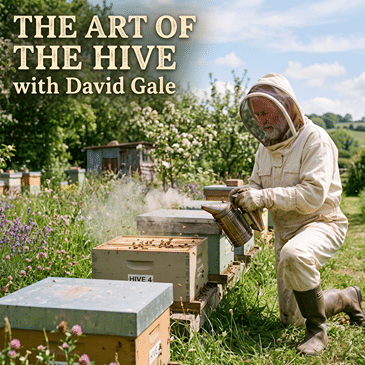
Join Ida Fanelli as she sits down with veteran commercial honey farmer and past Bee Beard Champion, David Gale, to explore four decades of apiculture history, hive science, and how it relates to holistic natural health!
In this deep dive, Dave shares his remarkable journey from starting Dave’s Apiaries completely from scratch in 1984 to managing over 350 hives solo across Southwestern Ontario. Discover the hidden biological intelligence of the hive, the art of selective Buckfast queen breeding, and the physical grit behind commercial honey farming.
What You’ll Learn in This Episode:
The Science of the Hive: How master beekeepers use sight, scent, and sound to diagnose hive health—from the calm purr of a thriving colony to a queenless whine.
Pure Production Standards:
Why keeping honey strictly at hive temperature (35C) and gravity straining preserves essential natural enzymes, vitamins, and local pollen.
The unique wellness benefits of raw honey, gently dried bee pollen, royal jelly, propolis, and beeswax.
The vital link between honeybee pollination, forage crops like clover and alfalfa, and the broader livestock and dairy industries.
How biofeedback, breath control, and hive trust helped Dave win a Bee Beard Competition!
Support your local beekeepers and learn how natural wellness meets agricultural science!
Connect & Explore with Ida Fanelli: Link in Bio
Important Disclaimer
Educational & Medical Disclaimer: The historical details, brochure references, traditional hive therapies, and natural product discussions (including raw honey, bee pollen, royal jelly, propolis, and bee venom) featured in this video/podcast are for educational and historical interest only. They are not intended as a substitute for professional medical advice, diagnosis, or treatment. Always consult a qualified healthcare provider before starting any new natural supplement or wellness regimen.
Safety Note: Raw honey should never be fed to infants under one year of age.
#Beekeeping #RawHoney #NaturalWellness #WhereScienceMeetsSelfCare #Apiculture #BeeBeard #DaveApiaries #QueenBreeding #Pollinators #SupportLocalBeekeepers #HolisticHealth #Superfoods #BeePollen #RoyalRoyalJelly #Propolis #OntarioAgriculture #podcastepisode
00:00:00 --> 00:00:03 Welcome to Where Science Meets Self-Care with
00:00:03 --> 00:00:06 Ida Fanelli. With over 30 years in beauty and
00:00:06 --> 00:00:09 wellness and a background in medical science,
00:00:09 --> 00:00:12 Ida blends clinical knowledge with holistic care.
00:00:13 --> 00:00:16 Each week, she and her guests share insights
00:00:16 --> 00:00:19 to help you achieve healthier skin, balanced
00:00:19 --> 00:00:23 energy, and empowered self -care. Now, here's
00:00:23 --> 00:00:32 your host, Ida Fanelli. Today we are stepping
00:00:32 --> 00:00:35 inside the world of commercial apiculture. Grit
00:00:35 --> 00:00:38 and incredible bond between a master beekeeper
00:00:38 --> 00:00:43 and his colony. Dave Gale is a honey farmer with
00:00:43 --> 00:00:46 over 40 years of experience who ran a home -based
00:00:46 --> 00:00:50 apiary. He didn't inherit his business, he started
00:00:50 --> 00:00:54 it entirely from scratch. Slowly building up
00:00:54 --> 00:00:57 the operation by buying beehives as he could
00:00:57 --> 00:01:01 afford them. all while working part -time for
00:01:01 --> 00:01:05 another established beekeeper. He is a past champion
00:01:05 --> 00:01:09 of the famous Clover Mead Annual Beebeard Competition,
00:01:09 --> 00:01:13 an active member of the Middlesex -Oxford Elgin
00:01:13 --> 00:01:17 Beekeepers Association, and the long -time past
00:01:17 --> 00:01:20 owner of Dave's Apiaries. He is also my husband.
00:01:20 --> 00:01:25 Welcome to the show, Dave. Hello. Dave, you and
00:01:25 --> 00:01:29 I have been side by side since 1991, but today
00:01:29 --> 00:01:32 I want to take a step back and formally look
00:01:32 --> 00:01:35 at the incredible legacy you built. You started
00:01:35 --> 00:01:40 Dave's Apiaries all the way back into 1984. Looking
00:01:40 --> 00:01:43 back to that very first year, what was it that
00:01:43 --> 00:01:47 made you say, I want to dedicate my life to the
00:01:47 --> 00:01:51 honeybee? Well, at first I had bees as a hobby
00:01:51 --> 00:01:54 when I was in high school. After high school,
00:01:54 --> 00:01:59 I went out working in construction, and I had
00:01:59 --> 00:02:02 a lot of different jobs that I really didn't
00:02:02 --> 00:02:05 like. And then I heard about a course out in
00:02:05 --> 00:02:09 Alberta to teach commercial beekeeping. So I
00:02:09 --> 00:02:12 thought, I love the bees, and I thought that
00:02:12 --> 00:02:15 I would get into that. So I took the course out
00:02:15 --> 00:02:19 in Fairview, Alberta. You traveled across the
00:02:19 --> 00:02:21 country to study at Fairview College in Alberta
00:02:21 --> 00:02:25 and then you apprenticed in the rigorous commercial
00:02:25 --> 00:02:29 yards of Peace River. What did that intense training
00:02:29 --> 00:02:31 out west teach you about the mental discipline
00:02:31 --> 00:02:36 it takes to be a beekeeper? It taught me lots
00:02:36 --> 00:02:39 of hard work and a strong commitment to looking
00:02:39 --> 00:02:43 after the bees. You're not on Your time, you're
00:02:43 --> 00:02:45 on their time. You've got to look after them
00:02:45 --> 00:02:48 when things need to be looked after. And the
00:02:48 --> 00:02:52 hard work and long hours out there is what taught
00:02:52 --> 00:02:56 me a strong commitment from me. Speaking of those
00:02:56 --> 00:02:59 intense early days, I'll never forget the story
00:02:59 --> 00:03:02 of your co -worker being attacked by a black
00:03:02 --> 00:03:05 bear while you two were out working the remote
00:03:05 --> 00:03:09 hives. You had to act fast to get the bear to
00:03:09 --> 00:03:13 back off so you could get him medical help. How
00:03:13 --> 00:03:16 did surviving a wild encounter like that change
00:03:16 --> 00:03:19 your perspective of the physical stakes of this
00:03:19 --> 00:03:22 job? Yes, that was the worst thing that I had
00:03:22 --> 00:03:25 to encounter in the bee business. Definitely
00:03:25 --> 00:03:28 need to have a lot more respect for wildlife
00:03:28 --> 00:03:33 than we give them. That's for sure. But you got
00:03:33 --> 00:03:36 through it, didn't you? Yes, that's right. You're
00:03:36 --> 00:03:40 still here. You injured your back and came back
00:03:40 --> 00:03:43 to Ontario. initially returning for family support
00:03:43 --> 00:03:48 after recovering you had to build dave's apiaries
00:03:48 --> 00:03:52 entirely from scratch frame by frame you even
00:03:52 --> 00:03:55 put your rough carpentry skills to use making
00:03:55 --> 00:03:58 your own frames and boxes right at home during
00:03:58 --> 00:04:02 the winter to slash overhead costs he has many
00:04:02 --> 00:04:07 woodworking devices he buys raw lumber and spends
00:04:07 --> 00:04:11 hours cutting top bottom and end bars to assemble
00:04:11 --> 00:04:15 thousands of wooden frames. First he is assembling
00:04:15 --> 00:04:19 and nailing the wooden frame together. Then he
00:04:19 --> 00:04:22 is inserting a specialized food grade plastic
00:04:22 --> 00:04:26 foundation sheet which is coated with a micro
00:04:26 --> 00:04:31 layer of pure hot beeswax. This is a cost -effective
00:04:31 --> 00:04:34 way to give the bees a perfect organic textured
00:04:34 --> 00:04:39 guide to start drawing out their hexagonal combed
00:04:39 --> 00:04:43 cells immediately. Doing all this assembly work
00:04:43 --> 00:04:48 by himself slashes his overhead costs to a fraction
00:04:48 --> 00:04:52 of what other commercial operations are paying.
00:04:53 --> 00:04:56 Looking back, how did that strict self -reliance
00:04:56 --> 00:04:59 start help you navigate the next 40 years of
00:04:59 --> 00:05:03 commercial farming? I guess I was just very determined.
00:05:03 --> 00:05:06 I wanted to make it. And I never let go of that
00:05:06 --> 00:05:09 dream that I wanted to have my own business and
00:05:09 --> 00:05:14 be my own boss. So that is what kept me going.
00:05:14 --> 00:05:17 I didn't want to go back to working for somebody
00:05:17 --> 00:05:22 else again. And I did love it. what I did so
00:05:22 --> 00:05:25 that made it a lot easier. At the peak of your
00:05:25 --> 00:05:29 career you were managing over 350 hives completely
00:05:29 --> 00:05:33 by yourself. Ask your wife I saw the grueling
00:05:33 --> 00:05:36 physical labor of the long hours. Over time,
00:05:36 --> 00:05:39 that kind of hard work catches up with everyone.
00:05:39 --> 00:05:42 How did you mentally handle that level of isolation
00:05:42 --> 00:05:46 and massive daily workload? Completely solo,
00:05:46 --> 00:05:49 and how difficult was it to make adjustments
00:05:49 --> 00:05:52 to your daily workflow as the years went on?
00:05:53 --> 00:05:55 Sometimes you think that when you're starting
00:05:55 --> 00:05:59 out, things are going to get easier, but that's
00:05:59 --> 00:06:02 not always necessarily the case. As you get older
00:06:02 --> 00:06:06 and you're not able to do the lifting, as easy
00:06:06 --> 00:06:11 and you have sore back and you're tired and things
00:06:11 --> 00:06:14 like that, I guess you think about back how hard
00:06:14 --> 00:06:17 it was when you were younger starting out. Maybe
00:06:17 --> 00:06:21 that's one thing that helps you get through it.
00:06:22 --> 00:06:24 So you know there's going to be an end someday,
00:06:25 --> 00:06:29 but you persevere and keep going. Part of that
00:06:29 --> 00:06:33 solo... workload meant keeping the yards populated
00:06:33 --> 00:06:36 which brought some unbelievable logistical adventures.
00:06:37 --> 00:06:41 As a beekeeper you constantly have to introduce
00:06:41 --> 00:06:43 fresh healthy queens to maintain the strength
00:06:43 --> 00:06:47 of your existing colonies or replace queens that
00:06:47 --> 00:06:50 didn't survive the winter. Because it's too cold
00:06:50 --> 00:06:54 to breed local queens early in the Canadian spring
00:06:54 --> 00:06:58 you would import them from Australia. I vividly
00:06:58 --> 00:07:01 remember traveling with you to the Toronto Customs
00:07:01 --> 00:07:05 Department where they had a live parcel section
00:07:05 --> 00:07:08 to pick up the imported queen bees. There was
00:07:08 --> 00:07:11 a major flight delay with a particular shipment.
00:07:11 --> 00:07:15 Because they are live cargo traveling in tiny
00:07:15 --> 00:07:19 cages with just a few worker bees to feed them,
00:07:19 --> 00:07:23 every single hour counts. If they sat in the
00:07:23 --> 00:07:26 warehouse for too long, they would die. and your
00:07:26 --> 00:07:30 existing hives would collapse. We couldn't just
00:07:30 --> 00:07:33 sit at home, so we frantically drove all the
00:07:33 --> 00:07:37 way to the Toronto airport. Because of the customs
00:07:37 --> 00:07:40 hold and flight issues, we had to sit in the
00:07:40 --> 00:07:43 car overnight, sleep deprived and stressed out,
00:07:43 --> 00:07:46 watching the clock tick down, waiting for the
00:07:46 --> 00:07:49 customs department door to finally open. The
00:07:49 --> 00:07:52 second they did, we walked straight into that
00:07:52 --> 00:07:55 live parcel department, cleared them, got them
00:07:55 --> 00:07:58 into the car and rushed them back to the house.
00:07:59 --> 00:08:03 Looking back on that specific night, what was
00:08:03 --> 00:08:05 going through your mind while we sat waiting
00:08:05 --> 00:08:10 in the dark? Oh, my nerves were absolutely shot
00:08:10 --> 00:08:15 that night, Ida. And I was so incredibly grateful
00:08:15 --> 00:08:19 that you were riding with me because that was
00:08:19 --> 00:08:24 a high stakes rescue for the bees trying to get.
00:08:24 --> 00:08:28 the bees home safely and get them into a hive.
00:08:28 --> 00:08:31 They don't have a lot of time, go without being
00:08:31 --> 00:08:35 in the hive. They have to be constantly looked
00:08:35 --> 00:08:39 after by other bees. It costs a lot of money
00:08:39 --> 00:08:44 to bring bees in like that. Yeah, at the time,
00:08:44 --> 00:08:47 what would it cost for one queen bee? At the
00:08:47 --> 00:08:51 time, it wasn't so bad. It was around $14 a queen,
00:08:51 --> 00:08:56 and I had 100 ordered, so there was $1400. Yeah,
00:08:57 --> 00:09:01 now they're $50 a piece, so it's quite a bit
00:09:01 --> 00:09:04 of money. So why don't you tell the people how
00:09:04 --> 00:09:08 bees are transported? They're in a little cage.
00:09:09 --> 00:09:15 It's about the size of a little matchbox, and
00:09:15 --> 00:09:17 it's got a screen on it, and there's a little
00:09:17 --> 00:09:21 bit of candy in the end. the bees to eat, and
00:09:21 --> 00:09:24 the queen is in there, and they have about five
00:09:24 --> 00:09:28 attendants in there to look after her when she's
00:09:28 --> 00:09:32 in the cage. But they're without water, and they
00:09:32 --> 00:09:35 could get chilled. So it's kind of a stressful
00:09:35 --> 00:09:39 thing bringing queens in from another country.
00:09:39 --> 00:09:42 I remember when we'd get them in the mail, sometimes
00:09:42 --> 00:09:45 we would just get one or two. There's a little
00:09:45 --> 00:09:49 pouch with a little air pocket in it. Yeah. So
00:09:49 --> 00:09:52 they could breathe. So sometimes we'll get them
00:09:52 --> 00:09:54 and it's a good idea as soon as you get them
00:09:54 --> 00:09:58 to, we had a little water bottle to just one
00:09:58 --> 00:10:01 little drip of water on top of every little queen
00:10:01 --> 00:10:03 cage so they can have a little bit of extra water.
00:10:03 --> 00:10:08 That's a good idea to give them water. So when
00:10:08 --> 00:10:10 you insert that little match box into the hive,
00:10:11 --> 00:10:14 all the other bees basically eat the sugar and
00:10:14 --> 00:10:17 that's how the queen gets out, right? Yeah, that's
00:10:17 --> 00:10:19 right. Yeah, I remember that after we waited
00:10:19 --> 00:10:22 all night long and we finally got the queens
00:10:22 --> 00:10:28 and we drove back home to London, then I had
00:10:28 --> 00:10:31 to work all day long putting those in the hives.
00:10:32 --> 00:10:36 Long, stressful day. It sure was. On top of that,
00:10:36 --> 00:10:40 the rad went in my car before I got home. Not
00:10:40 --> 00:10:44 a good day. Yeah, it was a rough day. So I don't
00:10:44 --> 00:10:47 know how I made it through sometimes. And we've
00:10:47 --> 00:10:52 had our adventures, haven't we? Yes. Yep. I got
00:10:52 --> 00:10:55 into raising my own queens after that because,
00:10:56 --> 00:11:00 you know, you can raise not as many at a time.
00:11:00 --> 00:11:03 So and then, of course, you don't have to travel
00:11:03 --> 00:11:06 down to Toronto to get them and get them in the
00:11:06 --> 00:11:09 hive. And you're not as stressed doing all the
00:11:09 --> 00:11:14 work. So after that night. I switched over to
00:11:14 --> 00:11:16 raising my own queens, even though they're not
00:11:16 --> 00:11:20 as early in the season. So something good came
00:11:20 --> 00:11:22 out of something bad. You learned something from
00:11:22 --> 00:11:26 it. Oh, yes. Yeah, you have to move ahead and
00:11:26 --> 00:11:31 learn, don't you? That's for sure. Yeah. Managing
00:11:31 --> 00:11:35 that many hives solo requires an undeniable bond.
00:11:35 --> 00:11:37 I've watched you work with them for decades,
00:11:37 --> 00:11:41 and it goes far beyond standard livestock farming.
00:11:42 --> 00:11:45 How do you actually think of the bees? Do you
00:11:45 --> 00:11:48 see them as individuals or do you view the hive
00:11:48 --> 00:11:51 as a single, highly intelligent consciousness?
00:11:51 --> 00:11:55 I don't see one single bee. I look at the whole
00:11:55 --> 00:12:00 hive as a unit. A hive is like a body almost.
00:12:01 --> 00:12:05 Bees all have to work together. Definitely. Yes.
00:12:06 --> 00:12:08 They're social insects and one can't get along
00:12:08 --> 00:12:11 without the other. The worker bees can't get
00:12:11 --> 00:12:13 along without a queen. The queen can't get along
00:12:13 --> 00:12:14 without the worker bees, and they have to have
00:12:14 --> 00:12:20 a drone there, drones for mating the queen. And
00:12:20 --> 00:12:23 there has to be new growth all the time in order
00:12:23 --> 00:12:27 for those hives to survive. That's right, because
00:12:27 --> 00:12:31 during the summertime, the bees don't live very
00:12:31 --> 00:12:33 long, right, because they're working very hard?
00:12:33 --> 00:12:36 Yes, that's correct. And they live longer in
00:12:36 --> 00:12:39 the wintertime, don't they? In the wintertime,
00:12:39 --> 00:12:41 they'll live through the whole winter, but in
00:12:41 --> 00:12:45 the summertime, they live only about six weeks.
00:12:45 --> 00:12:49 They actually work themselves to death. That's
00:12:49 --> 00:12:53 right. The wintertime, basically, they're just
00:12:53 --> 00:12:55 cuddled up in the hive. They're not moving around
00:12:55 --> 00:12:59 very much or anything, so they're not getting
00:12:59 --> 00:13:03 burnt out like they do in the summertime. outside
00:13:03 --> 00:13:06 of being stung regularly which i hear is actually
00:13:06 --> 00:13:10 quite good for your health circulation and biofeedback
00:13:10 --> 00:13:13 did you find the bees relaxing to work with because
00:13:13 --> 00:13:18 of the hives meditative rhythmic hum well definitely
00:13:18 --> 00:13:21 if the bees are humming they're in a better mood
00:13:21 --> 00:13:25 especially if it's a nice even hum like you get
00:13:25 --> 00:13:27 in the summertime when they're working on flowers
00:13:27 --> 00:13:32 but you can certainly tell some days It's quite
00:13:32 --> 00:13:36 relaxing to be out there. Your whole mind is
00:13:36 --> 00:13:39 focused on working on the bees. Some days, though,
00:13:39 --> 00:13:42 if the bees are in a bad mood, like if you're
00:13:42 --> 00:13:45 working on the hives, when it's sort of a cold
00:13:45 --> 00:13:48 day, maybe rainy a little bit, those bees are
00:13:48 --> 00:13:52 certainly a lot more aggressive that day. That's
00:13:52 --> 00:13:56 not as relaxing a day as when it's nice, warm
00:13:56 --> 00:13:58 weather in the summertime. Now we'll take time
00:13:58 --> 00:14:01 for a commercial break. Welcome back. You have
00:14:01 --> 00:14:05 to use a smoker to calm them down, right? Yes,
00:14:05 --> 00:14:08 that's correct, yeah. And why is that? Well,
00:14:08 --> 00:14:11 when you smoke a beehive, the bees smell the
00:14:11 --> 00:14:13 smoke and that sort of simulates a forest fire.
00:14:14 --> 00:14:19 So when they smell that, the bees will gorge
00:14:19 --> 00:14:21 themselves with honey because they're thinking
00:14:21 --> 00:14:24 maybe there's going to be a fire and they gorge
00:14:24 --> 00:14:27 themselves with honey. When they're full of honey,
00:14:27 --> 00:14:29 it's harder for them to sting you because they
00:14:29 --> 00:14:32 can't bend. They have to be able to bend over
00:14:32 --> 00:14:37 to sting you. So that's one reason. Well, they
00:14:37 --> 00:14:40 eat the honey because they think that maybe we'll
00:14:40 --> 00:14:43 have to vacate the hive because maybe there's
00:14:43 --> 00:14:46 a forest fire coming. Oh, I see. Yeah, yeah.
00:14:46 --> 00:14:48 Because they're happy because they have food
00:14:48 --> 00:14:50 in their stomachs that don't bother you then.
00:14:50 --> 00:14:55 Yeah, that's correct, yeah. Okay. There is a
00:14:55 --> 00:14:58 common phrase among veteran apiarists that you
00:14:58 --> 00:15:01 don't dominate a hive, you listen to it. It sounds
00:15:01 --> 00:15:04 like a beautiful sensory language that only comes
00:15:04 --> 00:15:08 with a lifetime of experience. Based on your
00:15:08 --> 00:15:10 experience, what are the subtle ways the pitch
00:15:10 --> 00:15:13 of the colonies buzz, their flight patterns,
00:15:13 --> 00:15:17 or the hive's distinct odor that tell you exactly
00:15:17 --> 00:15:20 what is happening inside before you even pull
00:15:20 --> 00:15:23 the frame? Okay, well, if the bees are aggressive,
00:15:24 --> 00:15:26 Sometimes you can give the hive a little bit
00:15:26 --> 00:15:30 of smoke and you'll open it up. And if the bees
00:15:30 --> 00:15:35 are in a sort of a bad mood, you can hear them
00:15:35 --> 00:15:38 starting to get louder and their hind end will
00:15:38 --> 00:15:41 start coming up because they might be thinking
00:15:41 --> 00:15:46 about stinging you. But on a day when it's nice
00:15:46 --> 00:15:50 and warm and the bees are gathering honey and
00:15:50 --> 00:15:53 everything, you know, they hardly even know that
00:15:53 --> 00:15:57 you're there. They're so focused on going out
00:15:57 --> 00:16:01 and collecting honey on those days. Well, everybody
00:16:01 --> 00:16:04 has their good days and bad days, right? Oh,
00:16:04 --> 00:16:08 for sure, yes. As the years went on, you became
00:16:08 --> 00:16:12 a true scientist of the yard. You carefully screened
00:16:12 --> 00:16:15 your hives on a regular basis to prevent a colony
00:16:15 --> 00:16:18 from dying off. How intense was that ongoing
00:16:18 --> 00:16:22 screening routine and what exactly were you looking
00:16:22 --> 00:16:25 for during those systemic checkups? Okay, well
00:16:25 --> 00:16:28 there's a few different things we look for. We
00:16:28 --> 00:16:32 inspect the bees for brood diseases. There's
00:16:32 --> 00:16:34 American fowl brood disease and European fowl
00:16:34 --> 00:16:38 brood disease and so we got a look at the larva
00:16:38 --> 00:16:43 and to find out if it has any of these diseases.
00:16:44 --> 00:16:47 So you get experience how to look for it. If
00:16:47 --> 00:16:52 the larva is nice and white, pearly white in
00:16:52 --> 00:16:56 the hive, then that means it's healthy. But if
00:16:56 --> 00:17:00 it's not white, that could be a sign of disease.
00:17:00 --> 00:17:04 So the different kinds. American fowl brood,
00:17:04 --> 00:17:07 it'll rot right down into the cell, and it'll
00:17:07 --> 00:17:12 be like a fish scale in there. And then the European
00:17:12 --> 00:17:16 one. The larva gets sort of twisted in the cell,
00:17:16 --> 00:17:20 kind of a funny twist to it. And it's kind of
00:17:20 --> 00:17:25 a coffee color or a yellowish color to it. So
00:17:25 --> 00:17:27 that would be a European foul brood disease.
00:17:28 --> 00:17:33 And then also we have to inspect for varroa mites.
00:17:33 --> 00:17:38 And what we do for varroa mites, we have to scoop
00:17:38 --> 00:17:41 up some bees in a cup and then we throw them
00:17:41 --> 00:17:46 into this. a jar and it has rubbing alcohol in
00:17:46 --> 00:17:51 there and they get shaken up in this jar and
00:17:51 --> 00:17:54 then they get poured through a little sieve.
00:17:54 --> 00:17:57 If there's mites in there, they will die and
00:17:57 --> 00:18:00 they'll sink down to the bottom of the jar and
00:18:00 --> 00:18:02 they'll screen out the bees. If it looks like
00:18:02 --> 00:18:05 there's a certain amount of mites, if you're
00:18:05 --> 00:18:09 getting over 10 % infection of mites in those
00:18:09 --> 00:18:11 hives, then you gotta start thinking about treating
00:18:11 --> 00:18:15 them for that problem. And you have to use a
00:18:15 --> 00:18:18 different kind of a treatment that kills mites
00:18:18 --> 00:18:21 in the hives. There's several different kinds
00:18:21 --> 00:18:25 now. Yeah, I've seen some of them are apistam
00:18:25 --> 00:18:29 strips and then you use formic acid too in a
00:18:29 --> 00:18:33 certain way, right? Yeah, and there's also oxalic
00:18:33 --> 00:18:37 acid now they use a lot. So, yeah. Basically,
00:18:37 --> 00:18:40 the bees just smell that, right? Or the mites
00:18:40 --> 00:18:44 smell that and kills it, right? Yeah, it seems
00:18:44 --> 00:18:48 to be. They're not strong enough to kill the
00:18:48 --> 00:18:53 bees, but it will kill the mites. I don't know
00:18:53 --> 00:18:55 how they can do that. It must be really something
00:18:55 --> 00:18:57 to figure out. Well, the bees are bigger, right?
00:18:58 --> 00:19:00 So they can handle more. Yeah, that's right.
00:19:02 --> 00:19:05 It must be still quite a job to create a chemical,
00:19:06 --> 00:19:09 but we'll do that. Well, they have the science
00:19:09 --> 00:19:12 to know how to do it, right? That's for sure,
00:19:12 --> 00:19:15 yes. And there's constant research because bees
00:19:15 --> 00:19:20 are important. Yeah. All the time they're researching
00:19:20 --> 00:19:24 bees. There's always something they're researching
00:19:24 --> 00:19:29 on bees, yes. That constant vigilance must have
00:19:29 --> 00:19:31 been exhausting, especially as the biological
00:19:31 --> 00:19:34 threats grew. Local beekeepers eventually had
00:19:34 --> 00:19:37 to learn to work together when navigating everything
00:19:37 --> 00:19:41 from the introduction of tracheomites to varroa
00:19:41 --> 00:19:43 mites, which were absolutely life -threatening
00:19:43 --> 00:19:46 for the bees. What was it like on the ground
00:19:46 --> 00:19:49 when those mites first hit your region, and how
00:19:49 --> 00:19:53 did the community rally? I can remember when
00:19:53 --> 00:19:57 we were... First started having troubles. There
00:19:57 --> 00:20:02 were some meetings called and very big attendance
00:20:02 --> 00:20:06 came to those meetings. And some of us were talking
00:20:06 --> 00:20:10 about the experiences we've had with them and
00:20:10 --> 00:20:14 how we dealt with it. And others were talking
00:20:14 --> 00:20:18 about they hadn't had the experience of catching
00:20:18 --> 00:20:21 the mites yet. So everybody was trying to learn
00:20:21 --> 00:20:26 off of everybody else. deal with these new problems
00:20:26 --> 00:20:29 with the varroa mites and certainly here it is
00:20:29 --> 00:20:34 35 years later and varroa mites are still one
00:20:34 --> 00:20:37 of the biggest problems in the beekeeping industry
00:20:37 --> 00:20:43 today. There was a threat of tracheal mites but
00:20:43 --> 00:20:46 for some reason the bees were able to resist
00:20:46 --> 00:20:49 those on their own and it never really became
00:20:49 --> 00:20:55 a problem here in Ontario. tracheomites. And
00:20:55 --> 00:20:57 I think the difference is the tracheomites attract
00:20:57 --> 00:21:00 the trachea of the bee, right? But the varroa
00:21:00 --> 00:21:03 mites, they do something with the blood? The
00:21:03 --> 00:21:07 varroa mites get on the bee and they'll suck
00:21:07 --> 00:21:11 the blood out of the bee, yeah. Yeah, so they're
00:21:11 --> 00:21:15 like little vampires, right? That's right, yeah.
00:21:15 --> 00:21:20 They would say a varroa mite would be the equivalent
00:21:20 --> 00:21:28 of Us having a rat clamped on our back. So that's
00:21:28 --> 00:21:32 pretty huge, isn't it? And some of these poor
00:21:32 --> 00:21:35 bees have, if they get really badly infected,
00:21:35 --> 00:21:38 they'll have three or four of these things on
00:21:38 --> 00:21:41 the back. That really shortens their life considerably.
00:21:41 --> 00:21:44 And most of the time, the hives won't make it
00:21:44 --> 00:21:46 through the winter if they get a heavy infection
00:21:46 --> 00:21:52 of overall mites in them. Wow. It really highlights
00:21:52 --> 00:21:55 how interconnected everything is. For a long
00:21:55 --> 00:21:58 time, though, it felt like beekeepers were fighting
00:21:58 --> 00:22:02 an invisible ghost. It took years for the industry
00:22:02 --> 00:22:04 to truly understand what was happening to the
00:22:04 --> 00:22:08 bees when a whole colony started collapsing.
00:22:08 --> 00:22:12 At first, everyone called it colony collapse.
00:22:12 --> 00:22:15 disorder but then the conversation shifted towards
00:22:15 --> 00:22:19 the agricultural grid itself specifically how
00:22:19 --> 00:22:22 GMOs processes and introduce chemical agents
00:22:22 --> 00:22:26 like glyphosates into the seeds and crops. From
00:22:26 --> 00:22:29 your perspective on the ground how did that realization
00:22:29 --> 00:22:33 unfold and what did it mean for how you had to
00:22:33 --> 00:22:37 protect your yards? Well at first we didn't really
00:22:37 --> 00:22:40 understand what was happening and it was really
00:22:40 --> 00:22:43 hard to figure it out. Yeah, we suffered quite
00:22:43 --> 00:22:46 a few years where we lost a lot of bees and we
00:22:46 --> 00:22:50 just had to rebuild our hives again. And then
00:22:50 --> 00:22:53 they started to figure out that maybe it was
00:22:53 --> 00:22:56 some of these chemicals that they were putting
00:22:56 --> 00:22:59 on the seed and that would be in the plant
00:22:59 --> 00:23:02 all the time. And the bees would go and work
00:23:02 --> 00:23:06 on the plant. And then they would get a little
00:23:06 --> 00:23:08 bit of this chemical in them and it would slowly
00:23:08 --> 00:23:10 infect the hive and we would lose hives right
00:23:10 --> 00:23:13 through. eat right in the summer they should
00:23:13 --> 00:23:18 be thriving and going ahead and a lot of them
00:23:18 --> 00:23:21 slowly build up of chemical in the hive and it
00:23:21 --> 00:23:24 would kill up some of them off in the winter
00:23:24 --> 00:23:28 also things have improved a little bit since
00:23:28 --> 00:23:31 then but there's still a lot of problems with
00:23:31 --> 00:23:36 the different chemicals used in agriculture now
00:23:36 --> 00:23:40 yeah it's just a never -ending worry isn't it
00:23:41 --> 00:23:47 Yes, and also there's a real monoculture of crops,
00:23:47 --> 00:23:51 especially in this area of Ontario, like mostly
00:23:51 --> 00:23:55 have corn and beans and that's it. And I know
00:23:55 --> 00:23:59 when I first got into the bees around here, almost
00:23:59 --> 00:24:02 all my bee yards were on farms where they had
00:24:02 --> 00:24:07 beef cattle, hay and clover for the beef cattle,
00:24:07 --> 00:24:11 and the dairy farmers, they also had. alfalfa
00:24:11 --> 00:24:16 for their dairy cattle but now there's going
00:24:16 --> 00:24:20 to be less and less livestock and there's more
00:24:20 --> 00:24:23 straight corn and beans. Other parts of the country
00:24:23 --> 00:24:26 they've got different crops but in this area
00:24:26 --> 00:24:30 around here it's corn and beans so there's not
00:24:30 --> 00:24:34 as much bee pasture for the bees in this area
00:24:34 --> 00:24:38 anymore. Yeah because people aren't growing the
00:24:38 --> 00:24:44 right crops. Yes. You know, it really drives
00:24:44 --> 00:24:48 home a profound truth. We need the bees far more
00:24:48 --> 00:24:51 than they will ever need us. I'd like to elaborate
00:24:51 --> 00:24:53 on this, on what you're seeing out there, because
00:24:53 --> 00:24:57 it highlights a fascinating loop that most of
00:24:57 --> 00:25:00 us never think about. You say the bees need clover
00:25:00 --> 00:25:04 and alfalfa to feed on, yet we usually assume
00:25:04 --> 00:25:07 bees are only important for our fruits and vegetables.
00:25:08 --> 00:25:10 But in reality, bees are the silent backbone
00:25:10 --> 00:25:15 of the dairy and livestock industry. Cattle rely
00:25:15 --> 00:25:19 heavily on high -protein forage crops like alfalfa
00:25:19 --> 00:25:23 and clover. And those crops cannot survive or
00:25:23 --> 00:25:27 reproduce without bees to pollinate them. So
00:25:27 --> 00:25:30 when the landscape shifts and our crops or pollinators
00:25:30 --> 00:25:34 diminish, it ripples all the way up to our milk
00:25:34 --> 00:25:37 and our meat. The bees are literally feeding
00:25:37 --> 00:25:42 the animals that feed us. It's all entirely interconnected.
00:25:42 --> 00:25:46 And because these tiny creatures are the ultimate
00:25:46 --> 00:25:50 rhythmic caretakers of our external ecosystem,
00:25:50 --> 00:25:53 I want to acknowledge that I'm playing a gentle
00:25:53 --> 00:25:57 background track of our own bees buzzing throughout
00:25:57 --> 00:26:01 this interview to bring their energy inside with
00:26:01 --> 00:26:06 us today. isn't really sweet for honey, it's
00:26:06 --> 00:26:09 more just for pollen, right? They'll get some
00:26:09 --> 00:26:13 pollen off it, and then a lot of chemicals are
00:26:13 --> 00:26:20 used on corn also. Okay. To stay ahead of these
00:26:20 --> 00:26:22 threats, you also became heavily involved in
00:26:22 --> 00:26:25 breeding. You started raising your own queens
00:26:25 --> 00:26:28 and carefully intermixing... different genetics
00:26:28 --> 00:26:32 like introducing buckfast bees to naturally strengthen
00:26:32 --> 00:26:35 the colonies against mites and harsh winter losses.
00:26:35 --> 00:26:39 What is the delicate art of queen rearing and
00:26:39 --> 00:26:41 why did you choose the buckfast breed specifically?
00:26:43 --> 00:26:47 Okay, I chose the buckfast because they did quite
00:26:47 --> 00:26:50 a little bit of research on it down at Guelph
00:26:50 --> 00:26:54 University and they were recommending beekeepers
00:26:54 --> 00:26:59 start to requeen their hives for the buckfast
00:26:59 --> 00:27:03 queens. They were very good honey producers.
00:27:03 --> 00:27:09 They were gentle, and they also were very efficient
00:27:09 --> 00:27:14 for using food. When I first got into it, the
00:27:14 --> 00:27:19 bees would eat an awful pile of sugar syrup through
00:27:19 --> 00:27:24 the winter so they didn't starve, but the buckfasts
00:27:24 --> 00:27:27 were very efficient. They didn't have to be fed
00:27:27 --> 00:27:33 half as much as the old stock that we used to
00:27:33 --> 00:27:39 have around here for honey production. And so
00:27:39 --> 00:27:43 we do follow a lot of the leads that the University
00:27:43 --> 00:27:46 of Guelph does. They do a lot of research and
00:27:46 --> 00:27:53 it's very helpful to all of us that they're there
00:27:53 --> 00:27:56 to help us out. The buckback bees, didn't it
00:27:56 --> 00:27:59 clean itself as well, so they're less likely
00:27:59 --> 00:28:04 for infection? Yeah, they were. At one time,
00:28:04 --> 00:28:07 there was a brood disease called sackbrood, and
00:28:07 --> 00:28:10 then there was another one called chalkbrood.
00:28:10 --> 00:28:13 In the early spring, they used to be pretty prevalent.
00:28:13 --> 00:28:17 But once we got buckfast, it's almost like those
00:28:17 --> 00:28:22 two diseases, viruses disappeared. That's good,
00:28:22 --> 00:28:25 isn't it? Yeah. there were so many good things
00:28:25 --> 00:28:29 about the buckfast. Did you have them the whole
00:28:29 --> 00:28:31 time or did you switch to another breed later?
00:28:32 --> 00:28:36 I pretty much stuck with the buckfast but after
00:28:36 --> 00:28:39 a while I just raised my own queens. I picked
00:28:39 --> 00:28:43 good stock like I just selected some of my better
00:28:43 --> 00:28:47 queens and tried to raise queens from those.
00:28:47 --> 00:28:50 Yeah every once in a while you'd buy a specialty
00:28:50 --> 00:28:53 that you wanted from a certain breeder but most
00:28:53 --> 00:28:56 of the bees you did on your own yeah that's correct
00:28:56 --> 00:29:00 yeah just once in a while doesn't hurt to bring
00:29:00 --> 00:29:06 in a little fresh genetics the rules new queens
00:29:06 --> 00:29:09 from and now we'll take time for a commercial
00:29:09 --> 00:29:13 break welcome back yeah this allowed you to build
00:29:13 --> 00:29:16 up the bees to supply hobbyists with a small
00:29:16 --> 00:29:20 beehive called a nuc as well right Yeah, that's
00:29:20 --> 00:29:26 correct, yeah. Yeah, that was another part of
00:29:26 --> 00:29:29 the business that was quite interesting. In the
00:29:29 --> 00:29:32 springtime, we would raise a bunch of queens,
00:29:32 --> 00:29:35 and then we would split some of the big, strong
00:29:35 --> 00:29:38 hives up and make smaller, little hives, they
00:29:38 --> 00:29:42 called the nucs, and people that wanted bees,
00:29:42 --> 00:29:45 you know, where they had a garden in their backyard,
00:29:45 --> 00:29:48 they wanted to have a couple hives. they had
00:29:48 --> 00:29:50 a small orchard or whatever they would come and
00:29:50 --> 00:29:54 buy bees from you. So yeah that was a busy little
00:29:54 --> 00:29:59 business in the spring also. For our video audience
00:29:59 --> 00:30:02 we are pulling up a quick clip of you out in
00:30:02 --> 00:30:06 the bee yard. We can see you holding up a special
00:30:06 --> 00:30:09 cell bar and in another photo carefully inserting
00:30:09 --> 00:30:12 a capped queen cell directly into a split hive.
00:30:13 --> 00:30:16 Here's a picture of some work that Dave does.
00:30:17 --> 00:30:20 The first picture shows his truck loaded with
00:30:20 --> 00:30:26 queenless beehives. The next picture shows queen
00:30:26 --> 00:30:30 cells which are ready to put in the hives. The
00:30:30 --> 00:30:35 third picture shows him putting a queen cell
00:30:35 --> 00:30:40 in a hive. And then the fourth picture shows
00:30:40 --> 00:30:45 14 requeened beehives. Now let's turn to the
00:30:45 --> 00:30:48 extraction room. I want to roll our next video
00:30:48 --> 00:30:51 clip showing exactly how you harvest the honey
00:30:51 --> 00:30:55 crops back at the honey house. After that, I'll
00:30:55 --> 00:30:59 show a video of you cutting honeycomb. Here is
00:30:59 --> 00:31:02 a demonstration of Dave uncapping the frames.
00:31:02 --> 00:31:05 When Dave removes the wax from the outside of
00:31:05 --> 00:31:10 the frame, this is called uncapping. Bees seal
00:31:10 --> 00:31:13 the honey in the comb with a layer of wax. called
00:31:13 --> 00:31:16 cappings. To keep it clean and dry to get the
00:31:16 --> 00:31:19 honey out Dave has to slice or scrape that layer
00:31:19 --> 00:31:24 off. Usually using a heated uncapping knife or
00:31:24 --> 00:31:29 a specialized scratcher tool. The spinner Dave
00:31:29 --> 00:31:32 uses is officially called a honey extractor.
00:31:32 --> 00:31:37 It works entirely on centrifugal force. The uncapped
00:31:37 --> 00:31:40 frames are spun around inside the drum. The spinning
00:31:40 --> 00:31:43 motion flings the honey out of the comb cells
00:31:43 --> 00:31:47 against the inner wall of the extractor. The
00:31:47 --> 00:31:49 honey then trickles down to the bottom, leaving
00:31:49 --> 00:31:53 the wax comb completely intact so the bees can
00:31:53 --> 00:31:57 reuse it next year. After the honey is drained
00:31:57 --> 00:32:01 from the extractor, straining is crucial. This
00:32:01 --> 00:32:05 removes any leftover tiny bits of wax, bee parts,
00:32:05 --> 00:32:08 or debris. Most beekeepers strain it into a large
00:32:08 --> 00:32:11 bucket and let it sit for a day or two so any
00:32:11 --> 00:32:15 remaining microscopic air bubbles or fine wax
00:32:15 --> 00:32:18 dust rise to the top, leaving perfectly clear
00:32:18 --> 00:32:24 honey underneath. The wax cappings Dave removed
00:32:24 --> 00:32:27 in step one are incredibly valuable. Melting
00:32:27 --> 00:32:31 them down is called rendering. Once melted and
00:32:31 --> 00:32:34 filtered this high quality wax can be used to
00:32:34 --> 00:32:38 make candles, lip balms, salves or traded back
00:32:38 --> 00:32:41 to beekeeping suppliers for new hive foundation.
00:32:42 --> 00:32:46 Okay this is a honey frame that we use for putting
00:32:46 --> 00:32:50 in the extractor and the difference between one
00:32:50 --> 00:32:55 for extracting honey is it's got a hard plastic
00:32:55 --> 00:33:01 foundation in the center of it. then there's
00:33:01 --> 00:33:05 a light layer of beeswax sprayed on the plastic
00:33:05 --> 00:33:09 and then the bees will build the frame up and
00:33:09 --> 00:33:12 it makes it stronger for putting in the machine
00:33:12 --> 00:33:16 for extracting. This is one we use for comb honey
00:33:16 --> 00:33:21 and it's just one sheet of very thin pure beeswax
00:33:21 --> 00:33:25 and it's made a little bit smaller so when we
00:33:25 --> 00:33:29 cut it the little Chunks of beeswax will fit
00:33:29 --> 00:33:35 right in the tinfoil trays that we put the comb
00:33:35 --> 00:33:40 honey in. And there's no strength to them at
00:33:40 --> 00:33:43 all so they wouldn't stand up in the extractor
00:33:43 --> 00:33:48 in order to run it through the machine. Steve's
00:33:48 --> 00:33:50 demonstrating how to cut the honeycomb. First
00:33:50 --> 00:33:53 he cuts the exterior perimeter of the honeycomb.
00:33:54 --> 00:33:57 honeycomb and then he cuts it into four evenly
00:33:57 --> 00:34:01 shaped pieces. Okay, after we cut up the honeycomb
00:34:01 --> 00:34:04 and put it in, we'll put it in the freezer and
00:34:04 --> 00:34:08 we'll freeze it for 24 hours. The reason we do
00:34:08 --> 00:34:13 this is because there's a bug called a wax moth
00:34:13 --> 00:34:20 that likes to eat wax and honey and they'll get
00:34:20 --> 00:34:23 in the hive and lay eggs. So if we freeze that,
00:34:23 --> 00:34:28 that'll kill any wax moth eggs because you don't
00:34:28 --> 00:34:31 want those hatching out and starting to eat your
00:34:31 --> 00:34:38 product before. Fresh honey now available. Speaking
00:34:38 --> 00:34:41 of production standards, you monitor the moisture
00:34:41 --> 00:34:44 content closely and ensure the honey is only
00:34:44 --> 00:34:48 gently heated at 35 degrees Celsius in your stainless
00:34:48 --> 00:34:52 steel equipment. You have to be incredibly careful
00:34:52 --> 00:34:55 because overheating can permanently alter both
00:34:55 --> 00:34:59 the natural flavour and the colour. That is an
00:34:59 --> 00:35:03 exacting standard. Now looking at your brochure
00:35:03 --> 00:35:06 for Dave's Apiaries, which you operated right
00:35:06 --> 00:35:08 out of your home on Killaly Road here in London
00:35:08 --> 00:35:13 since 1984, your commitment to keeping things
00:35:13 --> 00:35:16 completely pure is very clear. You mentioned
00:35:16 --> 00:35:19 that your honey is strictly gravity strained
00:35:19 --> 00:35:22 and never pressure filtered with absolutely no
00:35:22 --> 00:35:26 sugar or chemicals added. Why is that gentle
00:35:26 --> 00:35:29 handling so important and what are the specific
00:35:29 --> 00:35:32 thermal standards you use when liquefying it?
00:35:33 --> 00:35:36 I like to have a good product because if you
00:35:36 --> 00:35:39 have a really good honey product, then you're
00:35:39 --> 00:35:43 going to have a demand for your crop and the
00:35:43 --> 00:35:46 customers will. come back for it all the time.
00:35:46 --> 00:35:51 When I liquefy the honey, I have a band heater
00:35:51 --> 00:35:57 that goes on the drum and I monitor that drum
00:35:57 --> 00:36:02 about two or three times a day. And then near
00:36:02 --> 00:36:05 the end, I can tell when it's just about melted
00:36:05 --> 00:36:08 down. I can tell actually, just by experience
00:36:08 --> 00:36:11 that I only need to wait a few more hours to
00:36:11 --> 00:36:15 have that. on the melter before pumping it into
00:36:15 --> 00:36:20 the tanks and filling the containers. So I just
00:36:20 --> 00:36:21 have to monitor. You're talking about honey that
00:36:21 --> 00:36:25 you've collected from the summer that you reheat
00:36:25 --> 00:36:27 for when you put it into the jars, right? Yeah.
00:36:28 --> 00:36:32 After we collect the honey in the summer, you
00:36:32 --> 00:36:35 can't fill all the containers all at once. It's
00:36:35 --> 00:36:38 so many of them. A lot of the honey ends up in
00:36:38 --> 00:36:41 45 -gallon drums, and that honey will granulate.
00:36:42 --> 00:36:47 throughout the winter, but we just melt it down
00:36:47 --> 00:36:51 as we need it. When we do melt it down, I have
00:36:51 --> 00:36:55 to monitor the temperature a couple times a day
00:36:55 --> 00:36:59 before we actually pour it. That's all. Okay,
00:37:00 --> 00:37:04 when you pressure filter honey or flash heat
00:37:04 --> 00:37:07 it at a high temperature, like large commercial
00:37:07 --> 00:37:11 beekeepers do, you completely destroy beneficial
00:37:11 --> 00:37:17 enzymes, kill the natural vitamins, and filter
00:37:17 --> 00:37:21 out local pollen grains that make raw honey so
00:37:21 --> 00:37:25 valuable. By keeping our stainless steel equipment
00:37:25 --> 00:37:29 strictly at 35 degrees Celsius, we only mimic
00:37:29 --> 00:37:33 the natural temperatures of a live beehive. This
00:37:33 --> 00:37:38 allows us to gently liquefy and gravity strain
00:37:38 --> 00:37:43 the honey. So it retains its own biological integrity,
00:37:44 --> 00:37:47 deep natural flavor and rich color without even
00:37:47 --> 00:37:51 overheating it. It sounds like an absolute powerhouse
00:37:51 --> 00:37:53 because there are raw, unpasteurized natural
00:37:53 --> 00:37:57 products. You do note a strict safety warning
00:37:57 --> 00:38:00 that raw honey should never be fed to infants
00:38:00 --> 00:38:03 under one year of age. For adults storing your
00:38:03 --> 00:38:05 products at home, What are your best insider
00:38:05 --> 00:38:08 tips for keeping liquid or creamed honey from
00:38:08 --> 00:38:11 getting cloudy? And how should people store royal
00:38:11 --> 00:38:16 jelly long term? As far as the honey goes, storing
00:38:16 --> 00:38:20 it right on the shelf is the best place to keep
00:38:20 --> 00:38:23 it. Don't put it in the fridge. You could put
00:38:23 --> 00:38:26 it in the freezer, but just storing it on the
00:38:26 --> 00:38:30 shelf is the best place. And then as far as the
00:38:30 --> 00:38:33 royal jelly goes, it should be kept frozen. It'll
00:38:33 --> 00:38:37 keep it fresh longer. Speaking of pollen, your
00:38:37 --> 00:38:40 brochure clears up a major misconception. You
00:38:40 --> 00:38:44 explicitly state that if a person is allergic
00:38:44 --> 00:38:48 to bee stings, they are actually not allergic
00:38:48 --> 00:38:52 to consuming bee pollen or royal jelly. For listeners
00:38:52 --> 00:38:55 looking to add those to their diet, can you explain
00:38:55 --> 00:38:58 the nutritional power of your gently dried bee
00:38:58 --> 00:39:02 pollen? and how royal jelly is uniquely produced
00:39:02 --> 00:39:05 by the young worker bees. A bee sting allergy
00:39:05 --> 00:39:10 is a reaction to liquid apitoxin injection in
00:39:10 --> 00:39:13 your bloodstream through a stinger. It has absolutely
00:39:13 --> 00:39:16 nothing to do with consuming the bee pollen or
00:39:16 --> 00:39:20 the royal jelly. Bee pollen is the male terminating
00:39:20 --> 00:39:24 seed of any flower, shrub or plant. We call it
00:39:24 --> 00:39:27 bee pollen because the honey bees collect it
00:39:27 --> 00:39:30 with their back legs as they fly from blossom
00:39:30 --> 00:39:33 to blossom bringing it back to the hive as a
00:39:33 --> 00:39:37 primary source of food for the colony there is
00:39:37 --> 00:39:39 no need to worry about pesticides as the honey
00:39:39 --> 00:39:43 bees selectively collect only the absolute cleanest
00:39:43 --> 00:39:46 and purest of pollen they avoid toxic plants
00:39:46 --> 00:39:49 and any blossoms contaminated with pesticides
00:39:49 --> 00:39:54 nutritionally bee pollen is nature's ultimate
00:39:54 --> 00:39:57 multivitamin it contains every single known vitamin
00:39:58 --> 00:40:01 mineral, protein, complete with all essential
00:40:01 --> 00:40:05 amino acids alongside over 5 active enzymes
00:40:05 --> 00:40:08 and coenzymes. It also features essential fats,
00:40:08 --> 00:40:13 oils, hormones, peptones, carbohydrates, a high
00:40:13 --> 00:40:18 concentration of nucleic acids, and a variety
00:40:18 --> 00:40:22 of natural antibiotic substances. It's dried
00:40:22 --> 00:40:28 very gently using low heat natural gas to preserve
00:40:28 --> 00:40:30 all those living properties and protects its
00:40:30 --> 00:40:33 shelf life now royal jelly is produced by young
00:40:33 --> 00:40:37 worker nurse bees when they are between their
00:40:37 --> 00:40:40 sixth and thirteenth day of life they ingest
00:40:40 --> 00:40:43 and digest the bee pollen and utilize their special
00:40:43 --> 00:40:48 glands to secrete royal jelly fresh royal jelly
00:40:48 --> 00:40:52 is yellowish creamy highly acidic material with
00:40:52 --> 00:40:56 a slightly pungent odor and taste caring and
00:40:56 --> 00:41:02 acidic pH of 3 .5 to 4 .5. It is a biological
00:41:02 --> 00:41:06 superfood and it is the only natural source of
00:41:06 --> 00:41:12 pure acetylcholine given its potent antibacterial
00:41:12 --> 00:41:15 and antimicrobial properties. It also contains
00:41:15 --> 00:41:20 varying percentages of the valuable fatty acids
00:41:20 --> 00:41:25 10 -HDA along with several mysterious compounds
00:41:25 --> 00:41:28 that modern scientists hasn't even been able
00:41:28 --> 00:41:32 to identify yet. The nurse bee feeds this royal
00:41:32 --> 00:41:35 jelly exclusively to the queen larva, which triggers
00:41:35 --> 00:41:39 her incredible development and allows her to
00:41:39 --> 00:41:43 live for up to five years. The only difference
00:41:43 --> 00:41:46 between a queen and the worker bee is that the
00:41:46 --> 00:41:49 queen is actually fed royal jelly during her
00:41:49 --> 00:41:54 growth, right? During her growth, yes. And the
00:41:54 --> 00:41:57 queen is like three times bigger than the rooker
00:41:57 --> 00:42:03 bees, right? Not quite that much bigger. She's
00:42:03 --> 00:42:07 longer. I would say maybe two times bigger. Okay.
00:42:08 --> 00:42:13 Yeah. But a queen can be produced from an egg.
00:42:14 --> 00:42:18 It could be, but it's just fed differently from,
00:42:18 --> 00:42:24 and she is grown in a bigger cell. than the worker
00:42:24 --> 00:42:27 bees. The worker bees don't get as good a diet
00:42:27 --> 00:42:30 as the queen bee. It's just the queen bee that
00:42:30 --> 00:42:34 gets that diet of royal jelly and the queen larvae,
00:42:34 --> 00:42:36 the ones that they're trying to raise new queens
00:42:36 --> 00:42:39 from. And now we'll take time for a commercial
00:42:39 --> 00:42:44 break. Welcome back. You also kept yourself educated
00:42:44 --> 00:42:47 over the years by continuously reading specialized
00:42:47 --> 00:42:50 bee magazines and attending regular association
00:42:50 --> 00:42:53 meetings. during the cooler winter months to
00:42:53 --> 00:42:56 keep updated on what's happening with the bee
00:42:56 --> 00:43:00 farming industry. Why was that continuous learning
00:43:00 --> 00:43:02 so crucial even after decades in the business?
00:43:03 --> 00:43:07 Because the bee business is continually evolving.
00:43:08 --> 00:43:11 It's always evolving, and you've got to stay
00:43:11 --> 00:43:14 on top of everything all the time if you want
00:43:14 --> 00:43:17 to thrive in the business. It's like the mites
00:43:17 --> 00:43:22 came along. paying attention and you got mites
00:43:22 --> 00:43:27 and you didn't keep up with that, well, then
00:43:27 --> 00:43:29 your bees would be all dead and you'd be out
00:43:29 --> 00:43:32 of business. And same with the different crops
00:43:32 --> 00:43:36 in the area. You know, we had the troubles with
00:43:36 --> 00:43:38 the different chemicals that they were putting
00:43:38 --> 00:43:44 on the crops and glyphosate. So, yeah, there's
00:43:44 --> 00:43:48 a lot of things to keep up on all the time in
00:43:48 --> 00:43:51 order to... thrive and stay ahead of the game
00:43:51 --> 00:43:55 it's incredible to think about the depth of natural
00:43:55 --> 00:43:59 nutrition inside the hive for over 30 years we
00:43:59 --> 00:44:02 ran our home -based business together providing
00:44:02 --> 00:44:06 raw unpasteurized honey honeycomb beeswax bee
00:44:06 --> 00:44:10 pollen and royal jelly beyond the honey you harvested
00:44:10 --> 00:44:14 highly concentrated materials like propolis which
00:44:14 --> 00:44:19 bees use as an antimicrobial bee glue for sterile
00:44:19 --> 00:44:22 sealing and structural support as well as bee
00:44:22 --> 00:44:26 pollen the colony's protein superfood and royal
00:44:26 --> 00:44:30 jelly the nutrient dense queen maker specialized
00:44:30 --> 00:44:34 non -harmful collection methods like using glass
00:44:34 --> 00:44:37 plates with mild electrical currents are even
00:44:37 --> 00:44:41 used to harvest bee venom which has a long history
00:44:41 --> 00:44:44 of traditional use for supporting joint comfort
00:44:45 --> 00:44:48 When you harvest these, you realize the hive
00:44:48 --> 00:44:51 isn't just providing food. It's a living, breathing,
00:44:51 --> 00:44:56 nutrient -rich laboratory of nature. Yet despite
00:44:56 --> 00:44:59 the intense labor required to harvest these premium
00:44:59 --> 00:45:02 goods, their retail pricing at Dave's Apiaries
00:45:02 --> 00:45:06 was always kept remarkably reasonably in comparison
00:45:06 --> 00:45:09 to other commercial operations. You intentionally
00:45:09 --> 00:45:12 made your pure honey affordable for everyday
00:45:12 --> 00:45:15 local families. When people buy cheap blended
00:45:15 --> 00:45:19 imported flash heated honey from a supermarket
00:45:19 --> 00:45:22 shelf versus buying raw unpasteurized honey directly
00:45:22 --> 00:45:27 from a local producer, what are they truly missing
00:45:27 --> 00:45:30 out of in terms of environmental health quality
00:45:30 --> 00:45:34 and supporting the survival of our local agriculture
00:45:34 --> 00:45:40 grid? Well, if you buy honey from a beekeeper
00:45:40 --> 00:45:43 locally, you'll help him keep in business. And
00:45:43 --> 00:45:45 then his bees will be around to help pollinate
00:45:45 --> 00:45:50 the different crops. So the pollination of the
00:45:50 --> 00:45:53 crops is more important than the actual honey
00:45:53 --> 00:45:56 itself. It's the beekeeper that makes the money
00:45:56 --> 00:45:59 off the honey. There's a lot of all the benefits
00:45:59 --> 00:46:04 of what the bees do for the trees and the crops.
00:46:05 --> 00:46:10 it's not really noticed that much compared to.
00:46:10 --> 00:46:14 So, you know, it's important, you know, by buying
00:46:14 --> 00:46:17 the honey and you're supporting that beekeeper,
00:46:17 --> 00:46:21 which is looking after the bees too, that help
00:46:21 --> 00:46:25 pollinate the crops in the area. You had to be
00:46:25 --> 00:46:28 selective on where you put your bees. You were
00:46:28 --> 00:46:30 fussy about what type of crops the farmer grew,
00:46:31 --> 00:46:36 right? Yeah, that's correct, yes. Yeah. Like
00:46:36 --> 00:46:40 what kind of crops did you look for? Well, I
00:46:40 --> 00:46:45 like to have bees in a... I have several places
00:46:45 --> 00:46:47 where I keep bees and they're along a creek or
00:46:47 --> 00:46:51 a river. So there's moisture close by and there's
00:46:51 --> 00:46:55 a lot of wild vegetation along the river. So
00:46:55 --> 00:46:59 the bees can get natural forage from the wild
00:46:59 --> 00:47:04 vegetation. Plus, I like to have... fields where
00:47:04 --> 00:47:07 there were alfalfa and clover growing by if you
00:47:07 --> 00:47:11 could get that too so then they would have extra
00:47:11 --> 00:47:16 honey from the clover and alfalfa and then the
00:47:16 --> 00:47:19 wild stuff would give the bees extra food and
00:47:19 --> 00:47:25 nutrition to eat when the other crops weren't
00:47:25 --> 00:47:31 in blossom so that's why it was quite fussy about
00:47:31 --> 00:47:35 having where I kept my bees. Location is everything
00:47:35 --> 00:47:39 in the bee business. You also like to have shelter
00:47:39 --> 00:47:42 in case there was a windy day once in a while,
00:47:42 --> 00:47:44 right? Yeah. You like to have some trees in one
00:47:44 --> 00:47:50 direction or another? Yeah. Northwest, shelter
00:47:50 --> 00:47:54 from the northwest and good southern exposure
00:47:54 --> 00:47:59 from the south is what I look for in a bee yard.
00:48:00 --> 00:48:06 and a source of water was important and of course
00:48:06 --> 00:48:11 the crops in the area too. I've learned to think
00:48:11 --> 00:48:13 of honey as a diluted form of an essential oil
00:48:13 --> 00:48:17 since it has a bit of each plant's strength in
00:48:17 --> 00:48:20 it and it is a direct investment in the health
00:48:20 --> 00:48:24 of our own backyards. I went out into the field
00:48:24 --> 00:48:27 with you a couple of times myself when you transported
00:48:27 --> 00:48:30 hives in the early hours of the morning or late
00:48:30 --> 00:48:34 evening to pollinate local apple or cherry orchards
00:48:34 --> 00:48:38 your back would be aching from hauling that immense
00:48:38 --> 00:48:42 weight but when the sun rose over thousands of
00:48:42 --> 00:48:44 blooming trees it was truly an unforgettable
00:48:44 --> 00:48:48 magical sight to witness did the breathtaking
00:48:48 --> 00:48:50 beauty of those orchards make up for the back
00:48:50 --> 00:48:59 -breaking labour Yes, it did. It was like a miracle,
00:48:59 --> 00:49:02 really, every year when you went out and you
00:49:02 --> 00:49:06 put bees in the orchards and you had a nice sunny
00:49:06 --> 00:49:10 morning and you got there just at sunbreak and
00:49:10 --> 00:49:15 it was warm and the bees were flying from the
00:49:15 --> 00:49:20 hives right into the apple blossoms as soon as
00:49:20 --> 00:49:23 you... Before they even got to the ground almost,
00:49:23 --> 00:49:25 you were just moving them off the truck and they
00:49:25 --> 00:49:28 were flying right into the blossoms right away.
00:49:28 --> 00:49:32 It was just like a miracle. It was a nice treat
00:49:32 --> 00:49:37 for them, wasn't it? It was, yeah. They were
00:49:37 --> 00:49:42 happy that they got to do their jobs too. It
00:49:42 --> 00:49:46 wasn't like that every year. Some years there's
00:49:46 --> 00:49:50 been bad weather when the orchards are in blossom.
00:49:50 --> 00:49:54 And the bees don't fly quite as much when the
00:49:54 --> 00:49:59 weather is cold and windy and rainy. But those
00:49:59 --> 00:50:02 years when it's really nice and you get to experience
00:50:02 --> 00:50:05 that beautiful blossom in the orchard and the
00:50:05 --> 00:50:10 bees just getting in there right away, it's a
00:50:10 --> 00:50:15 real treat. To wrap up our conversation today,
00:50:15 --> 00:50:17 I want to bring it back to that ultimate display
00:50:17 --> 00:50:21 of confidence and composure, your time on stage
00:50:21 --> 00:50:24 as a celebrated Clovermead Beebeard champion.
00:50:25 --> 00:50:29 You can show your award if you like. Dave proudly
00:50:29 --> 00:50:36 shows his award. Okay, it says Elgin Oxford Middlesex
00:50:36 --> 00:50:41 Beekeepers Club Beebeard Champion 2006. Sponsored
00:50:41 --> 00:50:46 by Clovermeat Apiaries. I'll include a picture
00:50:46 --> 00:50:48 of his mugshot covered with the bees as well.
00:50:49 --> 00:50:54 That's me there. Yeah, just a little, it's just
00:50:54 --> 00:50:58 my nose sticking out. I had, they weigh us with
00:50:58 --> 00:51:02 the amount of bees we have and there's the runner
00:51:02 --> 00:51:07 up. That's John Heemstra there. And they weigh
00:51:07 --> 00:51:12 us in the amount of bees. If I had more weight
00:51:12 --> 00:51:15 of bees on me than the other guy, that's why
00:51:15 --> 00:51:20 I won. To protect your eyes and lips, they use
00:51:20 --> 00:51:24 barrier creams like Vaseline. Yeah, that's correct,
00:51:24 --> 00:51:28 yeah. The Queen Bee's pheromones are like a broadcast
00:51:28 --> 00:51:32 signal for the bees, right? Yeah. How did they
00:51:32 --> 00:51:35 use that strategy for the contest live on stage?
00:51:37 --> 00:51:41 Well, actually... The queen is put in a little
00:51:41 --> 00:51:45 cage and then there's a string and it goes around
00:51:45 --> 00:51:48 your neck and it's like a little necklace. So
00:51:48 --> 00:51:53 the bees can smell her and, you know, they'll
00:51:53 --> 00:51:57 come and they want to be near their queen. So
00:51:57 --> 00:52:02 that's why the bees stay with you like that.
00:52:02 --> 00:52:05 We do actually put a newspaper like this at first
00:52:05 --> 00:52:10 and somebody shakes the bees. into this newspaper
00:52:10 --> 00:52:14 and you're holding it and then they smell the
00:52:14 --> 00:52:16 queen that's sitting right here and then they'll
00:52:16 --> 00:52:23 go all over you like that. So that's how the
00:52:23 --> 00:52:27 beebeard contest is done. How did you handle
00:52:27 --> 00:52:30 the intense physical weight of the bees during
00:52:30 --> 00:52:34 the official weigh -in and how you mastered your
00:52:34 --> 00:52:38 own feedback when that heavy living wall of heat
00:52:38 --> 00:52:41 blankets your skin to prevent getting stung from
00:52:41 --> 00:52:45 pieces in front of a massive live crowd. Yeah
00:52:45 --> 00:52:50 I only got stung once with the bees on me and
00:52:50 --> 00:52:55 of course we put the Vaseline around our our
00:52:55 --> 00:52:57 nose and our mouth there to keep the bees from
00:52:57 --> 00:53:02 and your eyes also to keep the bees from going
00:53:02 --> 00:53:05 in there. I think we put some cotton batten in
00:53:05 --> 00:53:07 our ears also. You don't want the bees crawling
00:53:07 --> 00:53:11 in your ears. So that's how we handled the bees
00:53:11 --> 00:53:15 like that. The weight wasn't that big of a deal.
00:53:16 --> 00:53:19 You know, we had about three or four pounds of
00:53:19 --> 00:53:24 bees on us. But the heat that the bees generate
00:53:24 --> 00:53:30 is just incredible. You're really... suffering
00:53:30 --> 00:53:32 with the heat when the bees are covering you
00:53:32 --> 00:53:35 up like that. Yeah, because it was a warm day
00:53:35 --> 00:53:37 as well, right? And then you're compounded with
00:53:37 --> 00:53:40 more warmth on your face. The bees too, yes.
00:53:41 --> 00:53:44 It feels like Velcro on you. That's what it feels
00:53:44 --> 00:53:48 like. They're just crawling all over you. It's
00:53:48 --> 00:53:51 just like Velcro. Oh, I wouldn't want to do that.
00:53:54 --> 00:53:56 Well, Dave, I guess everybody would like to know
00:53:56 --> 00:53:59 how on earth did you get those bees off of you?
00:54:00 --> 00:54:04 Okay, well, there's one very easy way to do it.
00:54:04 --> 00:54:07 I bent over, and then I just jump up and then
00:54:07 --> 00:54:12 jump right down hard, and the bees just fly off
00:54:12 --> 00:54:15 and they land in the hive. I have the hive right
00:54:15 --> 00:54:21 underneath where I'm jumping. And then you take
00:54:21 --> 00:54:24 the... the queen off your neck she's in the little
00:54:24 --> 00:54:28 bracelet around your neck and you put that on
00:54:28 --> 00:54:31 the hive any bees that are left on you will slowly
00:54:31 --> 00:54:34 work their way down to where she is because they
00:54:34 --> 00:54:36 want to be with the queen that's how we get them
00:54:36 --> 00:54:39 off and another way is uh we use a blower it's
00:54:39 --> 00:54:43 like a leaf blower and some people just blow
00:54:43 --> 00:54:46 them off like that but the easiest and fastest
00:54:46 --> 00:54:49 way to do it is just bend over and then jump
00:54:49 --> 00:54:52 and bounce them down really hard and and they'll
00:54:52 --> 00:54:58 just poof fall down into the hive and yeah take
00:54:58 --> 00:55:02 the queen off and yeah you're done wow that's
00:55:02 --> 00:55:05 amazing and i'm glad to hear it didn't hurt you
00:55:05 --> 00:55:07 too much and i hope the bees didn't get hurt
00:55:07 --> 00:55:12 as well you are officially retired now and dave's
00:55:12 --> 00:55:15 apiaries as a commercial business is closed but
00:55:15 --> 00:55:18 you just couldn't stay away from the girls. You
00:55:18 --> 00:55:21 are still keeping bees today strictly as a hobby.
00:55:22 --> 00:55:25 What is it like for you now, tending just for
00:55:25 --> 00:55:28 a few hives for the pure meditative joy of it,
00:55:28 --> 00:55:31 compared to the high stakes of running a commercial
00:55:31 --> 00:55:38 yard? Not really that much has changed, except
00:55:38 --> 00:55:43 for I'm only working on the bees now a couple
00:55:43 --> 00:55:48 afternoons a week. Compared to when I had a lot
00:55:48 --> 00:55:53 of hives, I was busy six days a week, and I mostly
00:55:53 --> 00:55:58 took Sundays off, that's it. But when I had a
00:55:58 --> 00:56:02 lot of hives, six days a week, and lots of times
00:56:02 --> 00:56:05 we were working until, you know, I'd go out and
00:56:05 --> 00:56:08 work after supper too at night when we had lots
00:56:08 --> 00:56:14 of hives. So just not as busy, so that's good.
00:56:16 --> 00:56:19 Dave, thank you for a lifetime of hard work for
00:56:19 --> 00:56:21 protecting our local pollinators and for building
00:56:21 --> 00:56:24 such a beautiful business with me from our home.
00:56:24 --> 00:56:29 I am so incredibly proud of your legacy. David
00:56:29 --> 00:56:32 Gale, a true master of the craft and a pillar
00:56:32 --> 00:56:36 of our local agriculture history. Thank you so
00:56:36 --> 00:56:38 much for stepping into the studio to share your
00:56:38 --> 00:56:41 lifetime of grit, experience, and wisdom with
00:56:41 --> 00:56:46 us today. Thank you, Ida. And I couldn't have
00:56:46 --> 00:56:51 done it without you. Yeah, thank you. Just a
00:56:51 --> 00:56:54 quick reminder for our listeners, the stories,
00:56:54 --> 00:56:57 historical brochure details, and traditional
00:56:57 --> 00:57:00 hive therapy shared in today's episode, including
00:57:00 --> 00:57:03 our discussion of bee venom, pollen, and raw
00:57:03 --> 00:57:06 honey, are for educational and historical interest
00:57:06 --> 00:57:09 only. They are not a substitute for professional
00:57:09 --> 00:57:14 medical advice, diagnosis, or treatment. Always
00:57:14 --> 00:57:16 consult your doctor or qualified health care
00:57:16 --> 00:57:19 provider before starting any new natural supplement
00:57:19 --> 00:57:24 or therapy. And as a reminder, raw honey should
00:57:24 --> 00:57:27 never be fed to infants under one year of age.
00:57:27 --> 00:57:30 You can view this episode on many platforms.
00:57:30 --> 00:57:33 Thank you for tuning in to Where Science Meets
00:57:33 --> 00:57:36 Self -Care with Ida Fennelly. Ida bridges clinical
00:57:36 --> 00:57:40 science with holistic wisdom, guiding you toward
00:57:40 --> 00:57:44 radiant skin, balanced energy, and lasting well
00:57:44 --> 00:57:47 -being. Don't forget to subscribe, share the
00:57:47 --> 00:57:50 show, and join us next time for more inspiration
00:57:50 --> 00:57:53 and practical tools to help you live beautifully
00:57:53 --> 00:57:57 inside and out. To connect with Ida, visit linktr.ee
00:57:57 --> 00:58:03 /idafanelli. Until then... Take good care of yourself.
00:58:03 --> 00:58:06 And remember, self -care is where science and
00:58:06 --> 00:58:07 soul meet.