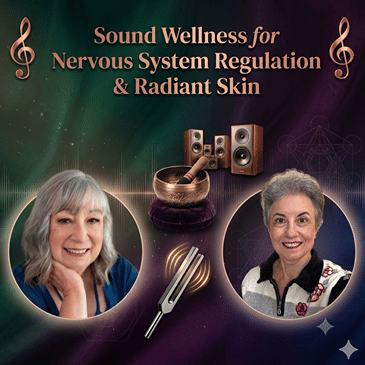
Discover the calming power of sound and music in this episode of Where Science Meets Self-Care. Host Ida welcomes Sharon Carne, founder of the Sound Wellness Institute, to explore how intentional sound can support relaxation and help balance the nervous system.
We explore the connection between acoustic science and holistic beauty, looking at how stress management and relaxation can support physical well-being, ease facial tension, and promote a healthy, radiant glow. Whether you are looking for practical stress-relief techniques or curious about how our bodies respond to sound and rhythm, this episode offers an engaging guide to sound-based wellness.
Inside the Episode: The Science of Sound & Relaxation
We move beyond the trends to discuss ethical and practical applications of sound for everyday well-being: Sound & Vibration for Wellness:
Understanding how music, tone, and gentle vibrations interact with our senses to promote deep relaxation.
The 60 BPM Secret: Why music at 60 beats per minute can help support a calm rhythm and heart rate variability.
Vocal Toning & The "Vocalized Sigh": Simple, accessible practices to help ease daily stress in seconds.
Beyond the Ears: How the body perceives vibration and why sound therapy is a popular tool for stress reduction and supportive care environments.
The Beauty Connection: How shifting out of a daily stress response helps reduce facial tension and supports skin vitality. Professional Standards:
What to look for in sound wellness training and how to select quality wellness tools (tuning forks, singing bowls, and more).
Explore Sharon Carne’s programs and certifications at the Sound Wellness Institute: Website: www.soundwellness.com | soundwellnessinstitute.com
Contact: scarne@soundwellness.com
Important Consumer Notice Disclaimer:
The information provided in this episode and educational summary is for general informational, educational, and cosmetic/wellness purposes only. It is not intended to diagnose, treat, cure, or prevent any medical condition, nor is it a substitute for professional medical advice, diagnosis, or treatment. If you suspect you have a skin condition, medical disorder, or health concern, please consult a licensed healthcare professional or dermatologist.
Connect with Ida Fanelli: Link in Bio
Like, share, and subscribe to the channel for more episodes!
#SoundTherapy#NervousSystemRegulation#VocalToning#MusicTherapy#MindBodyBeauty#SharonCarne#SoundWellness#StressReng #SoundWellness
00:00:00 --> 00:00:03 Welcome to Where Science Meets Self -Care with
00:00:03 --> 00:00:06 Ida Fanelli. With over 30 years in beauty and
00:00:06 --> 00:00:09 wellness and a background in medical science,
00:00:09 --> 00:00:12 Ida blends clinical knowledge with holistic care.
00:00:13 --> 00:00:16 Each week, she and her guests share insights
00:00:16 --> 00:00:19 to help you achieve healthier skin, balanced
00:00:19 --> 00:00:23 energy, and empowered self -care. Now, here's
00:00:23 --> 00:00:31 your host, Ida Finelli. Today I'm delighted to
00:00:31 --> 00:00:35 introduce Sharon Karn, an internationally respected
00:00:35 --> 00:00:38 author, speaker, trainer, recording artist, and
00:00:38 --> 00:00:41 pioneer in sound wellness and corporate well
00:00:41 --> 00:00:44 -being. Sharon is a founding partner and director
00:00:44 --> 00:00:47 of training and program development at the Sound
00:00:47 --> 00:00:50 Wellness Institute, where she has spent nearly
00:00:50 --> 00:00:54 a decade helping shape sound wellness as a credible,
00:00:54 --> 00:00:58 verifiable, and professionally recognized modality.
00:00:58 --> 00:01:01 Her work bridges science, music, and the body's
00:01:01 --> 00:01:04 innate ability to respond to sound, supporting
00:01:04 --> 00:01:08 health, harmony, and resilience on both individual
00:01:08 --> 00:01:13 and organizational levels. She is also a wellness
00:01:13 --> 00:01:16 expert leader with the Wellness Universe, where
00:01:16 --> 00:01:19 she plays a key role in corporate and cultural
00:01:19 --> 00:01:22 wellness initiatives, including serving on the
00:01:22 --> 00:01:26 expert team for SoccerX, the world -leading football
00:01:26 --> 00:01:30 business summit. With more than 30 years as a
00:01:30 --> 00:01:33 classical guitarist, educator, and performing
00:01:33 --> 00:01:36 musician, and advanced degrees from the Queen's
00:01:36 --> 00:01:41 University and the University of Minnesota, Sharon
00:01:41 --> 00:01:45 brings rare musical mastery to modern wellness
00:01:45 --> 00:01:47 through sound wellness and Mountain Rose music.
00:01:48 --> 00:01:52 She continues to publish, teach, and offer tools
00:01:52 --> 00:01:55 that help people calm the nervous system and
00:01:55 --> 00:01:58 reconnect with balance. In short, Sharon Carn
00:01:58 --> 00:02:02 is a powerful voice at the intersection of music,
00:02:02 --> 00:02:05 neuroscience, wellness, and conscious leadership.
00:02:06 --> 00:02:09 Welcome, Sharon. Thank you so much, Ida. What
00:02:09 --> 00:02:13 a delight to be here. Well, I'm happy to have
00:02:13 --> 00:02:18 you. You began your career as a classical guitarist
00:02:18 --> 00:02:21 and educator. Can you take us back to when you
00:02:21 --> 00:02:24 first noticed sound affecting people beyond performance
00:02:24 --> 00:02:27 when did you realize sound could be healing?
00:02:29 --> 00:02:34 I think it goes back, Ida, to the 1990s. I had
00:02:34 --> 00:02:38 begun music teaching in the conservatory at Mount
00:02:38 --> 00:02:43 Royal University in 1988 and quickly filled up
00:02:43 --> 00:02:47 my studio with students from three years old
00:02:47 --> 00:02:51 all the way to 70. And so I had a group of adult
00:02:51 --> 00:02:54 students who really wanted to learn how to perform
00:02:54 --> 00:02:58 more comfortably and without getting so nervous.
00:02:59 --> 00:03:01 ordered every book on stage fright that I could
00:03:01 --> 00:03:05 find and we practiced several exercises that
00:03:05 --> 00:03:08 I found in those books at live performances.
00:03:09 --> 00:03:12 I booked a favorite coffee shop here in Calgary
00:03:12 --> 00:03:15 and we would show up once a month to practice
00:03:15 --> 00:03:18 playing at least one piece and we would practice
00:03:18 --> 00:03:23 that exercise to see if it would bring the nervous
00:03:23 --> 00:03:26 system into a little more calmness while we were
00:03:26 --> 00:03:30 performing. And it worked really well, especially
00:03:30 --> 00:03:34 with the exercise where we imagined a color while
00:03:34 --> 00:03:38 we were performing. And the funniest thing happened
00:03:38 --> 00:03:41 because every time we did it, whether it was
00:03:41 --> 00:03:44 me practicing it or one of my students, somebody
00:03:44 --> 00:03:48 in the audience got the color. And I'll never
00:03:48 --> 00:03:51 forget one time I was performing in a concert
00:03:51 --> 00:03:55 in one of the towns here in Alberta, and I chose
00:03:55 --> 00:03:59 one piece in the concert. to practice imagining
00:03:59 --> 00:04:02 the color with. And this woman came up to me
00:04:02 --> 00:04:05 after the concert and she pointed to that piece
00:04:05 --> 00:04:09 on the program. And she said, Sharon, that piece
00:04:09 --> 00:04:13 felt so wonderful. It made me think I was sitting
00:04:13 --> 00:04:16 by the ocean. The color of the water was so blue.
00:04:16 --> 00:04:20 And I thought, okay, universe, this is way too
00:04:20 --> 00:04:24 many synchronicities. And the questions started
00:04:24 --> 00:04:28 to flow into my mind, especially the one, what
00:04:28 --> 00:04:30 is it about sound that makes it a carrier wave
00:04:30 --> 00:04:34 for thought, emotion, and intention? So I hit
00:04:34 --> 00:04:38 the library. I hit music stores. I hit record
00:04:38 --> 00:04:42 stores. I hit the internet. I got everything
00:04:42 --> 00:04:45 I could find on sound healing and sound therapy
00:04:45 --> 00:04:49 and started diving into the information and research.
00:04:49 --> 00:04:52 Who was teaching it? Not a lot of people. at
00:04:52 --> 00:04:56 that time and as it continued it changed my life
00:04:56 --> 00:04:58 I ended up training with two of the pioneers
00:04:58 --> 00:05:02 in sound healing in the early 2000s Jonathan
00:05:02 --> 00:05:07 Goldman and Tom Kenyon so that question from
00:05:07 --> 00:05:10 all those synchronicities really started a whole
00:05:10 --> 00:05:13 new trend or a whole new direction yeah that's
00:05:13 --> 00:05:17 for sure How did your formal music training shape
00:05:17 --> 00:05:20 the way you approach sound therapy differently
00:05:20 --> 00:05:22 from more intuitive or trend -based approaches?
00:05:23 --> 00:05:27 That was another really interesting invitation
00:05:27 --> 00:05:32 from the universe. I guess after I finished the
00:05:32 --> 00:05:34 training with Jonathan Goldman and Tom Kenyon,
00:05:34 --> 00:05:37 I was still continuing to practice a little bit
00:05:37 --> 00:05:41 and teach a little bit of sound therapy and sound
00:05:41 --> 00:05:44 healing. I got a call from out of the blue one
00:05:44 --> 00:05:47 day from the director of the Integrative Health
00:05:47 --> 00:05:50 Institute at the university. And she said, Sharon,
00:05:50 --> 00:05:54 I hear you are into sound therapy. And I said,
00:05:54 --> 00:05:57 I guess so, because it's been a huge area of
00:05:57 --> 00:06:00 research at that time for almost 10 years. And
00:06:00 --> 00:06:05 so she asked me to create a program as a facilitator
00:06:05 --> 00:06:10 in a study on stress that the institute was sponsoring.
00:06:12 --> 00:06:15 kind of shifted into sound healing but then it
00:06:15 --> 00:06:19 became more formal and I created sound wellness
00:06:19 --> 00:06:22 a month after the participation in that study
00:06:22 --> 00:06:28 that was back in 2008 and started to find ways
00:06:28 --> 00:06:33 to bring a lot more credibility for practitioner
00:06:33 --> 00:06:37 training. It took a little while to really find
00:06:37 --> 00:06:41 a way for that, but I found that it was something
00:06:41 --> 00:06:45 that was really needed, that professional approach.
00:06:46 --> 00:06:49 One of the things as a music instructor has always
00:06:49 --> 00:06:53 been important to me is being a member of a professional
00:06:53 --> 00:06:58 association. healing sound therapy there's really
00:06:58 --> 00:07:04 no professional association that even accepted
00:07:04 --> 00:07:09 sound healing as a modality. I was really surprised
00:07:09 --> 00:07:12 by that. What were some of the early challenges
00:07:12 --> 00:07:15 in positioning sound wellness as something credible
00:07:15 --> 00:07:18 rather than alternative? When I created sound
00:07:18 --> 00:07:21 wellness, I really had no experience in business.
00:07:21 --> 00:07:25 I had no network, no nothing. And one of the
00:07:25 --> 00:07:29 opportunities that came to me shortly after presenting
00:07:29 --> 00:07:33 in that study was an invitation through the Integrative
00:07:33 --> 00:07:37 Health Institute to teach or present about sound
00:07:37 --> 00:07:40 healing and sound therapy to first -year medical
00:07:40 --> 00:07:43 students at the medical school I did that in
00:07:43 --> 00:07:47 2009 10 and 11 I think with the medical school
00:07:47 --> 00:07:50 here in Calgary and once a year they have what
00:07:50 --> 00:07:53 they call a cam fair complementary alternative
00:07:53 --> 00:07:57 medicine fair for first -year medical students
00:07:57 --> 00:08:01 and with the handout they came with that I was
00:08:01 --> 00:08:04 really well educated in how the medical field
00:08:04 --> 00:08:08 defines different holistic modalities because
00:08:08 --> 00:08:12 there were there were many people who taught
00:08:12 --> 00:08:15 a lot of different modalities who presented to
00:08:15 --> 00:08:19 the medical students and so I learned that they
00:08:19 --> 00:08:23 they had very specific definitions for complementary
00:08:23 --> 00:08:26 medicine for alternative medicine alternative
00:08:26 --> 00:08:29 medicine is something you do completely different
00:08:29 --> 00:08:33 away generally away from your medical practitioner
00:08:33 --> 00:08:37 complementary means you're doing something to
00:08:37 --> 00:08:41 help support a medical treatment like using crystal
00:08:41 --> 00:08:44 balls or sound baths to help calm the nervous
00:08:44 --> 00:08:47 system when you're undergoing chemotherapy for
00:08:47 --> 00:08:51 example is quite a popular at least here in Calgary
00:08:51 --> 00:08:54 it's a popular and accepted complementary therapy
00:08:54 --> 00:08:57 for those undergoing cancer treatments then there's
00:08:57 --> 00:09:01 integrative which blends them all together and
00:09:01 --> 00:09:04 then there's holistic which is a little different
00:09:04 --> 00:09:07 and similar to alternative medicine holistic
00:09:07 --> 00:09:10 is more like energy medicine and supplements
00:09:10 --> 00:09:15 those kinds of things I learned that sound therapy
00:09:15 --> 00:09:19 sound healing fits quite well and more practically
00:09:19 --> 00:09:23 under holistic medicine and especially complementary
00:09:23 --> 00:09:27 medicine which is part of holistic medicine and
00:09:27 --> 00:09:30 integrative medicine for me that helped me go
00:09:30 --> 00:09:36 oh now I can say how I would define sound healing
00:09:36 --> 00:09:42 which is mostly complementary medicine. The Wellness
00:09:42 --> 00:09:46 Universe global platform was envisioned in 2013
00:09:46 --> 00:09:50 and launched in 2015. How did your work with
00:09:50 --> 00:09:53 Sound Wellness align naturally with their mission?
00:09:54 --> 00:09:58 Well, it was, I guess, getting to know Anna Pereira,
00:09:59 --> 00:10:01 Ida. She's the founder of the Wellness Universe.
00:10:02 --> 00:10:07 And I met her online, actually, before she created
00:10:07 --> 00:10:11 the Wellness Universe. And as she was creating
00:10:11 --> 00:10:15 the Wellness Universe, I could see her vision
00:10:15 --> 00:10:20 was so powerful. And I became one of her first
00:10:20 --> 00:10:23 members when it was created. Because it's all
00:10:23 --> 00:10:27 about... bringing together people in the holistic
00:10:27 --> 00:10:31 community with some of the highest qualifications
00:10:31 --> 00:10:36 for community for collaboration and for ways
00:10:36 --> 00:10:41 to support me and those other practitioners in
00:10:41 --> 00:10:43 getting their work out into the world for me
00:10:43 --> 00:10:47 it's all about wholeness of course and for me
00:10:47 --> 00:10:51 I was so grateful that her vision and my vision
00:10:51 --> 00:10:54 became a blend that help support her business.
00:10:54 --> 00:10:58 I love what she's creating in the world and she
00:10:58 --> 00:11:01 loves what I'm creating in the world. So it is
00:11:01 --> 00:11:04 a wonderful collaboration for me that really
00:11:04 --> 00:11:07 supports sound wellness and the Sound Wellness
00:11:07 --> 00:11:10 Institute that I'm very grateful for. So the
00:11:10 --> 00:11:13 phrase happy, healthy, healed humans is central
00:11:13 --> 00:11:16 to the wellness universe. How does that philosophy
00:11:16 --> 00:11:20 show up in your work with sound? Well, for me,
00:11:20 --> 00:11:25 I think being healthy, healed, and happy is the
00:11:25 --> 00:11:28 benefit of creating wholeness. And there's so
00:11:28 --> 00:11:31 many different ways in the world right now that
00:11:31 --> 00:11:34 can help us to create wholeness. And when we've
00:11:34 --> 00:11:38 done that, the body naturally heals itself. And
00:11:38 --> 00:11:42 so, in a way, we have very, very similar philosophies.
00:11:42 --> 00:11:46 And I love that very much. The wellness universe
00:11:46 --> 00:11:50 emphasizes seven dimensions of wellness. why
00:11:50 --> 00:11:53 is sound uniquely positioned to influence multiple
00:11:53 --> 00:11:56 dimensions at once from some of the research
00:11:56 --> 00:12:00 in sound sound affects all the dimensions and
00:12:00 --> 00:12:04 i i love to love to say that sound is food for
00:12:04 --> 00:12:08 your nervous system so in that way uh well partly
00:12:08 --> 00:12:12 the way that works is uh we call some of the
00:12:12 --> 00:12:15 dimensions in the holistic world physical mental
00:12:15 --> 00:12:19 emotional and spiritual and then and The spiritual
00:12:19 --> 00:12:22 kind of overlaps with quantum. Physically, sound
00:12:22 --> 00:12:24 goes through you. And as it goes through you,
00:12:25 --> 00:12:27 it's moving all your atoms and molecules. And
00:12:27 --> 00:12:30 so physically, sound is a powerful physical energy
00:12:30 --> 00:12:36 that moves every part of you. And mentally, sound
00:12:36 --> 00:12:39 calms the mind in such beautiful ways. The right
00:12:39 --> 00:12:42 choice of sound for you. And then emotionally,
00:12:42 --> 00:12:47 sound can start with regulating the nervous system.
00:12:47 --> 00:12:51 It's a powerful... way whether you're using specific
00:12:51 --> 00:12:54 sounds like Himalayan bowls or whether you're
00:12:54 --> 00:12:59 using music to help to regulate the nervous system
00:12:59 --> 00:13:02 by bringing the parasympathetic nervous system
00:13:02 --> 00:13:05 more online because many of us, probably 90%,
00:13:05 --> 00:13:09 have a highly dysregulated sympathetic nervous
00:13:09 --> 00:13:13 system. That means that's stress in one way to
00:13:13 --> 00:13:16 describe that. The parasympathetic nervous system
00:13:16 --> 00:13:19 helps to bring that into harmony. Sound is huge
00:13:19 --> 00:13:22 for stimulating that, which helps to calm the
00:13:22 --> 00:13:26 mind also and bring a little more emotional clarity.
00:13:26 --> 00:13:30 and calm. And then spiritually, one of the physical
00:13:30 --> 00:13:32 ways that works is in shifting the brainwave
00:13:32 --> 00:13:35 state. And when we shift into alpha brainwave
00:13:35 --> 00:13:38 state and especially theta brainwave state, and
00:13:38 --> 00:13:41 there are more gamma and other brainwave states
00:13:41 --> 00:13:44 that sound can stimulate, that brings us into
00:13:44 --> 00:13:49 more spiritual connection. And so we also are
00:13:49 --> 00:13:52 able to connect with the heart in so many beautiful
00:13:52 --> 00:13:55 ways with sound. So those are at least four of
00:13:55 --> 00:13:59 them. My goodness, there's so much that it can
00:13:59 --> 00:14:03 do to support wellness. And now we'll take time
00:14:03 --> 00:14:07 for a commercial break. Welcome back. Please
00:14:07 --> 00:14:10 explain how the Sound Wellness Institute connects
00:14:10 --> 00:14:14 with the wellness universe. It's mostly in collaboration
00:14:14 --> 00:14:19 and mutual support. And another way that in how
00:14:19 --> 00:14:23 Anna has structured the memberships in the wellness
00:14:23 --> 00:14:26 universe, there's a regular member, then there's
00:14:26 --> 00:14:29 a more involved member, and then there's what's
00:14:29 --> 00:14:32 called a select member, which goes through an
00:14:32 --> 00:14:36 interview process. The select member are those
00:14:36 --> 00:14:40 who can be called on whenever the wellness universe
00:14:40 --> 00:14:43 receives a contract. from a corporation where
00:14:43 --> 00:14:47 they need experts to come in to support a wellness
00:14:47 --> 00:14:50 program for their company. So in a way, one of
00:14:50 --> 00:14:53 the things that the wellness universe is moving
00:14:53 --> 00:14:57 into, especially the last few years, is in a
00:14:57 --> 00:15:00 way a supporter of their community of practitioners
00:15:00 --> 00:15:03 and a company. They're a bridge. That's the word
00:15:03 --> 00:15:07 I'm looking for. So the contract for the wellness
00:15:07 --> 00:15:11 universe supports me as I get hired to support
00:15:11 --> 00:15:14 a wellness. program that Anna has created through
00:15:14 --> 00:15:17 the wellness universe with that company if that
00:15:17 --> 00:15:20 makes sense it brings me opportunities through
00:15:20 --> 00:15:23 my membership and support of the wellness universe
00:15:23 --> 00:15:27 what's the distinction between training certification
00:15:27 --> 00:15:31 and platform visibility and why does that matter
00:15:31 --> 00:15:34 for practitioners And that's kind of what led
00:15:34 --> 00:15:38 to the competency certification through the Sound
00:15:38 --> 00:15:42 Wellness Institute. In 2017, my husband and I
00:15:42 --> 00:15:45 work on Sound Wellness Institute together. We
00:15:45 --> 00:15:47 were both researching professional organizations
00:15:47 --> 00:15:51 for holistic practitioners all over the world,
00:15:51 --> 00:15:55 whatever one we could find. Not one of them accepted
00:15:55 --> 00:16:00 sound healing as a viable modality. And I thought,
00:16:00 --> 00:16:04 whoa, that's got to change. Because one thing
00:16:04 --> 00:16:09 a viable training brings is confidence and it
00:16:09 --> 00:16:12 brings credibility, especially to a practitioner.
00:16:12 --> 00:16:15 And sound healing is exploding all over the world,
00:16:15 --> 00:16:20 especially sound baths. And a lot of practitioners
00:16:20 --> 00:16:24 are looking for credibility in their training.
00:16:24 --> 00:16:28 So what we did is we hired a mentor who had a
00:16:28 --> 00:16:32 PhD in education and he helped us. develop the
00:16:32 --> 00:16:36 testing process for verifying and certifying
00:16:36 --> 00:16:39 our practitioners at level one, level two, and
00:16:39 --> 00:16:43 level three. And so then after that, we approached
00:16:43 --> 00:16:47 the Natural Health Practitioners of Canada Association.
00:16:48 --> 00:16:51 They're the largest holistic practitioner association
00:16:51 --> 00:16:56 in our country. And we took a 300 -page proposal
00:16:56 --> 00:16:59 to them and a box of the books that I had written
00:16:59 --> 00:17:05 and asked the question, will you formally approve
00:17:05 --> 00:17:08 our training to give your practitioners credibility
00:17:08 --> 00:17:12 in their training and will you put sound healing
00:17:12 --> 00:17:17 on your list of approved modalities so they said
00:17:17 --> 00:17:20 no about sound healing on their list but they
00:17:20 --> 00:17:23 did put sound wellness on their list which I'm
00:17:23 --> 00:17:27 wow I'm so grateful for and it took them a while
00:17:27 --> 00:17:30 to go through our 300 pages however they did
00:17:30 --> 00:17:34 approve nationally our programs high -quality
00:17:34 --> 00:17:38 programs and certification. in sound healing
00:17:38 --> 00:17:42 and sound therapy. So that has been a journey,
00:17:42 --> 00:17:46 Ida, and I'm so grateful that it has provided
00:17:46 --> 00:17:50 a service for those practitioners who are looking
00:17:50 --> 00:17:53 for that level of credibility because that was
00:17:53 --> 00:17:56 missing. There's all kinds of training programs
00:17:56 --> 00:18:00 in sound healing at all different levels, and
00:18:00 --> 00:18:03 what we wanted to do is create one that would
00:18:03 --> 00:18:07 suit those who are career professionals. career
00:18:07 --> 00:18:11 practitioners who wanted that. And so we filled
00:18:11 --> 00:18:14 a hole, I really feel. Sulfrento frequencies
00:18:14 --> 00:18:18 are specific sound vibrations commonly used in
00:18:18 --> 00:18:21 sound therapy to influence nervous system regulation,
00:18:21 --> 00:18:26 stress response, and relaxation. how do the fibonacci
00:18:26 --> 00:18:30 sequence harmonic structure and the concept of
00:18:30 --> 00:18:33 nine healing sounds reflect the natural intelligence
00:18:33 --> 00:18:36 of healing and how are these principles integrated
00:18:36 --> 00:18:40 into sound wellness programs Oh my goodness,
00:18:40 --> 00:18:43 this is an amazing question, and we could spend
00:18:43 --> 00:18:47 six interviews on this one, depending on the
00:18:47 --> 00:18:50 detail. So let me talk about the Fibonacci sequence
00:18:50 --> 00:18:54 first, because the Salfeggio frequencies are
00:18:54 --> 00:18:57 very specific frequencies for special purposes,
00:18:58 --> 00:19:01 and they're amazing. There are a lot of other
00:19:01 --> 00:19:05 frequencies. The Fibonacci sequence is a mathematical
00:19:05 --> 00:19:10 pattern, and it's interesting how... the Fibonacci
00:19:10 --> 00:19:15 sequence, when you go into the result of understanding
00:19:15 --> 00:19:18 the mathematical pattern, when you see the relationships
00:19:18 --> 00:19:21 between the numbers there, that it results in
00:19:21 --> 00:19:24 what's called the golden mean or the golden ratio.
00:19:25 --> 00:19:27 Now that golden mean is found in your fingers,
00:19:27 --> 00:19:29 it's found in your liver, it's found in your
00:19:29 --> 00:19:32 heart, it's found in your arm, it's found in
00:19:32 --> 00:19:35 your height, it is everywhere in the human body.
00:19:35 --> 00:19:38 And I like to call the golden mean, it's found
00:19:38 --> 00:19:41 everywhere in nature too, but in the human body,
00:19:41 --> 00:19:46 everywhere. So what I love to do with the golden
00:19:46 --> 00:19:51 mean in sound is there is a specific ratio, 1
00:19:51 --> 00:19:57 , which represents the ratio of the golden
00:19:57 --> 00:20:01 mean ratio, which in music is called a minor
00:20:01 --> 00:20:06 sixth. And so the Fibonacci sequence doesn't
00:20:06 --> 00:20:08 work with that interval, but some of the other
00:20:08 --> 00:20:13 forks and some singing bowls do. So when I use
00:20:13 --> 00:20:17 the minor sixth sound or interval with tuning
00:20:17 --> 00:20:20 forks or with my bowls, what I intend with that
00:20:20 --> 00:20:24 sound is to remind the body that it has a divine
00:20:24 --> 00:20:28 blueprint. And that divine blueprint is represented
00:20:28 --> 00:20:32 by that golden mean in our proportions. basically
00:20:32 --> 00:20:36 and that's part of our divine blueprint so the
00:20:36 --> 00:20:40 sound can help the body remember that and then
00:20:40 --> 00:20:43 restructure its energy patterns to reflect that.
00:20:44 --> 00:20:48 So that's a very specific way for me for using
00:20:48 --> 00:20:53 in a practical way what it relates to that Fibonacci
00:20:53 --> 00:20:56 sequence in the golden mean. For the solfeggio
00:20:56 --> 00:21:01 frequencies, oh my goodness! In our beginning
00:21:01 --> 00:21:05 programs, we love to teach simpler forks, which
00:21:05 --> 00:21:08 are called body tuners. or the perfect fifth
00:21:08 --> 00:21:11 and the auto tuners. So the auto tuners kind
00:21:11 --> 00:21:15 of look like this because they are spectacular
00:21:15 --> 00:21:19 for the physical body and reducing stress. And
00:21:19 --> 00:21:22 there's fascinating science that goes into that.
00:21:22 --> 00:21:25 So we usually start with simpler things and teach
00:21:25 --> 00:21:28 the solfeggio frequencies in our level two programs.
00:21:29 --> 00:21:33 I bought the forks probably 15 years ago, Ida,
00:21:33 --> 00:21:36 and they sat on my shelf for 10 years. because
00:21:36 --> 00:21:38 they the people who were coming to me weren't
00:21:38 --> 00:21:41 ready for them but boy in the past six years
00:21:41 --> 00:21:45 Wow are those so federal frequency is ever coming
00:21:45 --> 00:21:49 forward I'm finding in the practical way if they
00:21:49 --> 00:21:53 help with trauma and some of this some of the
00:21:53 --> 00:21:56 individual clients I've worked with huge for
00:21:56 --> 00:22:00 trauma and reconnecting in a way with that divine
00:22:00 --> 00:22:03 essence inside that that has been really helpful
00:22:03 --> 00:22:07 for me and my practice. In the larger practice,
00:22:07 --> 00:22:12 I do a lot of online sound baths, and the sulfageal
00:22:12 --> 00:22:15 frequencies have been coming forward in different
00:22:15 --> 00:22:18 combinations, sometimes as a chakra balance,
00:22:19 --> 00:22:21 because they can make a really nice chakra balance
00:22:21 --> 00:22:25 with that intention. So your question for nervous
00:22:25 --> 00:22:28 system regulation, stress response, relaxation,
00:22:28 --> 00:22:33 very effective, and as specific sound frequencies
00:22:33 --> 00:22:36 really seem to who have come into, at least in
00:22:36 --> 00:22:40 my practice, their time. As humanity is awakening,
00:22:40 --> 00:22:44 the solfeggio frequencies also seem to be helping
00:22:44 --> 00:22:48 people to go through that process. Because the
00:22:48 --> 00:22:52 awakening process is a fascinating shift. That's
00:22:52 --> 00:22:54 another show. Anyway, I hope that will help your
00:22:54 --> 00:22:58 listeners. Music doesn't create violent behavior,
00:22:59 --> 00:23:02 but it can influence emotional arousal, stress
00:23:02 --> 00:23:06 response and impulse regulation. Because sound
00:23:06 --> 00:23:09 directly affects the nervous system, it can either
00:23:09 --> 00:23:12 support regulation or escalate overstimulation.
00:23:13 --> 00:23:16 I see that you intentionally weave both sound
00:23:16 --> 00:23:19 healing and frequency healing into your teachings
00:23:19 --> 00:23:21 and offerings. Can you explain the difference
00:23:21 --> 00:23:25 between the two? I think you did, but if in case
00:23:25 --> 00:23:27 you didn't, you can. And why that distinction
00:23:27 --> 00:23:30 actually matters for real effective healing.
00:23:30 --> 00:23:33 okay sound healing and frequency healing to me
00:23:33 --> 00:23:37 are very similar things and with sound healing
00:23:37 --> 00:23:41 we divide our information and how we share it
00:23:41 --> 00:23:47 into three categories one of them is music and
00:23:47 --> 00:23:50 how it affects you and with our practitioner
00:23:50 --> 00:23:54 training we teach music that has clinical research
00:23:54 --> 00:23:58 behind it so things like brainwave entrainment
00:23:58 --> 00:24:02 has a lot of clinical research in how that supports
00:24:02 --> 00:24:05 the response in the nervous system and body and
00:24:05 --> 00:24:08 how it heals or not how it heals how it supports
00:24:08 --> 00:24:11 healing your body knows how to heal but there
00:24:11 --> 00:24:14 are a lot of things we can do to support the
00:24:14 --> 00:24:19 healing process so we have music that is specifically
00:24:19 --> 00:24:22 designed to support you and that includes your
00:24:22 --> 00:24:26 favorite music now that doesn't mean if it that
00:24:26 --> 00:24:28 could be any style that could be country that
00:24:28 --> 00:24:31 could be heavy metal for some people who are
00:24:31 --> 00:24:34 fans that could be classical music it could be
00:24:34 --> 00:24:40 pop whatever you love is healthy for you Because
00:24:40 --> 00:24:44 if you love that music, it stimulates a response
00:24:44 --> 00:24:48 from your nervous system that boosts your immune
00:24:48 --> 00:24:52 system, that releases oxytocin, the bonding hormone,
00:24:52 --> 00:24:55 that releases dopamine, the feel -good hormone,
00:24:55 --> 00:24:59 serotonin, that helps you regulate your body
00:24:59 --> 00:25:02 systems, including sleep. All of that is your
00:25:02 --> 00:25:05 body's response to your favorite music. So yes,
00:25:05 --> 00:25:08 that's healthy. And yes, there is music that
00:25:08 --> 00:25:12 can... you and you'll know because it's the music
00:25:12 --> 00:25:13 you can't stand and that you want to turn off
00:25:13 --> 00:25:18 so do that turn it off please because that will
00:25:18 --> 00:25:21 lead to dysregulation so we have music and different
00:25:21 --> 00:25:25 ways to use it and then we have sound tools which
00:25:25 --> 00:25:29 can be this is more the sound therapy and more
00:25:29 --> 00:25:33 the frequency healing where we bring in the tuning
00:25:33 --> 00:25:37 forks we bring in the Himalayan bowls drums rattles
00:25:37 --> 00:25:40 all of those things that can help support the
00:25:40 --> 00:25:43 body's energy patterns and well -being and then
00:25:43 --> 00:25:46 the third thing is the voice now the voice to
00:25:46 --> 00:25:51 me after 25 years of doing this is the most miraculous
00:25:51 --> 00:25:55 sound goes through you and your voice is created
00:25:55 --> 00:25:59 inside of you and because it's in created inside
00:25:59 --> 00:26:02 of you it's moving every molecule and atom of
00:26:02 --> 00:26:05 your being with every sound that you make and
00:26:05 --> 00:26:08 when i learned that and actually realized that
00:26:08 --> 00:26:11 at a physical level ida the question came up
00:26:12 --> 00:26:14 What is the nature of the sound that my voice
00:26:14 --> 00:26:17 is making and how is it affecting my well -being?
00:26:18 --> 00:26:21 And if I'm yelling, for example, or if I've got
00:26:21 --> 00:26:24 an angry voice, I am massaging every molecule
00:26:24 --> 00:26:27 in my body with anger. If I've got a whiny voice,
00:26:27 --> 00:26:30 I'm massaging every molecule in my body with
00:26:30 --> 00:26:34 whining or complaining. So then I became, whoa,
00:26:34 --> 00:26:37 okay, I've got to make a decision here. I've
00:26:37 --> 00:26:40 got to become aware of how I'm using my voice
00:26:40 --> 00:26:44 because it's a... affecting my body in a very
00:26:44 --> 00:26:48 intimate way. Fascinating stuff. How does sound
00:26:48 --> 00:26:51 therapy differ from entertainment music and from
00:26:51 --> 00:26:54 classical music when it comes to nervous system
00:26:54 --> 00:26:58 regulation and healing intent? Oh, and I guess
00:26:58 --> 00:27:01 that still comes down to your favorite song because
00:27:01 --> 00:27:05 your favorite music is healthy. What you don't
00:27:05 --> 00:27:09 like is unhealthy. And your favorite music will
00:27:09 --> 00:27:12 help you with nervous system regulation because
00:27:12 --> 00:27:14 that's what your nervous system does. It just
00:27:14 --> 00:27:17 pours all these healthy hormones into your system
00:27:17 --> 00:27:20 whenever you're listening to your favorite music.
00:27:20 --> 00:27:23 That, to me, is entertainment music. Now, some
00:27:23 --> 00:27:27 classical music has been studied. Mozart and
00:27:27 --> 00:27:30 Vivaldi the baroque music because it has regular
00:27:30 --> 00:27:33 heartbeats or a regular beat I should say one
00:27:33 --> 00:27:37 of the ways your body responds to music is your
00:27:37 --> 00:27:40 heartbeat always wants to follow the beat of
00:27:40 --> 00:27:44 the music and you can we even have done that
00:27:44 --> 00:27:47 with in one of the presentations I did corporate
00:27:47 --> 00:27:50 presentations downtown one of the engineers we
00:27:50 --> 00:27:52 were talking about music regulating heartbeats
00:27:52 --> 00:27:56 so he had a Fitbit on he measured heartbeat every
00:27:56 --> 00:27:59 minute i had a 15 minute track it takes about
00:27:59 --> 00:28:01 five minutes for the music you're listening to
00:28:01 --> 00:28:04 to change your heartbeat and he found the music
00:28:04 --> 00:28:07 i was playing was at 60 beats per minute which
00:28:07 --> 00:28:10 in the medical community is a calm heartbeat
00:28:10 --> 00:28:13 it's a healthy heartbeat or a relaxed heart and
00:28:13 --> 00:28:17 so the music i was playing was meant to bring
00:28:17 --> 00:28:20 the heartbeat to 60 beats per minute so it took
00:28:20 --> 00:28:23 five minutes he said he started at 70 beats per
00:28:23 --> 00:28:26 minute after five minutes it was at 60 beats
00:28:26 --> 00:28:30 per minute and stayed there so great way to relax
00:28:30 --> 00:28:35 go to spotify go to youtube type in 60 beats
00:28:35 --> 00:28:37 per minute and a whole pile playlists are going
00:28:37 --> 00:28:40 to come up at music hopefully in your favorite
00:28:40 --> 00:28:44 genre of 60 beats per minute you can have that
00:28:44 --> 00:28:47 playing softly in the background and it'll regulate
00:28:47 --> 00:28:50 your heartbeat and when you regulate your heartbeat
00:28:50 --> 00:28:53 you're breathing and your brainwave state follows
00:28:53 --> 00:28:56 along because those three systems are connected
00:28:56 --> 00:29:00 and your body goes huh and your brain focuses
00:29:00 --> 00:29:04 what a bonus yeah that's wonderful and so that
00:29:04 --> 00:29:08 that's impregnated into the music that when you
00:29:08 --> 00:29:11 type those words in it'll just come up Yeah,
00:29:11 --> 00:29:14 and a lot of that includes classical music. And
00:29:14 --> 00:29:19 some pop music, Ida, is set to 60 beats per minute
00:29:19 --> 00:29:22 because it's a nice, easy beat to sing to, I
00:29:22 --> 00:29:25 guess. I'm not sure. But anyway, that's a great
00:29:25 --> 00:29:30 health tip. Yeah, thank you for that. why isn't
00:29:30 --> 00:29:34 frequency alone enough why do structure rhythm
00:29:34 --> 00:29:37 pacing and harmony play such a critical role
00:29:37 --> 00:29:40 in whether sound becomes regulating or overstimulating
00:29:41 --> 00:29:44 Partly the answer to that is the heartbeat. The
00:29:44 --> 00:29:46 frequency doesn't affect the heartbeat that much.
00:29:47 --> 00:29:49 It depends. If you're using one frequency or
00:29:49 --> 00:29:53 combinations of frequency, to me, in my practice,
00:29:53 --> 00:29:56 combinations of frequency can affect the nervous
00:29:56 --> 00:29:58 system, which then affects the heartbeat. So
00:29:58 --> 00:30:02 they're connected that way, whereas music will
00:30:02 --> 00:30:06 affect the heartbeat directly. Brainwave entrainment
00:30:06 --> 00:30:08 will affect the brainwave state directly in minutes.
00:30:08 --> 00:30:12 It shifts your brainwave state. So there are
00:30:12 --> 00:30:16 multiple pathways to get to that regulated nervous
00:30:16 --> 00:30:20 system. Now, also, it's really important to become
00:30:20 --> 00:30:24 aware of what grates on your nervous system.
00:30:24 --> 00:30:26 And we all know that feeling where that doesn't
00:30:26 --> 00:30:29 feel right. Turn it off, please, if you can,
00:30:29 --> 00:30:33 or leave the space if you can, because it is
00:30:33 --> 00:30:36 overstimulating or dysregulating. Another sound
00:30:36 --> 00:30:40 too that I could mention is traffic noise. a
00:30:40 --> 00:30:43 lot of studies done, especially in Europe, on
00:30:43 --> 00:30:46 how traffic noise is causing heart problems through
00:30:46 --> 00:30:51 creating stress from the noise that is dysregulating
00:30:51 --> 00:30:54 nervous systems for those who live near high
00:30:54 --> 00:30:57 traffic areas. And now we'll take time for a
00:30:57 --> 00:31:01 commercial break. Welcome back. How do you help
00:31:01 --> 00:31:04 people understand when to use therapeutic frequencies
00:31:04 --> 00:31:08 like sulfringotones? when harmonically structured
00:31:08 --> 00:31:12 music such as classical composition is supportive
00:31:12 --> 00:31:15 and when entertainment music may actually be
00:31:15 --> 00:31:18 too stimulating for the nervous system? Through
00:31:18 --> 00:31:23 education, I guess, would be my way. And to help
00:31:23 --> 00:31:27 people understand the 60 beats per minute, for
00:31:27 --> 00:31:31 one thing, is a really helpful thing. One of
00:31:31 --> 00:31:34 the frequencies that I love to teach people about
00:31:34 --> 00:31:37 is the body tuners, the perfect fifth sound.
00:31:38 --> 00:31:42 And this is a C to a G in a musical scale. They
00:31:42 --> 00:31:45 were developed by John Beaulieu many years ago,
00:31:46 --> 00:31:49 and they are some of the most powerful nervous
00:31:49 --> 00:31:53 system regulating sounds. We have them available
00:31:53 --> 00:31:56 on our website as a download, and also his nervous
00:31:56 --> 00:32:00 system balance, which uses three different combinations.
00:32:00 --> 00:32:03 of sounds, which is so supportive for people
00:32:03 --> 00:32:07 these days. Now, entertainment music can be very
00:32:07 --> 00:32:10 stimulating. And one thing I find, if I go into
00:32:10 --> 00:32:14 a doctor's office or someplace where I have to
00:32:14 --> 00:32:15 wait for a while and they've got the radio on,
00:32:16 --> 00:32:20 I get irritated. I don't know if you do, because
00:32:20 --> 00:32:24 I don't know if it's the sound quality or all
00:32:24 --> 00:32:26 of the music and the ads and then the talking
00:32:26 --> 00:32:30 or the news. I end up getting irritated. by the
00:32:30 --> 00:32:32 radio being played, especially in the doctor's
00:32:32 --> 00:32:36 office. I love it when I go into a hotel or a
00:32:36 --> 00:32:39 doctor's office where they have calming music
00:32:39 --> 00:32:41 playing because then it's like my nervous system
00:32:41 --> 00:32:45 just goes, ah, dentist's office is another one.
00:32:46 --> 00:32:49 If there's a radio playing, I go, okay, I'm closing
00:32:49 --> 00:32:51 my ear flaps. Thank you. I'm already nervous
00:32:51 --> 00:32:58 enough. So I find, for me, I find that overstimulating.
00:32:58 --> 00:33:00 It's almost like I want to bring earplugs to
00:33:00 --> 00:33:02 the dentist's office or the doctor's office.
00:33:03 --> 00:33:06 Can classical music become overstimulating depending
00:33:06 --> 00:33:11 on tempo or complexity? Oh, absolutely it can.
00:33:11 --> 00:33:14 And I know there are some pieces that I love
00:33:14 --> 00:33:17 to listen to because they're so invigorating.
00:33:17 --> 00:33:22 And other pieces that I love to listen to, like
00:33:22 --> 00:33:29 Linus and Lucy. I just can't stop chair dancing
00:33:29 --> 00:33:33 whenever I hear that tone. So for me, not overstimulating,
00:33:33 --> 00:33:36 but stimulating in a way I want to move and dance.
00:33:36 --> 00:33:40 So many ways. And I guess... The most important
00:33:40 --> 00:33:43 thing we can do with music that's meant for entertainment
00:33:43 --> 00:33:46 is, because it's going through you, because it's
00:33:46 --> 00:33:48 affecting emotions, mind, spirit, everything,
00:33:48 --> 00:33:52 notice how you're responding. Become aware of
00:33:52 --> 00:33:55 how the music around you is affecting you when
00:33:55 --> 00:33:57 you go to the grocery store, when you go to the
00:33:57 --> 00:34:00 mall, when you go to the doctor's office. Wherever
00:34:00 --> 00:34:04 music is playing, it's affecting you. Become
00:34:04 --> 00:34:08 aware of it. It's important. The faster the music,
00:34:08 --> 00:34:10 the more stimulated you're going to get. The
00:34:10 --> 00:34:14 slower the music, generally, the calmer you're
00:34:14 --> 00:34:17 going to get. And I say generally because we're
00:34:17 --> 00:34:19 all unique. We all respond to music. We can't
00:34:19 --> 00:34:23 not do that. But we respond in our own unique
00:34:23 --> 00:34:28 way. We're also seeing growing awareness that
00:34:28 --> 00:34:30 music can reach parts of the brain that remain
00:34:30 --> 00:34:33 accessible even when the memory and language
00:34:33 --> 00:34:37 decline. Music has been shown to benefit people
00:34:37 --> 00:34:39 living with Alzheimer's and other forms of dementia.
00:34:40 --> 00:34:44 often improving mood reducing agitation and even
00:34:44 --> 00:34:47 an awakening emotional recognition from a sound
00:34:47 --> 00:34:50 wellness perspective how does music and structured
00:34:50 --> 00:34:53 sound engage the brain and nervous system when
00:34:53 --> 00:34:59 other cognitive pathways are compromised A couple
00:34:59 --> 00:35:01 of things here, and I love this question too,
00:35:01 --> 00:35:03 because this is a question I often get, Ida,
00:35:03 --> 00:35:07 when I'm sharing about sound and music. Playing
00:35:07 --> 00:35:11 music uses more of the brain than anything else
00:35:11 --> 00:35:15 you will ever do. Anything else you will ever
00:35:15 --> 00:35:20 do. Singing music is the same, even if you're
00:35:20 --> 00:35:23 singing along to your favorite song. There is
00:35:23 --> 00:35:26 a neuroscientist, Daniel Levitin, who wrote a
00:35:26 --> 00:35:29 book called This is Your Brain on Music. He was
00:35:29 --> 00:35:31 a neuroscientist who worked in the laboratories
00:35:31 --> 00:35:34 at McGill University for a while. He's not there
00:35:34 --> 00:35:38 anymore. He even did a CBC special where he brought
00:35:38 --> 00:35:41 Sting in, the rock star, and put him in the fMRI
00:35:41 --> 00:35:45 machine to measure his brain while he was singing.
00:35:47 --> 00:35:49 show was hilarious because it showed him lying
00:35:49 --> 00:35:52 down his head is inside the machine and the machines
00:35:52 --> 00:35:54 going clunk clunk clunk and he's got a little
00:35:54 --> 00:35:57 guitar he's trying to play and he's trying to
00:35:57 --> 00:36:00 sing while he's in the machine and while Daniel
00:36:00 --> 00:36:02 Levitin is measuring his brain response while
00:36:02 --> 00:36:06 he's doing that it lit up everything Everything.
00:36:06 --> 00:36:09 And there's tests you can do while you're doing
00:36:09 --> 00:36:11 math problems, while you're trying to solve something
00:36:11 --> 00:36:14 else. Everything else uses part of the brain,
00:36:15 --> 00:36:18 language. All of this uses specific parts of
00:36:18 --> 00:36:22 the brain, but music uses everything. Now, when
00:36:22 --> 00:36:24 it comes to Alzheimer's, there have been a lot
00:36:24 --> 00:36:28 of studies with Alzheimer's in music. So far
00:36:28 --> 00:36:31 as I know, there are benefits to the brain where
00:36:31 --> 00:36:35 it brings back memory to a certain extent. However,
00:36:36 --> 00:36:39 it's short -lived, and that's the sad part. My
00:36:39 --> 00:36:42 husband's dad had pretty severe dementia in his
00:36:42 --> 00:36:47 later years. We were his caregivers, and I taught
00:36:47 --> 00:36:50 him how to play the ukulele when he was almost
00:36:50 --> 00:36:55 95 94 because he really wanted to play and say
00:36:55 --> 00:36:58 he couldn't sing and play but he really wanted
00:36:58 --> 00:37:02 to play the ukulele for his grandson and our
00:37:02 --> 00:37:05 daughter -in -law when they got married. He learned
00:37:05 --> 00:37:09 two chords. I put stickers on the fretboard where
00:37:09 --> 00:37:12 he put his fingers, and my husband would show
00:37:12 --> 00:37:16 cards when he had to change the chords, and he
00:37:16 --> 00:37:19 learned how to play the ukulele with severe dementia.
00:37:19 --> 00:37:24 He had no short -term memory at all. He was having
00:37:24 --> 00:37:26 a hard time. We had him over for meals because
00:37:26 --> 00:37:30 he couldn't remember even to eat. those kinds
00:37:30 --> 00:37:32 of things he had very little long -term memory
00:37:32 --> 00:37:36 what he had was from way back in the past that
00:37:36 --> 00:37:38 he kept repeating all the time to try to hold
00:37:38 --> 00:37:40 on to the memory but learning how to play the
00:37:40 --> 00:37:44 ukulele brought joy and it he could remember
00:37:44 --> 00:37:47 I made a tape of his favorite songs especially
00:37:47 --> 00:37:51 from the Second World War because he was working
00:37:51 --> 00:37:53 in the hospital clinics in the Second World War
00:37:53 --> 00:37:57 and he sang all those songs he remembered all
00:37:57 --> 00:38:02 the words but But still, it didn't help for him.
00:38:02 --> 00:38:04 It didn't help the short -term memory or the
00:38:04 --> 00:38:07 long -term. I don't think it repairs. I think
00:38:07 --> 00:38:12 it brings back certain things, including some
00:38:12 --> 00:38:14 speech and reasoning for the short -term, at
00:38:14 --> 00:38:17 least in my knowledge and experience. It's sad.
00:38:17 --> 00:38:20 It breaks my heart in a way that we haven't figured
00:38:20 --> 00:38:22 out how to help the brain in those conditions.
00:38:23 --> 00:38:28 So I really hope that that's coming. Is this
00:38:28 --> 00:38:32 an explanation of how rhythm familiarity and
00:38:32 --> 00:38:35 emotional memory bypass damage neural pathways
00:38:35 --> 00:38:40 what you just said? I think so, because that
00:38:40 --> 00:38:43 memory is stored in a different place in the
00:38:43 --> 00:38:46 brain. Because the music affects every part of
00:38:46 --> 00:38:49 the brain, and when you're singing and listening
00:38:49 --> 00:38:51 to your favorite song included, because that
00:38:51 --> 00:38:56 goes to places in your brain that maybe bypasses
00:38:56 --> 00:38:59 the damaged areas and still can retrieve the
00:38:59 --> 00:39:03 memory from other parts. Is my guess at it? Yeah,
00:39:03 --> 00:39:05 it's such a great question, and one that really
00:39:05 --> 00:39:08 concerns a lot of people. when they have family
00:39:08 --> 00:39:11 members who are dealing with this. Well, I watched
00:39:11 --> 00:39:14 a movie one time with Glen Campbell and he did
00:39:14 --> 00:39:17 concerts with the memory loss. I think he had
00:39:17 --> 00:39:20 Alzheimer's. I can't remember, but that kept
00:39:20 --> 00:39:24 him going. He was doing the show still. I didn't
00:39:24 --> 00:39:26 know that, Ida. Wow. Yeah, you look it up. I
00:39:26 --> 00:39:30 will. Wow. Yeah, it was a good documentary. how
00:39:30 --> 00:39:33 does calming the nervous system through sound
00:39:33 --> 00:39:40 reduce agitation anxiety or sun downing This
00:39:40 --> 00:39:44 has to do with how the nervous system responds
00:39:44 --> 00:39:48 to sound. And maybe I could explain the study
00:39:48 --> 00:39:53 that John Beaulieu did in the early 2000s. In
00:39:53 --> 00:39:57 the late 1990s, the research was exploding on
00:39:57 --> 00:40:01 a metabolic cycle in the body called the nitric
00:40:01 --> 00:40:05 oxide cycle. In fact, nitric oxide is a tiny
00:40:05 --> 00:40:08 molecule with the biggest job in your body. It's
00:40:08 --> 00:40:12 involved in every metabolic interaction in your
00:40:12 --> 00:40:16 body, including heartbeat, including breathing,
00:40:16 --> 00:40:20 including brain, including immune system. It's
00:40:20 --> 00:40:23 hugely involved everywhere in the body. It's
00:40:23 --> 00:40:27 a signaling molecule. So when John Ballew received
00:40:27 --> 00:40:31 a million -dollar grant in the early 2000s to
00:40:31 --> 00:40:34 study, Is there a sound that can stimulate the
00:40:34 --> 00:40:39 nitric oxide cycle naturally? research had exploded
00:40:39 --> 00:40:42 previously on creating supplements and medications
00:40:42 --> 00:40:46 to help those especially with heart challenges
00:40:46 --> 00:40:49 because one of the things the natural nitric
00:40:49 --> 00:40:53 oxide cycle does or delivering nitric oxide to
00:40:53 --> 00:40:57 the body is it relaxes blood vessels and so helps
00:40:57 --> 00:41:00 the blood move more easily does the same with
00:41:00 --> 00:41:04 digestion and so what they wanted was to know
00:41:04 --> 00:41:08 was can a sound stimulated naturally because
00:41:08 --> 00:41:11 you can overdose on nitric oxide and go into
00:41:11 --> 00:41:14 overstimulation with the supplements or the medications,
00:41:15 --> 00:41:19 which was a problem. And so what they did is
00:41:19 --> 00:41:22 they used, and I have them here, the body tuners
00:41:22 --> 00:41:25 or the perfect fifth tuning forks. They started
00:41:25 --> 00:41:28 the study by activating the forks and pointing
00:41:28 --> 00:41:32 the sound to live cells in a petri dish. Cells
00:41:32 --> 00:41:36 don't have ears. They do respond to sound and
00:41:36 --> 00:41:40 vibration though. And so a sound in a close proximity
00:41:40 --> 00:41:43 went through the cells and stimulated the nitric
00:41:43 --> 00:41:47 oxide cycle in less than 30 seconds every single
00:41:47 --> 00:41:50 time. So then they moved on to human subjects
00:41:50 --> 00:41:53 and they put the sounding forks by the ears.
00:41:53 --> 00:41:57 And they measured nitric oxide natural cycle
00:41:57 --> 00:42:01 in the body every single time in less than 30
00:42:01 --> 00:42:06 seconds. That is huge. And you wouldn't believe
00:42:06 --> 00:42:11 the testimonials or the letters I get from people
00:42:11 --> 00:42:15 who said, one lady I hadn't even met sent me
00:42:15 --> 00:42:17 a message on Facebook saying, Sharon, you don't
00:42:17 --> 00:42:20 know me, but I need you to know that these sounds
00:42:20 --> 00:42:25 saved my life. And I thought, wow, she was going
00:42:25 --> 00:42:28 through huge emotional turmoil. So indication
00:42:28 --> 00:42:32 of lowering the stress levels, because it affects
00:42:32 --> 00:42:34 the heartbeat, the breathing and the brainwaves,
00:42:34 --> 00:42:38 then this sound can regulate the nervous system.
00:42:39 --> 00:42:42 So for someone who's in anxiety or highly stressed,
00:42:42 --> 00:42:46 it gives them their brain back. And not only
00:42:46 --> 00:42:48 that, it stimulates the nervous system, reduces
00:42:48 --> 00:42:51 stress, stimulates digestion. The list is really
00:42:51 --> 00:42:55 long in what the natural nitric oxide cycle does.
00:42:55 --> 00:42:58 So in the conclusions to the studies, they suspected,
00:42:59 --> 00:43:03 they proved that this sound does stimulate the
00:43:03 --> 00:43:06 cycle. And they did suspect, although they didn't
00:43:06 --> 00:43:10 have enough funds to measure it, that a Himalayan
00:43:10 --> 00:43:15 bowl or a specific tuning fork or another tuning
00:43:15 --> 00:43:19 fork sound or a crystal bowl and maybe your favorite
00:43:19 --> 00:43:22 song. It would be good to get more studies to
00:43:22 --> 00:43:25 be able to measure all this item because that
00:43:25 --> 00:43:28 cycle is so important to our health because it
00:43:28 --> 00:43:30 helps us in that regulation of the nervous system
00:43:30 --> 00:43:34 and that's so important right now because dysregulated
00:43:34 --> 00:43:37 nervous systems are really at high levels right
00:43:37 --> 00:43:40 now and that we need a lot of great solutions
00:43:40 --> 00:43:44 for that. I witnessed a deaf girl singing by
00:43:44 --> 00:43:47 responding to vibrational patterns she felt through
00:43:47 --> 00:43:50 her feet. How does this help us understand that
00:43:50 --> 00:43:53 therapeutic frequencies such as sofragio tones
00:43:53 --> 00:43:56 work through vibration and nervous system response,
00:43:56 --> 00:43:59 allowing sound therapy to benefit people who
00:43:59 --> 00:44:03 are deaf or tone deaf by engaging the body, not
00:44:03 --> 00:44:07 just the ears? Oh, what a great question. And
00:44:07 --> 00:44:11 that reminds me, Ida, about one of the... best,
00:44:11 --> 00:44:14 most amazing percussionists in the world who
00:44:14 --> 00:44:17 plays with orchestras. She has an incredible
00:44:17 --> 00:44:21 TED talk is Evelyn Glennie. She's profoundly
00:44:21 --> 00:44:24 deaf. And when she's performing on the drums,
00:44:24 --> 00:44:27 there's so many different percussion instruments.
00:44:27 --> 00:44:31 She's so gifted. She performs in bare feet with
00:44:31 --> 00:44:34 the orchestras because she feels the vibration
00:44:34 --> 00:44:37 of the orchestra through her feet. And this is
00:44:37 --> 00:44:40 such a great question for those who have. difficulty
00:44:40 --> 00:44:44 hearing and like like the the sound being pointed
00:44:44 --> 00:44:47 to those cells in the petri dish sound goes through
00:44:47 --> 00:44:53 you so we listen through body conduction we listen
00:44:53 --> 00:44:57 through bone conduction every cell actually has
00:44:57 --> 00:45:01 receptors for sound and there's new research
00:45:01 --> 00:45:05 from the Niels Bohr Institute in Denmark that
00:45:05 --> 00:45:10 says a nerve cell carries sound not chemical
00:45:10 --> 00:45:14 electricity in it. Our nervous system works first
00:45:14 --> 00:45:17 on sound, which then creates the electrical impulses
00:45:17 --> 00:45:20 to send messages to the body. Sound is how our
00:45:20 --> 00:45:24 nervous system really works. It's a sound wave
00:45:24 --> 00:45:27 called a soliton. So there's so much of you that
00:45:27 --> 00:45:31 is already listening, although we can't, if we're
00:45:31 --> 00:45:35 not able to listen with the ears and its connection
00:45:35 --> 00:45:39 to the brain, your body listens with every part
00:45:39 --> 00:45:42 of it. and sends different kinds of signals to
00:45:42 --> 00:45:46 the brain to interpret what that vibration is.
00:45:46 --> 00:45:51 So fascinating. It is. And now we'll take time
00:45:51 --> 00:45:55 for a commercial break. Welcome back. Since every
00:45:55 --> 00:45:58 sound has a frequency, can speaking or voice
00:45:58 --> 00:46:00 lessons support health by reducing vocal strain,
00:46:01 --> 00:46:04 jaw tension, and nervous system stress, and even
00:46:04 --> 00:46:06 show up in posture, confidence, and appearance?
00:46:08 --> 00:46:12 Oh, I would do it anyway, yes. Anytime you get
00:46:12 --> 00:46:15 a chance to sing, it is one of the healthiest
00:46:15 --> 00:46:17 things you can do and uses every part of your
00:46:17 --> 00:46:20 brain, as I mentioned earlier. Absolutely great
00:46:20 --> 00:46:24 healthy things. As an esthetician, I know listeners
00:46:24 --> 00:46:26 love understanding how wellness practices show
00:46:26 --> 00:46:30 up. their skin and appearance not just how they
00:46:30 --> 00:46:33 feel internally how does nervous system regulation
00:46:33 --> 00:46:36 through sound therapy support circulation lymphatic
00:46:36 --> 00:46:39 flow facial tension release and overall skin
00:46:39 --> 00:46:43 health Oh, I love that question too, because
00:46:43 --> 00:46:46 that has to do with the effect of sound on the
00:46:46 --> 00:46:50 nervous system and the neurochemicals and endorphins
00:46:50 --> 00:46:52 that the nervous system release that help to
00:46:52 --> 00:46:56 support that, including the nitric oxide, which
00:46:56 --> 00:47:00 helps to modulate the digestion, the heartbeat,
00:47:00 --> 00:47:04 which is intimately involved in moving lymph.
00:47:04 --> 00:47:07 Now, moving lymph, for one thing, there's lots
00:47:07 --> 00:47:10 of things involved in doing that. However, I
00:47:10 --> 00:47:12 feel... Regulating that nervous system is going
00:47:12 --> 00:47:16 to show up in the face and in skin health for
00:47:16 --> 00:47:19 sure. Have you observed visible changes in skin
00:47:19 --> 00:47:22 tone, glow, or facial softness with consistent
00:47:22 --> 00:47:28 sound practices? Yeah, I'm 75. You look pretty
00:47:28 --> 00:47:34 good. I do a lot of sound. I think part of it
00:47:34 --> 00:47:37 might be my mother's genes and her genetic makeup,
00:47:37 --> 00:47:41 but I do a lot of sound and support my well -being
00:47:41 --> 00:47:44 with other things in addition to sound, because
00:47:44 --> 00:47:47 sound isn't the only thing. There are a lot of
00:47:47 --> 00:47:51 ways to support your well -being. So I so agree
00:47:51 --> 00:47:55 with that, Ida. Oh, great. Work with both wellness
00:47:55 --> 00:47:58 professionals and wellness seekers. How do those
00:47:58 --> 00:48:03 groups support one another? mmm so interesting
00:48:03 --> 00:48:07 I think for wellness professionals one of the
00:48:07 --> 00:48:10 things that's important to me for our the professionals
00:48:10 --> 00:48:15 that we teach is to create a community and I
00:48:15 --> 00:48:19 know that I do many things online to create community
00:48:19 --> 00:48:23 with those who are wellness seekers I do for
00:48:23 --> 00:48:27 about um eight or ten years now ida on the wellness
00:48:27 --> 00:48:30 universe platform their video platform kind of
00:48:30 --> 00:48:33 like zoom i've been doing a weekly toning circle
00:48:33 --> 00:48:36 which supports health and well -being and there's
00:48:36 --> 00:48:39 people who have been coming for eight years now
00:48:39 --> 00:48:43 every week to do the practice it's an active
00:48:43 --> 00:48:46 meditation practice where we use the voice to
00:48:46 --> 00:48:50 regulate the nervous system basically and create
00:48:50 --> 00:48:55 peace interconnection and well being and so for
00:48:55 --> 00:48:59 me wellness seekers I love to create ways that
00:48:59 --> 00:49:03 people can come for no charge or a donation whatever
00:49:03 --> 00:49:06 they feel appropriate for them and experience
00:49:06 --> 00:49:10 consistently especially because sometimes one
00:49:10 --> 00:49:13 and done just doesn't do it you've got to have
00:49:13 --> 00:49:17 a practice that continually regulates your nervous
00:49:17 --> 00:49:21 system continually brings wellness so community
00:49:21 --> 00:49:24 I would say Community is really important and
00:49:24 --> 00:49:28 the opportunity to experience. So I do lots of
00:49:28 --> 00:49:31 webinars and actual experiences like the chakra
00:49:31 --> 00:49:34 toning in order to give people a taste, to dip
00:49:34 --> 00:49:36 their toe in and say, hmm, that's interesting.
00:49:37 --> 00:49:39 I wonder if that would help me. Maybe I could
00:49:39 --> 00:49:42 try it for a few weeks and see. Because you always
00:49:42 --> 00:49:45 have to try things for a while to see if you
00:49:45 --> 00:49:48 notice a difference. What does it mean to be
00:49:48 --> 00:49:52 a wellness universe world changer? oh that's
00:49:52 --> 00:49:55 anna's term and i love that too because it's
00:49:55 --> 00:50:01 people who are passionate about bringing knowledge
00:50:01 --> 00:50:04 and experiences to other people to help their
00:50:04 --> 00:50:09 lives be easier or healthier why are mentorships
00:50:09 --> 00:50:12 and ethical growth so important in wellness education
00:50:12 --> 00:50:17 oh very important to me i know integrity is one
00:50:17 --> 00:50:22 of our top values in our company and so integrity
00:50:22 --> 00:50:25 is really really important and i know a lot of
00:50:25 --> 00:50:28 people who find us really appreciate that so
00:50:28 --> 00:50:32 ethical growth is really important and mentorship
00:50:32 --> 00:50:37 of course and partly I love, for me personally,
00:50:38 --> 00:50:41 the mentorship for me comes through our monthly
00:50:41 --> 00:50:44 connections with practitioners, through the webinars,
00:50:45 --> 00:50:49 to be able to help others to find simple ways
00:50:49 --> 00:50:53 to bring well -being into their lives, to help
00:50:53 --> 00:50:56 support them. So in a way, the way I bring it
00:50:56 --> 00:51:00 into a lot of our webinars and experiences, and
00:51:00 --> 00:51:03 then the ethical growth in all the ways we can
00:51:03 --> 00:51:06 to make the world a better place. How does sound
00:51:06 --> 00:51:09 wellness translate into corporate and sports
00:51:09 --> 00:51:12 environments? This is really helpful for those
00:51:12 --> 00:51:16 at work and the Wellness Universe has recently
00:51:16 --> 00:51:21 created a contract with the women's The Players
00:51:21 --> 00:51:25 Network, which is a community of professional
00:51:25 --> 00:51:28 soccer women players from all over the world,
00:51:28 --> 00:51:32 they are not supported as well as the men players
00:51:32 --> 00:51:36 are. It's not as well known, the women's professional
00:51:36 --> 00:51:40 soccer community. And so one of the things that
00:51:40 --> 00:51:43 the Wellness Universe has done is created a learning
00:51:43 --> 00:51:47 platform specifically for these women. to find
00:51:47 --> 00:51:51 different ways different modalities to help with
00:51:51 --> 00:51:54 pain management knees are an issue and backs
00:51:54 --> 00:51:57 and hips are an issue with someone who spends
00:51:57 --> 00:51:59 a lot of time in physical training and running
00:51:59 --> 00:52:04 and so pain management is important peak performance
00:52:04 --> 00:52:08 is essential because your job really is no matter
00:52:08 --> 00:52:10 where you are whether you're a professional soccer
00:52:10 --> 00:52:13 player or whether you're an office worker who
00:52:13 --> 00:52:16 has to send in a report tomorrow peak performance
00:52:16 --> 00:52:20 and being able to do your best is really important
00:52:20 --> 00:52:22 in a way to your job, to keeping your job for
00:52:22 --> 00:52:26 some people. Nervous system regulation is essential
00:52:26 --> 00:52:29 because when a nervous system is dysregulated,
00:52:29 --> 00:52:33 then you're in high stress mode. One of the things
00:52:33 --> 00:52:38 that happens in high stress mode is the amygdala,
00:52:38 --> 00:52:40 which is the part of your emotional brain that
00:52:40 --> 00:52:44 runs the stress, partly stimulates and runs the
00:52:44 --> 00:52:47 stress response. cuts off access to the thinking
00:52:47 --> 00:52:50 brain in order to keep your body on high alert.
00:52:50 --> 00:52:54 So you have very little access to your thinking
00:52:54 --> 00:52:58 brain if you are at work or whatever you're doing
00:52:58 --> 00:53:01 and you are in high stress mode. The only thing
00:53:01 --> 00:53:05 that really helps, that can help, and this comes
00:53:05 --> 00:53:08 from heart mass research, the only thing that
00:53:08 --> 00:53:12 can calm down that amygdala most powerfully is
00:53:12 --> 00:53:15 heart -brain coherence. go into your heart go
00:53:15 --> 00:53:17 into your heart i must say i've been a broken
00:53:17 --> 00:53:21 record for go into your heart breathe into your
00:53:21 --> 00:53:24 heart go into your heart because that when you
00:53:24 --> 00:53:27 can imagine your nose is in front of your heart
00:53:27 --> 00:53:30 and breathe in and out of your heart you are
00:53:30 --> 00:53:32 regulating your nervous system getting your brain
00:53:32 --> 00:53:37 back and putting the brain and the heart in proper
00:53:37 --> 00:53:40 relationship the brain has never been meant to
00:53:40 --> 00:53:43 run your life It supports your life with information,
00:53:44 --> 00:53:47 with pros and cons, and all that stuff, but your
00:53:47 --> 00:53:51 heart guides your life. it makes the decisions
00:53:51 --> 00:53:54 whether your brain pretends to or not your heart
00:53:54 --> 00:53:57 makes a decision so when you bring your awareness
00:53:57 --> 00:54:00 into the heart you put the brain into its proper
00:54:00 --> 00:54:04 relationship of supporting the heart then that
00:54:04 --> 00:54:07 changes everything oh my goodness i did broken
00:54:07 --> 00:54:11 record broken record for me on that for listeners
00:54:11 --> 00:54:14 who want to bring sound wellness into daily life
00:54:14 --> 00:54:17 what resources do you offer such as cds digital
00:54:17 --> 00:54:21 recordings books feng shui tools or sound instruments
00:54:21 --> 00:54:24 and how should people begin using them safely
00:54:24 --> 00:54:29 and effectively? Oh, there's lots of resources
00:54:29 --> 00:54:32 available on our website at soundwellnessinstitute
00:54:32 --> 00:54:35 .com. You can click on one of the menu links
00:54:35 --> 00:54:38 called Coming Events, and that'll bring you the
00:54:38 --> 00:54:41 dates and the links of all of the webinars, the
00:54:41 --> 00:54:44 free events, all of the things that I'm doing
00:54:44 --> 00:54:48 where you can start to learn. We also have very
00:54:48 --> 00:54:51 reasonable beginning courses. The Sound Wellness
00:54:51 --> 00:54:55 Foundation is a $37 Canadian price course where
00:54:55 --> 00:54:58 you can... can learn a lot about those three
00:54:58 --> 00:55:02 aspects of sound the voice the sound tools and
00:55:02 --> 00:55:06 music in order to begin a journey if this is
00:55:06 --> 00:55:09 something that or just to answer some questions
00:55:09 --> 00:55:13 very easy to follow of course we also have our
00:55:13 --> 00:55:16 online store available there our online store
00:55:16 --> 00:55:19 is mostly to support the practitioners with high
00:55:19 --> 00:55:22 quality tools or for those who find the perfect
00:55:22 --> 00:55:25 fifth tuning forks are really helpful we send
00:55:25 --> 00:55:28 a lot of those all across the world actually
00:55:28 --> 00:55:33 a lot of sound tools go far from here but there
00:55:33 --> 00:55:37 it's a great place to begin an exploration because
00:55:37 --> 00:55:40 from from the free things to the very low cost
00:55:40 --> 00:55:42 things and then the more advanced training it
00:55:42 --> 00:55:46 has all those levels and opportunities to dip
00:55:46 --> 00:55:49 your toe in the water check some things out give
00:55:49 --> 00:55:52 us a call there's every page up pretty well everywhere
00:55:52 --> 00:55:56 is our phone number or our email email or a form
00:55:56 --> 00:56:00 to quickly get a hold of us to say, hey, I want
00:56:00 --> 00:56:04 to call. Tell me more about this. So we're always
00:56:04 --> 00:56:08 there to help support you. How important are
00:56:08 --> 00:56:11 precision tuning and craftsmanship in sound tools?
00:56:11 --> 00:56:14 And how can people tell when an instrument or
00:56:14 --> 00:56:18 frequency is no longer supportive? Oh, that's
00:56:18 --> 00:56:21 a big question. When it comes to tuning forks,
00:56:21 --> 00:56:25 Ida, they need to be accurate. It's most important
00:56:25 --> 00:56:29 with these. With the singing crystal bowls and
00:56:29 --> 00:56:32 the Himalayan bowls, there is some frequency
00:56:32 --> 00:56:35 tuning. If you want to create a set, tuning is
00:56:35 --> 00:56:39 important. However, in tuning forks, it's most
00:56:39 --> 00:56:42 important because when you combine two tuning
00:56:42 --> 00:56:45 forks together, or if you want a specific frequency,
00:56:45 --> 00:56:48 you want a tuning fork. that's well made. My
00:56:48 --> 00:56:51 husband, Ed, who I mentioned earlier, works with
00:56:51 --> 00:56:55 me and Sound Wellness. He spent over 30 years
00:56:55 --> 00:56:58 in quality management. So I can tell you, every
00:56:58 --> 00:57:02 fork that comes into our store is tested to make
00:57:02 --> 00:57:07 sure that it is accurate. And those things are
00:57:07 --> 00:57:10 important for some specific things, especially
00:57:10 --> 00:57:13 the forks. And if you want to create a singing
00:57:13 --> 00:57:16 bowl set, especially with the crystal bowls.
00:57:16 --> 00:57:19 are more finely tuned. The Himalayan bowls are,
00:57:19 --> 00:57:22 at least the handmade Himalayan bowls, sing at
00:57:22 --> 00:57:24 a lot of different frequencies so there's a little
00:57:24 --> 00:57:28 more forgiveness there. I once had a singing
00:57:28 --> 00:57:30 bowl that I accidentally dropped and afterward
00:57:30 --> 00:57:34 the healing sound completely disappeared. It
00:57:34 --> 00:57:36 really showed to me how much precision matters.
00:57:37 --> 00:57:41 Oh my goodness, yeah. How do you guide people
00:57:41 --> 00:57:43 especially beginners in choosing the right sound
00:57:43 --> 00:57:45 instrument or recording for their current needs?
00:57:47 --> 00:57:49 Oh, probably one of the best ways would be that
00:57:49 --> 00:57:54 Sound Wellness Foundation course, the $37 one.
00:57:54 --> 00:57:57 If you really want quite a lot of information
00:57:57 --> 00:58:00 about instruments, sounds, the voice and recordings,
00:58:01 --> 00:58:04 that can really be a helpful guide. Also checking
00:58:04 --> 00:58:06 out the events there on the Wellness Universe
00:58:06 --> 00:58:10 Lounge. There are all kinds of previous webinars.
00:58:11 --> 00:58:13 I do a webinar every month on a different topic.
00:58:13 --> 00:58:16 So you can go through the different webinars.
00:58:16 --> 00:58:20 if there's a specific question or give me a call
00:58:20 --> 00:58:24 or send me an email with your question if it's
00:58:24 --> 00:58:27 a specific one and I can help guide you to the
00:58:27 --> 00:58:30 answer or give you an answer where do you see
00:58:30 --> 00:58:32 sound wellness in the broader wellness industry
00:58:32 --> 00:58:39 heading in the next decade oh my gosh Ida We
00:58:39 --> 00:58:43 are starting to teach other people to teach sound
00:58:43 --> 00:58:46 wellness and beginning to have conversations
00:58:46 --> 00:58:49 with other stores, other suppliers to help it
00:58:49 --> 00:58:53 grow. And to get other people teaching sound
00:58:53 --> 00:58:57 wellness is where we're going and to expand the
00:58:57 --> 00:59:02 capacity of what we do. For someone feeling overwhelmed,
00:59:02 --> 00:59:06 what is one small sound -based practice you'd
00:59:06 --> 00:59:10 recommend starting with? Oh, I love this question
00:59:10 --> 00:59:14 too. Start with a sigh. Your body's natural sounds
00:59:14 --> 00:59:18 are healers. And what your body naturally does
00:59:18 --> 00:59:25 when you're overstressed is... That releases
00:59:25 --> 00:59:28 endorphins and neurochemicals that helps reduce
00:59:28 --> 00:59:31 stress So what I recommend from a sound perspective
00:59:31 --> 00:59:35 is to vocalize the sigh Start in the middle of
00:59:35 --> 00:59:38 your vocal range and let the sound of your voice
00:59:38 --> 00:59:49 drop. So it sounds like this Do that three times
00:59:49 --> 00:59:52 with a big belly breath and you'll notice your
00:59:52 --> 00:59:55 shoulders have dropped, your jaw might be looser,
00:59:55 --> 00:59:57 your heartbeat is slowed down. Three breaths,
00:59:57 --> 01:00:01 three breaths with a vocalized sigh. It works
01:00:01 --> 01:00:04 perfectly with the way your body already loves
01:00:04 --> 01:00:08 to work. If you could leave listeners with one
01:00:08 --> 01:00:11 message about healing through sound, what would
01:00:11 --> 01:00:15 it be? Oh, become aware of the sound around you.
01:00:17 --> 01:00:20 Thank you, Sharon Karn, for educating us. Sound
01:00:20 --> 01:00:23 is vibrational energy. Your body is nourished
01:00:23 --> 01:00:26 by food and by sound. I'm now quoting Sharon
01:00:26 --> 01:00:29 by saying there is junk sound, good sound, and
01:00:29 --> 01:00:31 super sound, which is intentional, structured,
01:00:31 --> 01:00:34 therapeutic sound. And at the center of it is
01:00:34 --> 01:00:37 the heart, the rhythm keeper of the body. When
01:00:37 --> 01:00:39 the nervous system calms, circulation improves,
01:00:40 --> 01:00:42 inflammation decreases, and the face literally
01:00:42 --> 01:00:45 softens. Beauty reflects regulation. Sharon's
01:00:45 --> 01:00:48 contact information and resources are listed
01:00:48 --> 01:00:51 in the description section below, and you can
01:00:51 --> 01:00:53 watch or listen to this episode across multiple
01:00:53 --> 01:00:59 platforms. Thank you, Sharon. Thank you so much,
01:00:59 --> 01:01:02 Ida. Thank you for tuning in to Where Science
01:01:02 --> 01:01:05 Meets Self -Care with Ida Fennelly. Ida bridges
01:01:05 --> 01:01:09 clinical science with holistic wisdom, guiding
01:01:09 --> 01:01:12 you toward radiant skin, balanced energy, and
01:01:12 --> 01:01:15 lasting well -being. Don't forget to subscribe,
01:01:15 --> 01:01:19 share the show, and join us next time for more
01:01:19 --> 01:01:22 inspiration and practical tools to help you live
01:01:22 --> 01:01:26 beautifully inside and out. To connect with Ida,
01:01:26 --> 01:01:32 visit linktr.ee/idafanelli. Until then, take good care
01:01:32 --> 01:01:35 of yourself. And remember... self-care is where
01:01:35 --> 01:01:37 Science and soul meet.